in Story & News
Museum SAN:
Rest and Reflection in the Mountains
Nestled at the foot of the mountains in Wonju, Gangwon Province, is a distinctive museum. After following a path through a birch forest, visitors encounter a landscape where flowers, water, and stone come together like a single work of art, with a building of exposed concrete then emerging from among them. At Museum SAN, the visit begins before visitors enter the exhibition halls. True to its name, “Space, Art, Nature,” the museum brings space, art, and nature together in a landscape that invites visitors to walk slowly and linger.
By Na-yeon Kim
Photo Credit Museum SAN
A Place to Linger Between Nature and Art
Museum SAN is a little different from a typical museum you might visit simply to see artworks. As visitors walk from the Welcome Center through the gardens to the Special Exhibition Hall, light and breezes pass through the spaces between buildings. The changing mountain scenery through the seasons, too, naturally becomes part of the experience.
The architect behind this space is Tadao Ando, a renowned architect and recipient of the Pritzker Prize, often called the Nobel Prize of architecture. When he first visited the site in 2005, he was drawn to the site's tranquility amid beautiful mountains and nature, away from the bustle of the city. Rather than working against the terrain, he arranged the architecture and gardens to follow the flow of nature. The result is Museum SAN, a place where visitors experience nature, architecture, and art together rather than simply viewing artworks inside a building.
A Museum to Explore on Foot in the Mountains
The best way to fully experience Museum SAN is to walk through it slowly. As visitors follow the path from one space to the next, each reveals a different character.
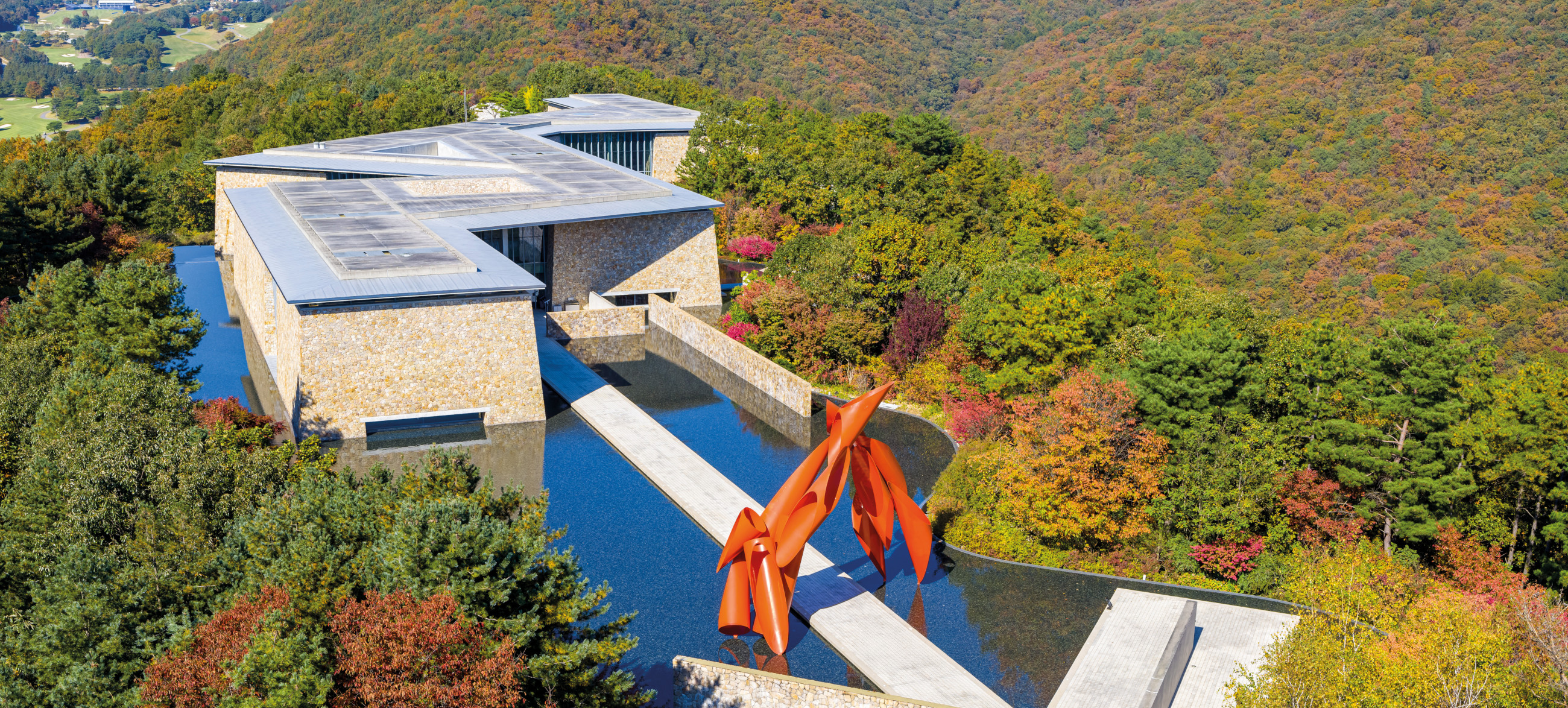
Beyond the Welcome Center lies the Flower Garden, where red dianthus flowers complement white birch trees. After passing the Sculpture Garden and the Space of Light, visitors arrive at the tranquil Water Garden. The main building appears to float on the water, while its reflection mingles with those of the sky and surrounding trees, turning the architecture itself into part of the landscape.
The connection with nature continues inside the main building. Its distinctive design places exposed-concrete structures within spaces enclosed by Paju stone. Rectangular, triangular, and circular spaces link the building's different sections into a cohesive whole. As visitors walk along the corridors connecting the galleries, sunlight filtering through the windows and the changing scenery of the four seasons catch their eye alongside the artworks.
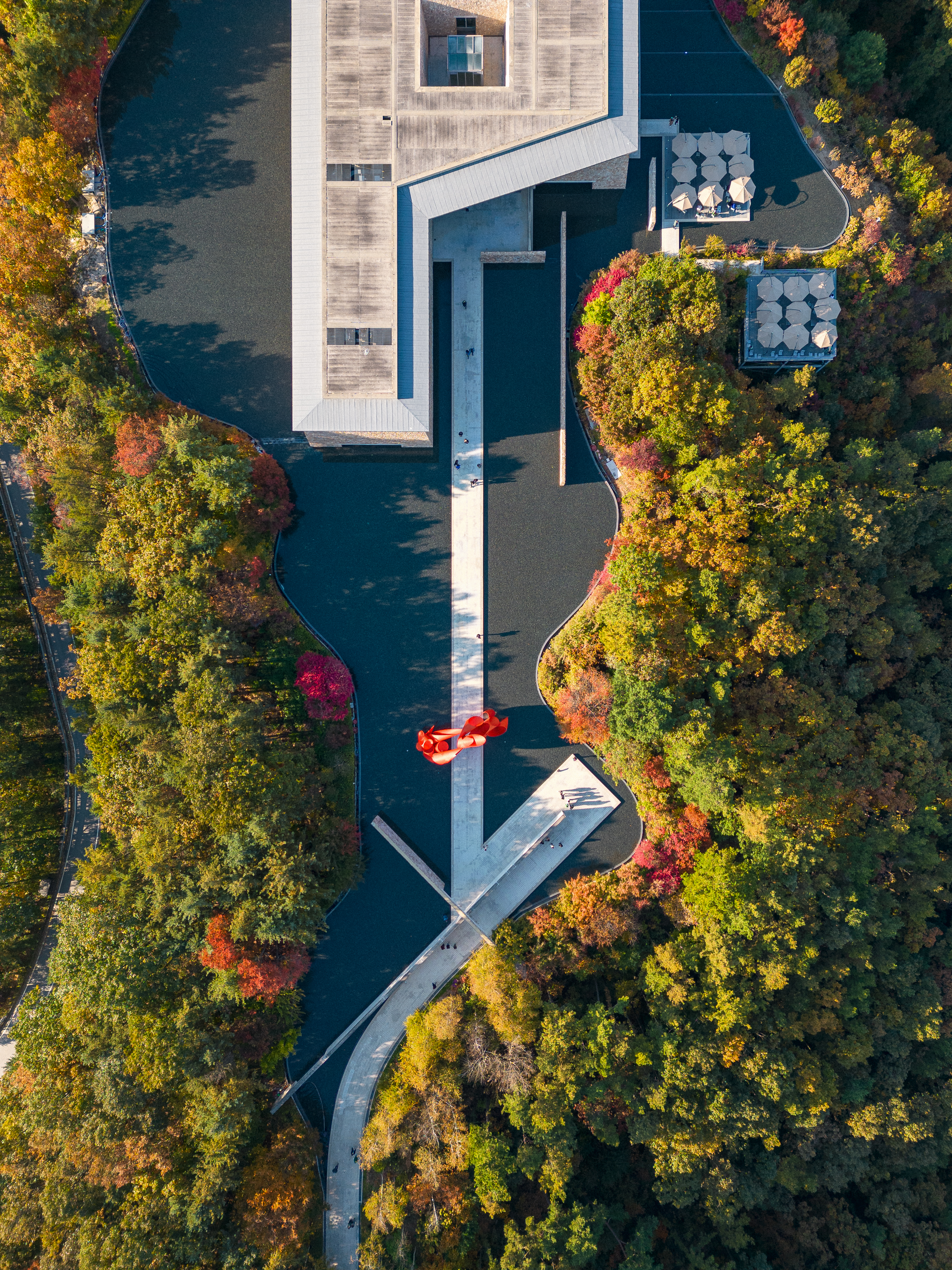 A panoramic view of Museum SAN © Museum SAN
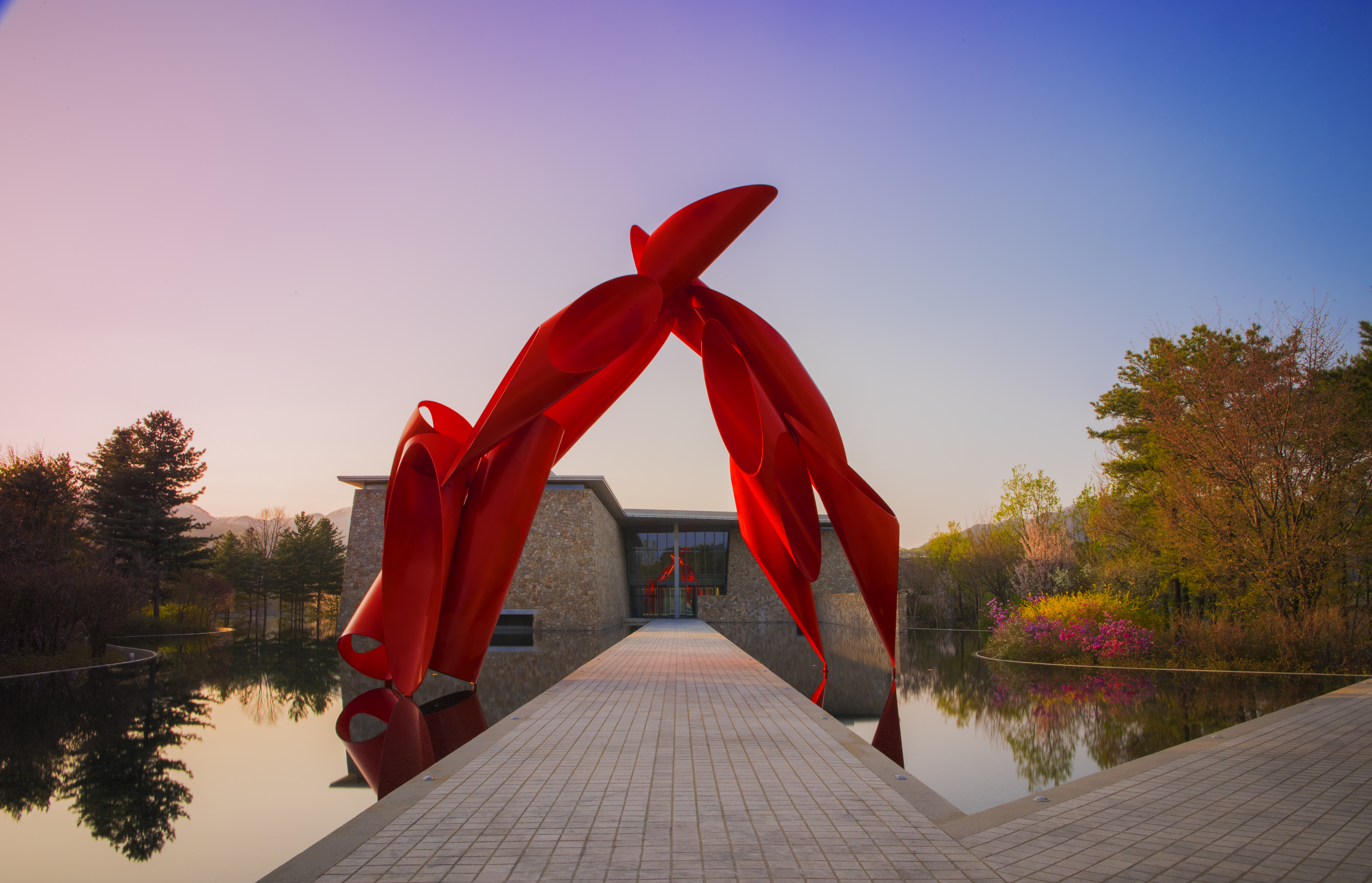
Flowers, Water, Stone, and Light
Beyond the main building, the landscape shifts to stone and light. In the Stone Garden, nine gently rounded stone mounds inspired by Silla-era burial mounds spread across the landscape. Visitors can view the sculptures while walking among the stones, with wind and sunlight surrounding them. Beside the garden stands the Meditation Hall, designed by Tadao Ando. It is designed to give visitors a moment to focus inward as they take in the sensory experience of space, nature, and art.
At the end of the journey is the James Turrell Hall, dedicated to the artist known for his work with light and space. His works use light as a medium, inviting visitors to experience light and space anew and notice what they might otherwise overlook. Walking from flowers to water, from water to stone, and finally to light, visitors may come to realize that the art here is about far more than viewing a few individual works.
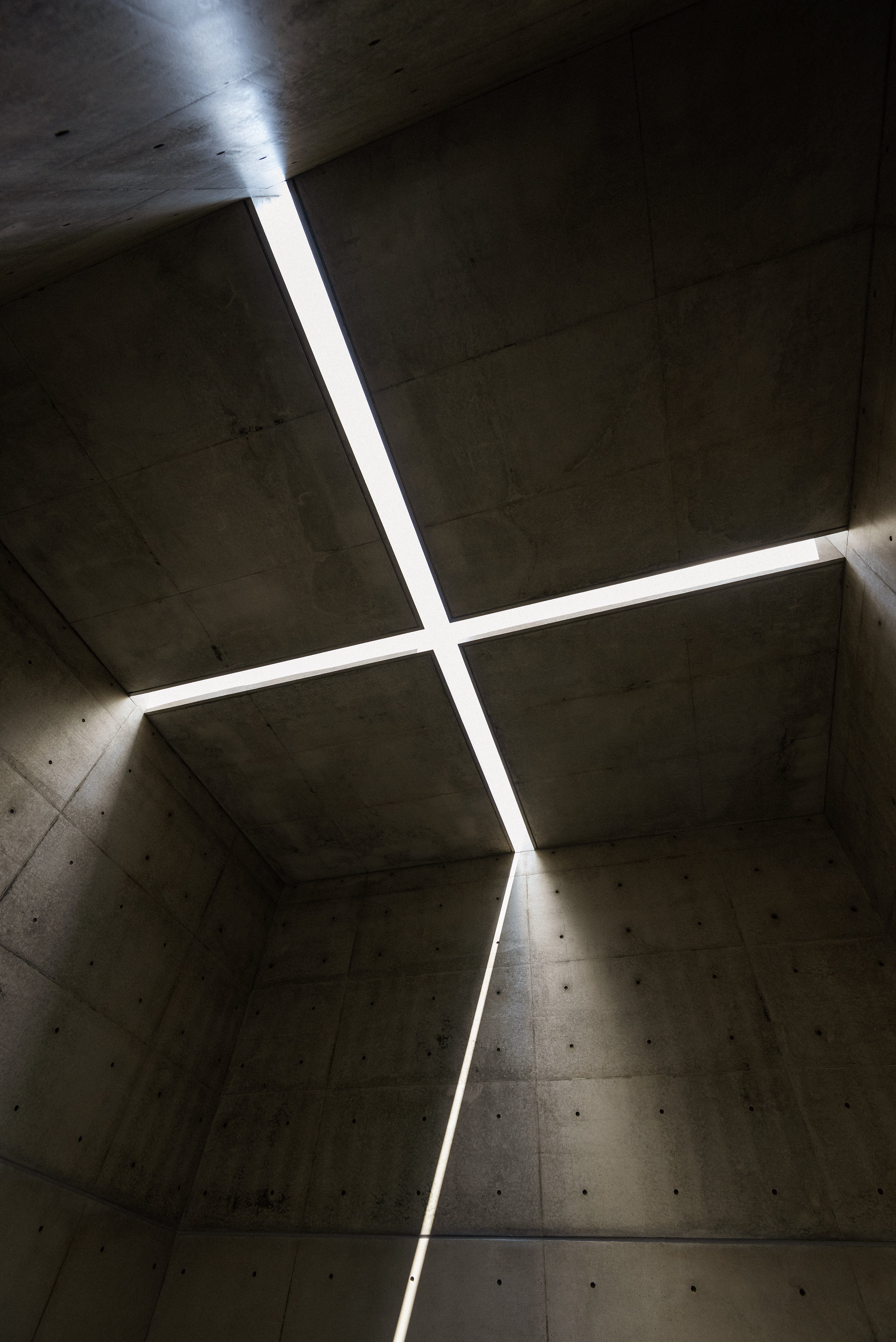
This journey now includes GROUND Antony Gormley Hall, an underground gallery beneath the flower garden. The gallery, which opened in 2025, is the first collaboration between Tadao Ando and British contemporary artist Antony Gormley. Together, natural light from a circular skylight, Gormley’s sculptures, and Ando’s architecture, make the gallery itself feel like a work of art. After descending underground, visitors find their gaze is drawn back toward the mountains, valleys, and sky as they move through the gallery.
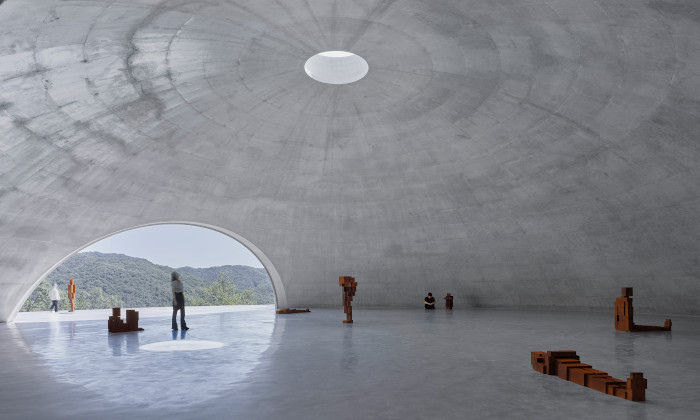 GROUND Antony Gormley Hall ⓒ Museum SAN, Photo by Jaewon Choi
Art That Extends Across Spaces
Museum SAN grew out of Hansol’s vision of sharing culture and the arts with a wider audience. The late In-hee Lee, an adviser to Hansol Group, established the Hansol Cultural Foundation in 1995 to contribute to society through corporate initiatives in arts and culture. In addition to operating the Paper Museum, which researches and promotes the cultural value of Korean paper, the foundation expanded this vision by establishing a museum to share a broader range of artistic and cultural experiences with the public.
The museum’s art collection, which began as a private collection, was likewise intended not to remain the possession of a select few, but to be shared with the public as part of a common cultural heritage for everyone to enjoy. After years of preparation, the present-day Museum SAN, encompassing both the Paper Museum and the art museum, opened in 2013. The vision of sharing culture and art with society continues today in a space where visitors can experience nature, architecture, and art together.
The art at Museum SAN does not remain confined to a single place. The Paper Gallery explores the value of paper as a medium for keeping records and conveying culture long before it became an industrial material, while the Cheongjo Gallery presents a range of exhibitions centered on modern and contemporary Korean art. With outdoor gardens and special exhibition spaces also part of the visit, the experience of viewing art naturally extends across indoor and outdoor spaces.
With the spaces themselves forming part of the artistic experience, Museum SAN has continued to expand its exhibition program through a diverse range of artists and works since its opening. It has presented successive solo exhibitions by internationally renowned contemporary artist Ugo Rondinone and leading British contemporary sculptor Antony Gormley, the largest solo shows of these artists' works held in Korea. Through exhibitions drawn from its collection, it has also shed new light on modern and contemporary Korean artists such as Re-hyun Park, Saeng-kwang Park, and Kwan Nam, introducing visitors to diverse currents in contemporary art.
This fall, Museum SAN is presenting En attendant: Waiting, a solo exhibition by Korean contemporary artist Bae Lee. The first solo exhibition by a Korean artist since the museum opened, it presents more than 30 years of the artist’s exploration of charcoal through two-dimensional works, sculpture, installation, and video. Notably, the works span six spaces, extending from the main building's entrance and exhibition halls to the outdoor gardens, allowing visitors to encounter them as they walk through Museum SAN’s natural surroundings and architectural spaces.
 Poster for 《En attendant》
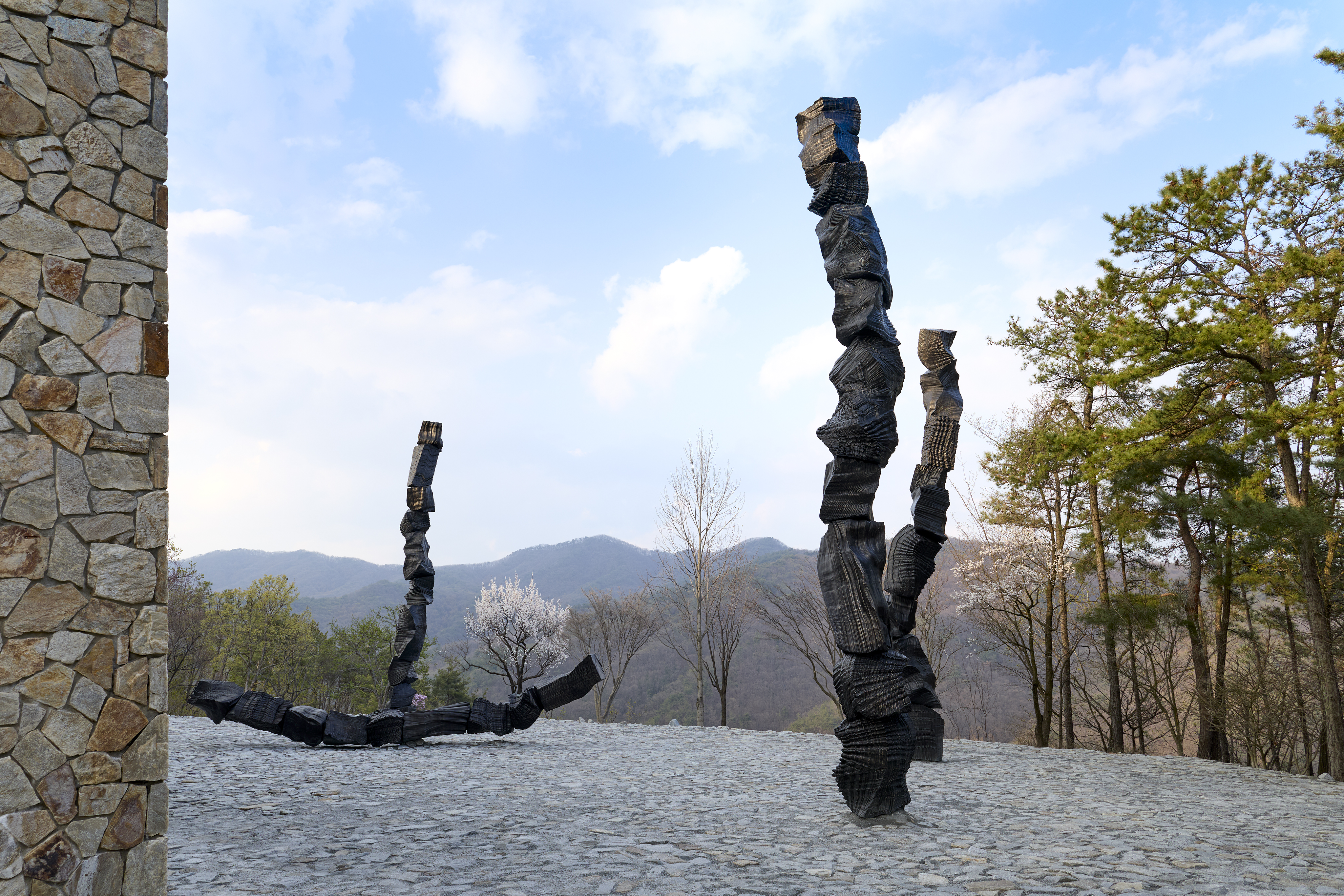 Space of Nothingness_2 - Brushstroke, 110x40x400cm (each), 6 sculptures, bronze, 2026
ⓒ Museum SAN, Photo by Sangtae Kim
Museum SAN uses the phrase, “Disconnect to connect.” The idea is that taking a brief step back from familiar routines allows us to see ourselves, nature, and art anew. Here, visitors can walk along mountain paths, look at the sky reflected on the water, and linger over the light that fills the spaces. At Museum SAN, the purpose of a journey may be less about simply viewing artworks and more about slowly wandering between nature and art, rediscovering a sense of ease we may have temporarily forgotten.