Special Interview
30 Years in the OECD:
Exploring Korea’s Next Leap
Mathias Cormann,
Secretary-General of the OECD
30 Years in the OECD:
Exploring Korea’s Next Leap
Mathias Cormann,
Secretary-General of the OECD
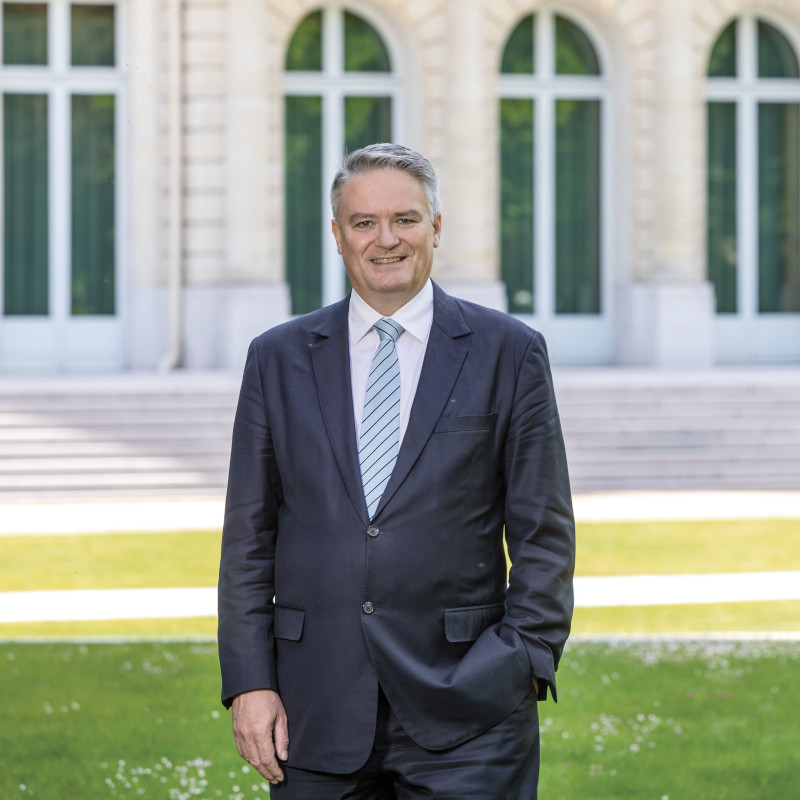
Mathias Cormann
Mathias Cormann became the OECD's sixth Secretary-General in June 2021, and began his second term in June 2026. Before joining the OECD, he served as Australia's Minister for Finance and Leader of the Government in the Senate, with responsibility for the Australian government's economic and fiscal policy. He now leads OECD discussions on sustainable global economic growth, international cooperation, and the building of an open, rules-based trading system.
From an aid recipient to a donor, and to a leader in technology and innovation, Korea has undergone remarkable changes over its three decades of OECD membership. To mark the 30th anniversary of Korea’s accession, we spoke with OECD Secretary-General Mathias Cormann about the significance of this transformation as well as what the next 30 years might have in store. As the global economic order and the conditions for growth evolve rapidly, he shares his perspective on what Korea needs to do to prepare for its next leap forward.
By Na-yeon Kim
Photo Credit OECD
Q. Allow me to express my deepest gratitude for your warm video message congratulating FKI on its 60th anniversary. Our organization's top priority over the past six decades has been to support the growth of the Korean economy, and in this regard, FKI has served as a bridge between the OECD and the Korean business community. Looking ahead, what should be Korean companies' biggest priorities if they wish to play a bigger role on the global stage?
A. Korean companies are already among the world's most competitive and innovative businesses. From semiconductors and advanced manufacturing to digital technologies and cultural industries, Korea leads in many global markets. Maintaining that edge will require a focus on boosting productivity and widening technology adoption.
Three priorities stand out.
First, turning innovation into economy-wide productivity gains. Korea invests more than 5% of GDP in research and development, one of the highest levels in the OECD. The next step is to spread innovation more widely across smaller firms and the services sector.
Second, winning the race for skills. Korea's workforce is highly educated, but technology is moving fast. As AI transforms industries, continuous upskilling will become a competitive necessity.
Third, building resilience. Korean firms are well integrated in global value chains, particularly in semiconductors and advanced manufacturing. Diversifying supply chains and reducing vulnerabilities will be key to weather future disruptions.
Q. This year marks the 30th anniversary of Korea’s accession to the OECD. How do you assess Korea’s past 30 years, during which time we graduated from an aid recipient to a donor country? What milestones do you think have been particularly significant and symbolic, given Korea’s efforts to embrace global norms proposed by the OECD?
A.
Korea's transformation over the past three decades has been extraordinary. When Korea joined the OECD in 1996, its GDP per capita stood at roughly three-quarters of the OECD average. Today, it is around the OECD average, and Korea has become a global leader in technology, innovation and advanced manufacturing. The benefits are visible across society. Koreans live more than eight years longer than they did thirty years ago, younger generations are among the best educated in the OECD, and living standards have improved dramatically.
Several milestones illustrate this remarkable journey. Korea's accession to the OECD marked a decisive commitment to openness, competition and internationally recognised standards. Another defining moment came in 2010, when Korea became the first former aid recipient to join the OECD Development Assistance Committee, symbolising its transformation into a donor and development partner.
Today, Korea helps shape the OECD’s agenda. From digital transformation and AI to engagement with Southeast Asia, Korea has become a leading voice within the OECD. Korea's experience gives it a unique credibility when addressing the challenges and opportunities facing economies around the world.
“Another defining moment came in 2010, when Korea became the first former aid recipient to join the OECD
Development Assistance Committee, symbolising its transformation into a donor and development partner.”
Q.International cooperation has become more important than ever, with the recent volatile shifts in the global trade environment. What are the biggest strengths of the OECD as a platform for reducing economic uncertainty and creating shared prosperity among like-minded players?
A.
The OECD's greatest strength is its ability to build trust through evidence, dialogue and shared standards. At a time of rising uncertainty, governments and businesses need a common understanding of the facts. That is what the OECD provides. We help countries address challenges ranging from trade and investment to AI, supply chains and economic security based on data, analysis and practical experience.
The OECD also helps translate dialogue into action. Our standards in areas such as taxation, anti-corruption, responsible business conduct and digital governance help reduce uncertainty and make it easier for businesses to operate across borders with confidence.
Korea's own experience demonstrates the value of this approach. Over three decades, Korea has benefited from OECD standards, peer learning and policy dialogue. In a more fragmented world, that combination of evidence, international standards and practical cooperation remains a powerful foundation for shared prosperity.
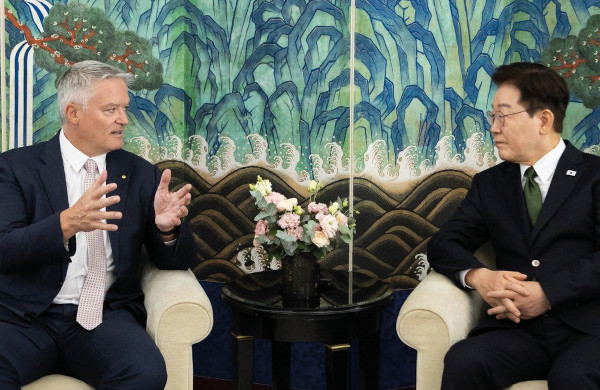 Meeting between OECD Secretary-General Mathias Cormann and President Lee Jae Myung to mark the 30th anniversary of Korea’s accession to the OECD
Q.Companies are expressing aggressive commitment toward investing into AI. What are some of the key limiting factors that will prevent such investments creating productive innovation? For governments, which policy areas should take priority when providing support?
A. AI has enormous potential. It can help boost productivity, address labor shortages and support stronger growth. For Korea, this opportunity is particularly significant given demographic pressures and its strong technology base.
A key challenge is diffusion. AI adoption remains concentrated among large and highly productive firms, while many small and medium-sized firms lag behind. Skills are another constraint. Businesses need workers capable of using AI effectively, and countries need strong systems for lifelong learning as technologies evolve. Access to digital infrastructure, computing capacity and reliable energy also matters.
For governments, three priorities stand out: skills, adoption and trust. Helping workers continuously upgrade their skills, supporting AI adoption across smaller firms including through reliable connectivity, and ensuring appropriate governance frameworks will be critical. Korea starts from a position of strength. Korea has the ingredients to succeed. Ensuring that AI reaches businesses of all sizes will be key to unlocking its full potential.
Q.What are your top three global economic variables for 2026-2027 that companies and their leaders need to prioritize and prepare for?
A.
First, geopolitical uncertainty and its impact on trade and energy markets. Recent disruptions in the Middle East have highlighted how quickly energy prices and supply chains can come under pressure. Companies should focus on resilience by diversifying suppliers, markets and logistics networks.
Second, demographic change. Population aging is becoming a defining economic trend across many OECD economies, especially in Korea. A shrinking workforce will make skills, productivity and labour utilisation increasingly important sources of growth.
Third, AI and digital transformation. AI is rapidly becoming a competitive differentiator across industries. Firms that successfully integrate AI into their operations and invest in the skills needed to use it effectively will be best placed to boost productivity and adapt to change.
The common thread across all three trends is adaptability. Companies that invest in resilience, skills and innovation today will be best positioned to succeed in an increasingly uncertain global environment.
Q.On a policy level, how can AI complement labor market participation rather than replace it altogether? In an aging labor market, can AI serve as a digital assistive tool to support productivity?
A. AI works best when it complements people rather than replaces them. The greatest gains come when AI helps workers become more productive, make better decisions and spend more time on higher-value tasks.
AI can enhance efficiency, automate routine tasks, facilitate knowledge sharing, and support more complex and creative activities. OECD surveys show that around 80% of workers using AI report improved job performance. Many firms are also using AI to transform jobs and create new tasks rather than simply reduce employment.
The productivity potential is significant. Recent analysis in OECD and G20 economies shows that AI-driven productivity gains can raise per capita real income growth by between 0.1 and 1 percentage points annually in the next decade. This is especially relevant for ageing societies such as Korea. To realise these benefits, governments should focus on skills, access and adoption. With the right policies, AI can become a powerful tool to support both productivity growth and labour market participation.
Q.With geopolitical risk, there is renewed attention on economic security. What should Korean companies occupying central positions in the global supply chain consider when balancing economic efficiency and economic security?
A. Korean companies occupy an important position in global value chains, particularly in semiconductors, batteries and advanced manufacturing. In this environment, economic security begins with understanding vulnerabilities. Firms need greater visibility across supply chains, better mapping of dependencies and more diversified sources of key inputs and technologies.
At the same time, economic security should not be confused with economic isolation. Korea's success has been built on openness to trade, investment and innovation. OECD analysis shows that diversified international networks are generally more resilient than highly concentrated ones. The goal is to manage risk, not retreat from global markets.
Companies should also invest in risk management, cybersecurity, and supply-chain resilience while continuing to invest in international partnerships. The businesses that can combine openness with resilience will be best placed to succeed in a more uncertain world.
Q.The OECD has emphasized that the most urgent systemic-level challenge for sustainable growth in Korea is reducing the manufacturing-services productivity gap. Korea is a manufacturing powerhouse, but the productivity level of services stands at around one-half that of the OECD average. With digital transformation and intangible assets set to define the next thirty years, what are some top-priority regulatory guideline reforms that are necessary if Korea is to gain global leadership in services?
A. Korea's highly productive manufacturing sector is a major strength. The next chapter of Korea's growth story will depend increasingly on raising productivity in services and among smaller firms.
A key priority to unlock this potential is to strengthen competition. Stronger competitive pressures support innovation, encourage investment and help the most productive firms grow. Simplifying regulations, modernising licensing requirements and reducing unnecessary restrictions would help unlock that potential.
Korea also needs to boost productivity among SMEs, which account for most employment but lag behind large firms in access to finance, technology and skilled workers. Helping smaller firms to adopt new technologies and scale up more rapidly will be essential to narrowing productivity gaps.
Finally, skills matter. As digital technologies and intangible assets become more important, Korea will need to equip workers with the right skills and improve the matching of talent with jobs through education, training and labour market reforms.
Q.In FKI's view, entrepreneurship is the next growth engine, especially now growth has slowed. What do you think are the key elements in bolstering entrepreneurship on an institutional or systemic level? This may include regulatory predictability, fostering competition, (mitigating) the cost of failure, access to funds/talent/data, etc.
A. All these are important, but I would highlight two additional priorities.
First, turning innovation into more start-ups and scale-ups. Korea has world-class strengths in technology and innovation. The next step is ensuring that more young firms grow into globally competitive companies. This requires access to talent, finance and data, as well as a regulatory environment that supports risk-taking and innovation. FKI can play an important role by helping connect start-ups with established firms, investors and global markets.
Second, broadening the geography of entrepreneurship. Much of Korea’s talent, investment and economic activity remain concentrated in the capital region. Recent OECD analysis identifies 37 regional hubs in Korea with the potential to become centres of innovation and business creation. Strengthening local innovation ecosystems, universities and digital connectivity can help unlock new sources of growth across the country.
Q.Do you have any words of advice for Korea's youth and next-generation leaders who aim to engage the world as responsible global citizens? What are one or two essential qualities that global citizens ought to possess?
A. The world is changing faster than ever. New technologies, shifting economic realities and global challenges will create opportunities that previous generations could not have imagined. The ability to adapt, keep learning and embrace change will be one of the most important qualities for success.
Equally important is engagement. Global citizens do not simply observe change—they help shape it. They are curious about the world, open to different perspectives and willing to contribute to their communities. Through Youthwise, the OECD's youth advisory board, I have seen first-hand how young people bring fresh ideas, challenge assumptions and strengthen policymaking.
My advice to Korea's young people is simple: stay curious and stay engaged. Keep investing in your skills, make your voice heard and never underestimate your ability to make a difference.