in Story & News
FKI News

3rd Korea-France Business Dialogue for Our Future Held
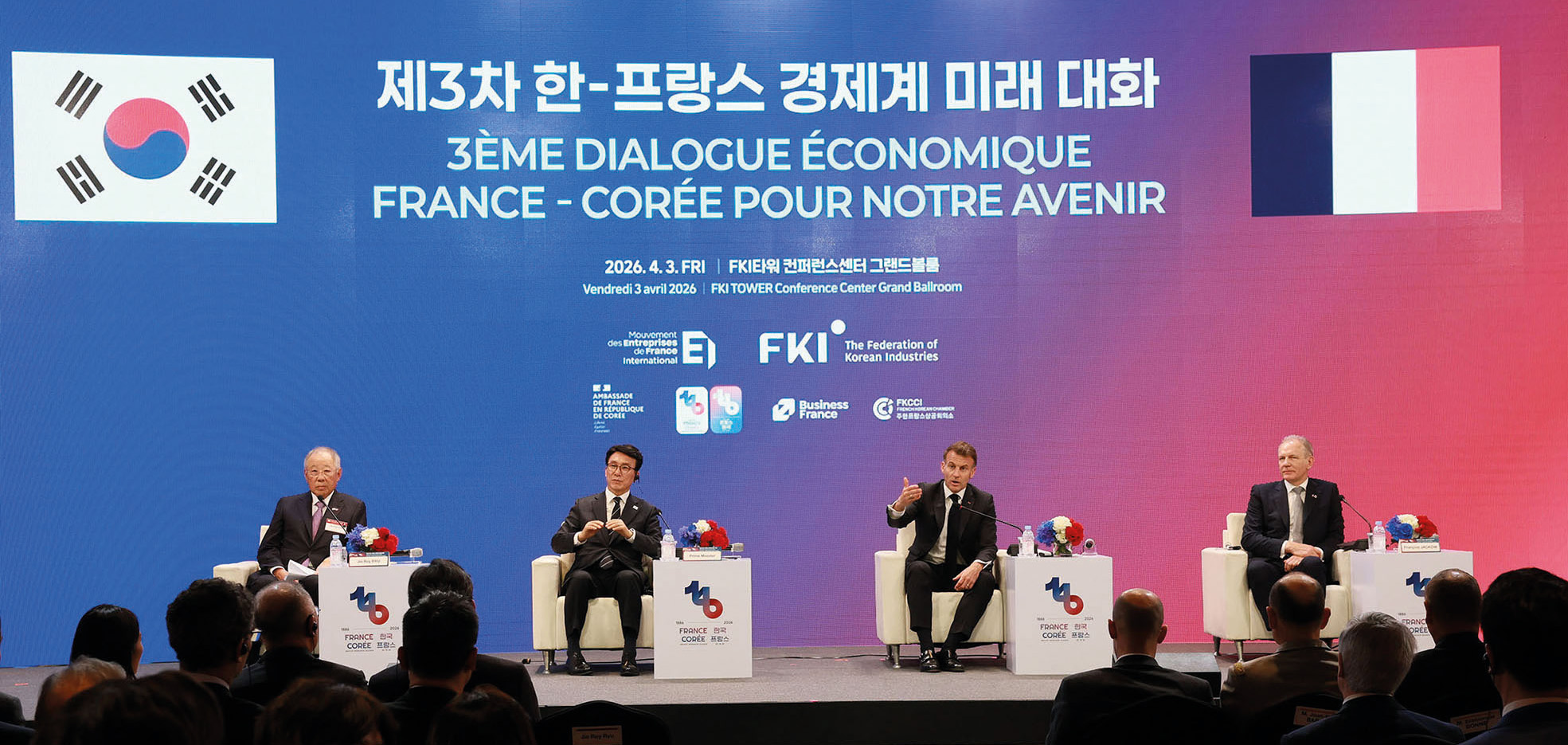
FKI and the Mouvement des Entreprises de France (MEDEF) jointly hosted the 3rd Korea-France Business Dialogue for Our Future on the occasion of French President Emmanuel Macron's state visit to Korea. The event brought together approximately 300 government and business leaders from both countries to discuss cooperation in future industries, including biotechnology, decarbonization, and deep tech. Ahead of the forum, President Macron attended a commemorative tree-planting ceremony at Jardin Haneul at FKI Tower, symbolizing the strengthening partnership between the two countries. Discussions focused on combining Korea's manufacturing and clinical expertise with France's strengths in basic science and investment capital, while participants also explored joint hydrogen initiatives and commercialization strategies for AI and quantum computing. FKI Chairman Jin Roy Ryu emphasized expanding bilateral partnerships across future industries. A total of 12 MOUs were signed in the fields of energy, biotechnology, and other advanced sectors, and are expected to elevate Korea-France cooperation into a more strategic alliance centered on innovation.

2026 SPO Riverside Concert Held
To celebrate its 65th anniversary, FKI co-hosted the 2026 SPO Riverside Concert with the Seoul Philharmonic Orchestra at Yeouido Hangang Park on June 13. FKI has supported the annual performance for three consecutive years to expand access to arts and culture and broaden the audience for classical music. Conducted by Sunwook Kim, the concert featured renowned musicians including pianist Yekwon Sunwoo and violinist Seohyun Kim, performing a program of accessible classical works. This year's celebration also included a commemorative fireworks display marking FKI's 65th anniversary, along with a variety of interactive events, offering a restorative experience for people spending the day by the Han River.
Inaugural Career Exploration Program for Japanese International Students in Korea Held
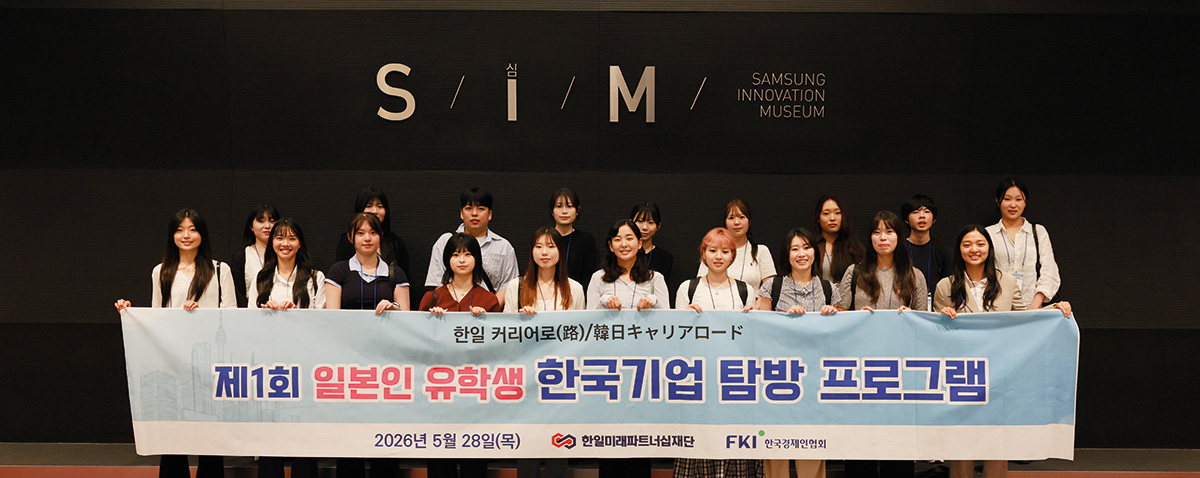
The Korea-Japan Future Partnership Foundation held the inaugural Korea-Japan Career Road, a company-tour program for 50 Japanese students and youth interested in pursuing careers in Korea. Designed to promote greater people-to-people exchanges between the younger generations of the two countries, the program offered participants firsthand exposure to Korea's corporate culture. Participants visited leading Korean companies including Samsung Electronics, Kia, Netmarble, and NAVER, where they explored advanced manufacturing processes and innovative IT workplaces. They also received briefings by HR managers and met Japanese professionals working at Korean companies, gaining practical advice on workplace environments and preparing for employment. The Foundation plans to continue supporting youth exchanges through additional initiatives, including online and offline job fairs scheduled for the second half of the year.
India-Korea Business Forum Held
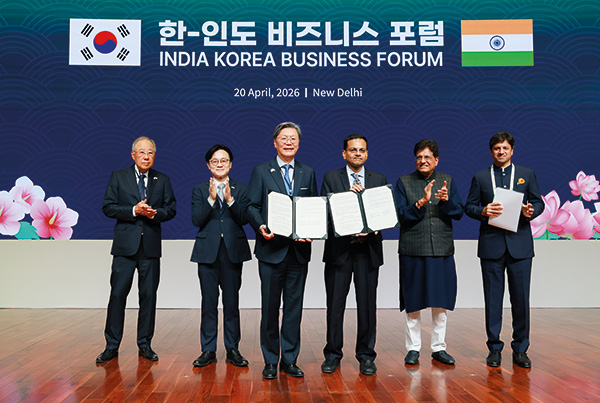
FKI co-hosted the India-Korea Business Forum in New Delhi during the Korean President's state visit to India. Approximately 600 government and business leaders from both countries attended the event, which was organized to strengthen economic cooperation with India as an increasingly important hub in global supply chains. Chairman Jin Roy Ryu identified advanced manufacturing, digital technologies and AI, and cultural industries as the three key pillars of future bilateral cooperation. The forum also highlighted practical collaboration opportunities, including POSCO's joint investments in steel, Hyundai Motor Company’s efforts to build an electric vehicle ecosystem, and HD Hyundai’s cooperation on shipyard infrastructure—offering realistic avenues for shared projects in advanced manufacturing and the energy transition.
Support Initiative for Out-of-School Youth Launched
FKI signed an MOU with Hana Financial Group, the Korea Youth Counseling & Welfare Institute, and the Korea Educational Broadcasting System (EBS) to launch the Youth Bridge project, an initiative supporting the independence and future development of out-of-school youth. Chairman Jin Roy Ryu described youth isolation as a critical social challenge and emphasized investing in the next-generation drivers of the economy. The participating organizations will jointly provide customized support through financial education, psychological counseling, and job-experience programs. Together with EBS, the project has aired the first installment of a relay lecture series titled “To the Youth” and plans to hold a policy forum, air a documentary, and launch a dedicated online learning platform by year-end. Beginning in the second half of the year, FKI will further expand support by leveraging the business community's infrastructure to help young people successfully transition into society.
Survey on Corporate Readiness for ESG Disclosure Released
FKI has released the results of its Survey on Corporate Preparedness for ESG Disclosure, conducted among KOSPI-listed companies with total assets of at least KRW 10 trillion but less than KRW 30 trillion. According to the survey, 70.4% of respondents said they would be ready to comply with mandatory ESG disclosure requirements when they take effect in 2029. The survey also found significant differences in preparedness across industries and company sizes. More than half (55.6%) of respondents reported that ESG personnel currently perform ESG duties alongside other responsibilities, highlighting concerns over securing dedicated professionals as disclosure requirements expand. Regarding Scope 3 greenhouse gas emissions disclosure, which cover emissions across the entire supply chain, 66.7% of manufacturing companies supported postponing mandatory reporting until 2033 or later, citing practical implementation challenges. Respondents identified limited measurement capabilities among suppliers, concerns about data reliability, and the potential disclosure of confidential business information as major obstacles to accurate data collection. To facilitate a smooth transition, companies urged the government to provide industry-specific implementation guidelines and establish standardized platforms for data collection.
3rd Meeting of the AI Innovation Committee Held
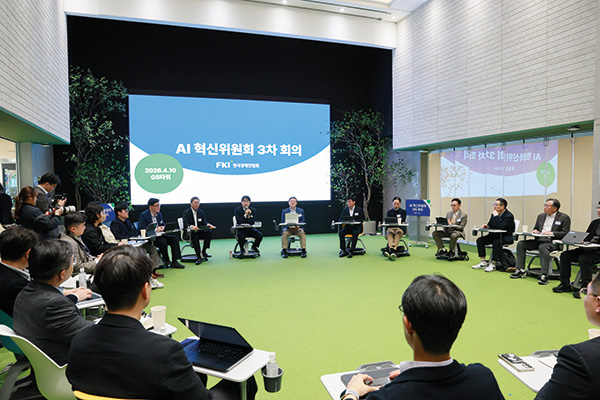
FKI convened the 3rd Meeting of the AI Innovation Committee, bringing together senior government officials to discuss strategies for accelerating AI adoption across industry. Committee Chair Tae Soo Huh stressed that Korea must become a nation that excels at applying AI, outlining three priorities: pursuing regulatory reform, strengthening connections between AI technology companies and industrial users, and sharing best practices. In the keynote session, representatives of the Presidential Council on National Artificial Intelligence Strategy presented an industrial AX support roadmap based on the Korea AI Action Plan. The public-private roundtable that followed focused on practical challenges, including developing mutually beneficial AI transformation models between large corporations, SMEs, and middle-market enterprises and expanding tax incentives to support AI infrastructure. FKI plans to further develop industry-specific implementation models to ensure AI is effectively integrated into actual industrial processes.
K-GX Strategy Seminar on New Growth Engines Held
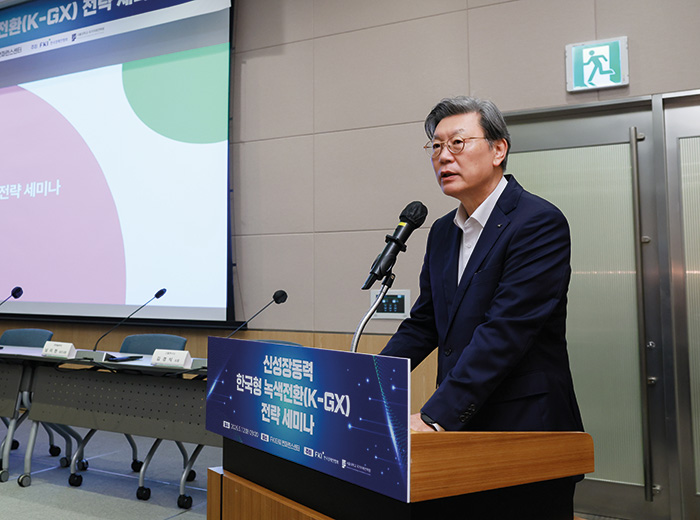
FKI and Seoul National University's Institute for Future Strategy jointly hosted a seminar arguing that the government’s K-GX (Korean Green Transformation) strategy should go beyond emissions reduction to serve as a key driver of industrial restructuring and upgrading. Vice Chairman and CEO Chang-beom Kim noted that major economies are using the energy transition to secure new growth engines and emphasized that K-GX should become a central policy framework for strengthening Korea's flagship industries. Government officials presented policy directions centered on fostering strategic industries and expanding tax incentives while encouraging closer public-private collaboration. Professor Je-yong Yoon, representing the private sector, identified two priorities for accelerating industrial transformation: expanding the power grid to ensure a stable supply of carbon-free electricity and creating markets for low-carbon products that reflect their higher production costs. Panelists also agreed that tax incentives and consistent government policy signals are essential to stimulate private-sector investment.
2026 Comprehensive Regulatory Reform Proposals Submitted
Drawing on feedback from its member companies, FKI submitted its 2026 Comprehensive Regulatory Reform Proposals—a package of 100 proposals—to the Office for Government Policy Coordination. The proposals aim to remove outdated regulations that hinder innovation in mobility, AI, and other emerging industries, while strengthening corporate competitiveness. Key recommendations include separating ownership of electric vehicle batteries from vehicles to lower upfront purchase costs and promote battery recycling, as well as introducing a copyright safe harbor for AI training data to reduce legal uncertainty surrounding large-scale AI model development. Additional proposals call for easing regulations to allow robotic parking systems in apartment complexes to address parking shortages, and adding family relationship certificates to the bundled-information package available through the insurance MyData service, reducing paperwork for insurance users. FKI Vice President of Economic Affairs Sang-ho Lee emphasized that bold regulatory reform is essential during a period of industrial transformation and expressed hope that the newly elevated Regulatory Rationalization Committee will deliver meaningful institutional improvements.
Seminar on Labor Market Reform Held
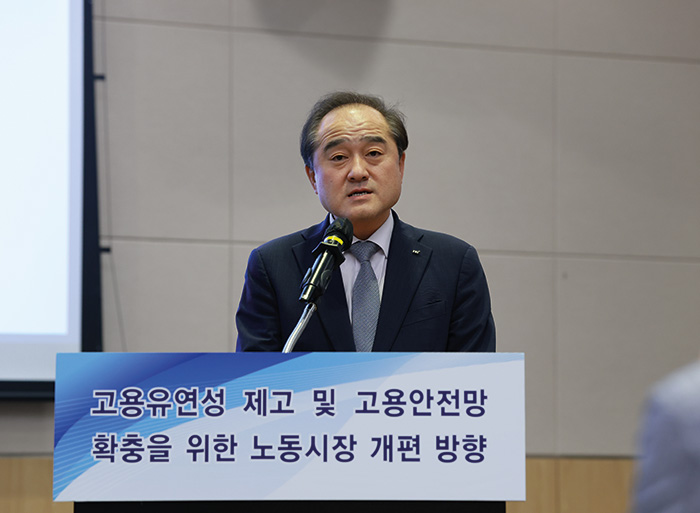
FKI hosted a seminar exploring a "two-track strategy" for increasing labor market flexibility while strengthening the employment safety net. Chul Chung, President of the Korea Economic Research Institute (KERI), emphasized balancing flexible workforce management that reflects rapid technological change with policies that support worker mobility. Presenters proposed expanding performance-based compensation systems and flexible work arrangements in advanced industries, while also clarifying job reassignment procedures in traditional manufacturing sectors. To strengthen employment security, they recommended measures including continued employment support for older workers, improved job matching for young people, and greater government funding for maternity protection benefits to improve the financial sustainability of the Employment Insurance Fund. Participants also agreed that Korea should gradually expand a Korean model of flexicurity, beginning with areas where consensus between labor and management can be achieved.
Korea-Japan Economic Cooperation Seminar in an Era of Multiple Crises Held
KERI and the Keidanren Policy Research Institute jointly held a seminar to discuss Korea-Japan cooperation in response to the restructuring of supply chains for critical minerals and advanced industries. Han-koo Yeo, Korea's Minister for Trade, emphasized flexible cooperation through multilateral platforms—such as through the Korea-Japan Supply Chain Partnership Arrangement (SCPA), as well as closer coordination on LNG procurement. KIEP Vice President Sungbae Ahn and Professor Arata Kuno identified the urgent need to reduce dependence on any single country by establishing bilateral and minilateral cooperation frameworks encompassing joint development of mining projects in third countries, information sharing, and the coordinated procurement of critical minerals.