in Issue & Trend
Impacting Psychiatric Diagnosis
with Brain-Analysis AI
Sang-yoon Bae, CEO, Risorius
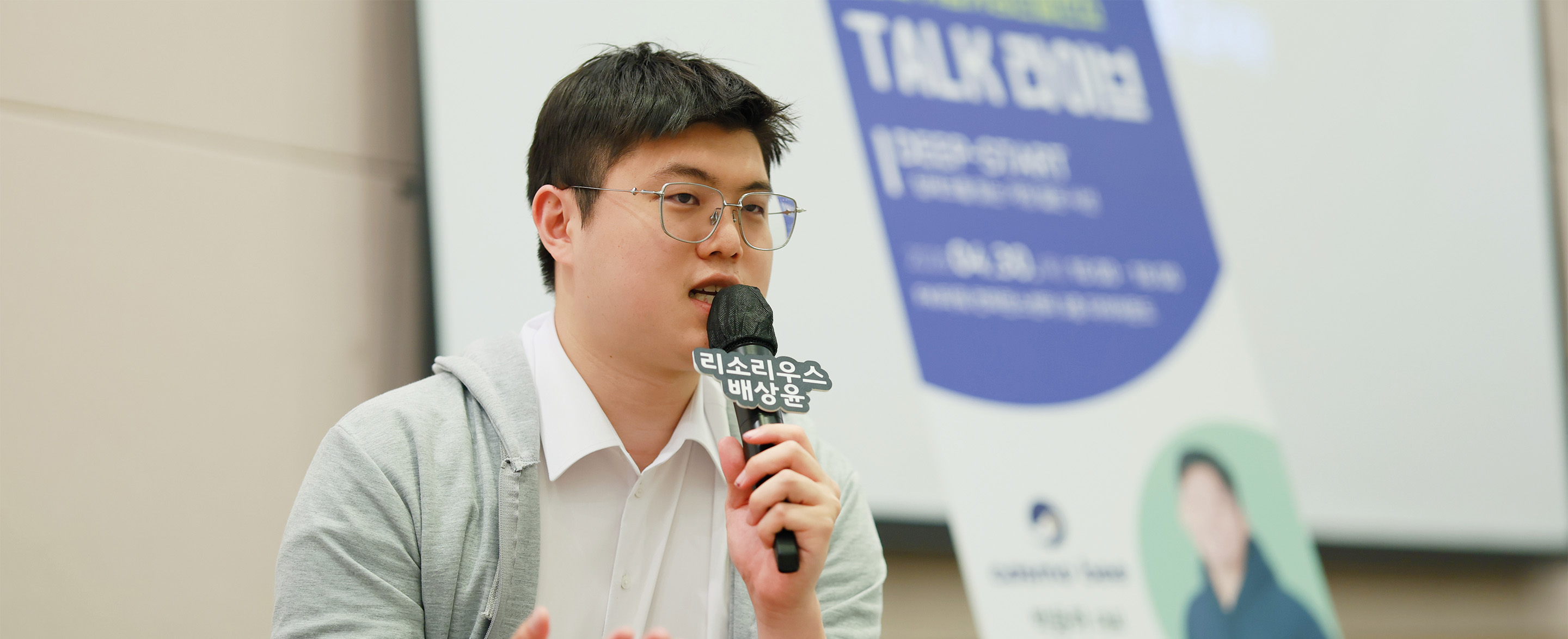
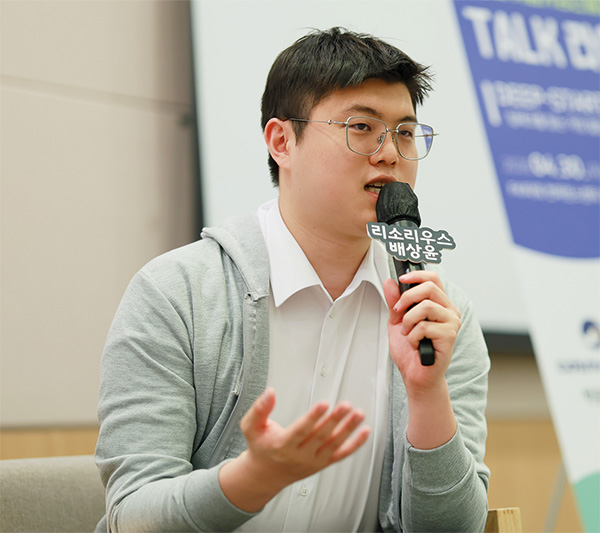
Making psychiatric and neurological care faster, more affordable, and more accurate—this is the singular mission driving Sang-yoon Bae, founder and CEO of Risorius. While still a medical student at Seoul National University College of Medicine, Bae founded the company and secured KRW 2 billion in seed funding. A student entrepreneur defying conventional expectations, he is now taking on the global healthcare market. We spoke with Bae, who appeared as a speaker at the 3rd Entrepreneurship Power House Live TALK1 , about practical challenges in building a startup and the advice he has to offer from the front lines.
By In-young Lee
Photo Credit FKI
- 1.An open lecture series featuring interactive live talks that promotes the value of entrepreneurship among young people and the general public.
How did your experience as a medical student engaging in academic research differ from actually founding and running a company?
I believed that quantifying brain health was a meaningful research topic that could benefit society and improve patient outcomes. In academia, having a technologically interesting idea may have been enough. In business, however, there are very different expectations. No matter how advanced the technology, customers demand cost reductions or the addressing of an immediate need in clinical practice. This realization led me to dive deep into why legacy industries operate the way they do. Instead of dismissing existing practices as outdated and assuming we could do things better, I approached the problem with humility and sought to understand the underlying issues. Only then was I able to identify genuine business opportunities that reflected real market demand.
You explored several business ideas before settling into your current direction. Looking back, what is your biggest regret?
I spent too much time superficially pursuing multiple ideas instead of committing myself to solving one problem in depth. Early on, I convinced myself that successful startups were supposed to launch quickly, iterate constantly, and pivot whenever necessary. In reflection, however, I think I went down alternate paths because I didn’t want to confront failure head on.
Today, AI makes it possible to build apps and services in a remarkably short time. Ironically, that can encourage founders to engage with the problems they are trying to solve on a more superficial level. Without a clearly defined problem and the determination to see it through, repeat experiments rarely produce useful outcomes. That is why we decided to discontinue our earlier ventures in InsurTech and wellness. Today, we are fully committed to one mission: developing new drugs for psychiatry and neurology and building a chain of psychiatric and neurological clinics.
Why did you choose to focus specifically on psychiatry and neurology? What is Risorius' business model and strategic direction?
Psychiatric and neurological disorders have traditionally been among the most difficult conditions to diagnose objectively. Clinical decisions have relied largely on patients' subjective descriptions and physicians' observations rather than quantitative data. At Risorius, we are transforming this inherently subjective field into a quantifiable one, ensuring precision through an AI-based brain foundation model2 for brain data analysis.
At the same time, we are developing a fully automated platform for hospital administration and clinical operations, enabling us to build psychiatric and neurological hospitals that are more affordable, faster, and higher in quality. We are currently conducting joint research with more than 15 institutions in Korea and overseas, including hospitals in Vietnam, the United States, and the United Kingdom, while continuing to build a robust body of clinically validated data.
- 2.An artificial intelligence model trained on large-scale datasets that can be adapted to perform a wide range of tasks, including language, image, and code generation.
What is Risorius currently focused on, and what is your long-term vision for the digital healthcare infrastructure you have in mind?
Our immediate priority is relocating our headquarters to the United States. This is a strategic decision that will allow us to overcome regulatory constraints in Korea— a place where companies face significant limitations in directly acquiring hospitals—and ultimately build autonomous hospital chains. Our long-term goal is to acquire struggling psychiatric hospitals and turn them around by deploying our AI-powered EEG analysis technology, automating and streamlining the work of physicians and nurses, and ultimately increasing patient conversion rates.
Our solution goes far beyond a data analytics tool. We envision it as an AI neuroscientist that seamlessly integrates clinical diagnosis with hospital operations. By leveraging objective brain data, we aim to significantly improve diagnostic accuracy while fully automating clinical workflows to reduce healthcare costs. Ultimately, we seek to transform the cost structure of healthcare delivery itself, providing the public with a better healthcare experience and, over the long term, better patient outcomes.
Finally, what mindset do you hope young Koreans will adopt if they aspire to develop global competitiveness like Risorius?
Youth should not allow themselves to be defined by labels, such as "student." If the problem you choose to solve is too small, you will never attract significant capital or exceptional talent. Last year, I spent considerable time working alongside talented people in the United States and China, and their mindset was strikingly different from Korean talent. Many young Koreans tend to focus first on simply surviving, but American and Chinese talent seem to be driven by an ambition to lead markets and change the world. To build a truly global company and create a decisive edge on the global stage, one needs to be bolder and think beyond survival, and aspire to shape markets. I hope Korean youth will hold firm in their conviction and walk down their chosen paths with armed solid confidence.