in Issue & Trend
Four Keywords Redefining Everyday
Life and Industry
#DigitalDetox #PixelLife #1.5-PersonHousehold #SamJeon-Nix
As we enter the second half of 2026, Korea has reached a pivotal moment where the gains from rapid technological advancement increasingly coexist with the fatigue it creates. The conversation has shifted beyond simply adopting new technologies to asking how their pace can be aligned with human well-being, and how meaningful value can be preserved amid the growing ebb and tide of asset markets. This issue explores four defining trends that are fundamentally reshaping Koreans’ lifestyles across consumption, culture, technology, and industry, offering insight into where Korean society is headed.
By Professor Byung-woong Kwon, Department of Art Management, Graduate School of Arts, Chung-Ang University

Voluntary Disconnection: A New Form of Rest in the Digital Age
Digital detox refers to the intentional practice of stepping away from smartphones and other digital devices to restore mental and physical well-being through analog activities. The trend reflects growing fatigue in an always-connected society, where constant online engagement and social media-driven comparison have intensified mental fatigue and feelings of relative deprivation. According to a survey by market research firm Embrain Trend Monitor, 73.4% of respondents said they had either practiced digital detox or were interested in doing so, with “recovering from mental fatigue and burnout” (26.0%) cited as the most common motivation.
Increasingly aware of the cumulative effects of digital overload, many consumers are adopting practical ways to physically limit their smartphone use. Some place their smartphones in timed lockboxes that cannot be opened until a preset period has elapsed, while others embrace the "dumb phone" trend by carrying basic mobile phones with little or no internet access as secondary devices during weekends or other periods reserved for uninterrupted rest. Local communities have also begun taking note of the trend, organizing digital detox experiences ranging from nature festivals to hands-on workshops that encourage participants to put their smartphones aside. As digital technologies become ever more deeply embedded in everyday life, these efforts to establish healthier boundaries with technology are pointing to new possibilities across the wellness, tourism, and lifestyle industries.
Consuming Fragmented Trends at Hyper-Speed
Like the individual pixels that make up a digital display, Pixel Life describes a lifestyle in which consumers divide their lives and consumption patterns into increasingly small, fine-grained units, rapidly moving from one trend to the next. Whereas a single megatrend once dominated markets for years, today's consumers cycle through countless microtrends, embracing each briefly before shifting their attention elsewhere. This shift has transformed the retail and marketing landscape. Short-form content now eclipses long-form media, while short, “pixelated” experiences are increasingly valued over long-term ownership. Success no longer depends on riding broad cultural movements but on how quickly brands can create and present fragmentary trends that immediately capture consumers' attention. As consumption becomes increasingly fragmented, the global marketplace is sending a clear signal: supply-driven mass production must evolve into agile, consumer-centric production and distribution systems capable of responding to highly individualized demand at unprecedented speed.

Between One- and Two-Person Households: A New Era of Living and Consumption
The 1.5-person household has emerged as a new force in the home and lifestyle market. It encompasses people who live alone while maintaining deep emotional bonds with pets or plants, as well as those whose living arrangements shift between weekdays and weekends. This growing demographic takes several forms. Some live near their family home and maintain separate residences while sharing aspects of daily life with family members. Others share a home but carefully separate their living spaces with partitions or interior doors to preserve independence. Then there are those who embrace co-living arrangements,1 minimizing private space while making full use of shared facilities and community programs. The rise of these nontraditional household models has opened a new premium market for the home appliance, furniture, and interior design industries. Consumers who find conventional family-sized products excessive but those designed for studio apartments too limited are driving demand for modular furniture and furnishings with adjustable privacy features designed specifically for 1.5-person lifestyles.
As Korea's demographic structure continues to evolve, the 1.5-person household offers a distinctly Korean model for future urban living. By balancing personal independence with emotional connection, it has the potential to become a new benchmark for future housing solutions that reduce social isolation while supporting emotional connection in increasingly urbanized environments.
- 1.Co-living arrangements: A housing model in which residents occupy private bedrooms while sharing common facilities such as kitchens, lounges, and laundry rooms. Beyond shared living space, these communities also provide cultural programs and networking opportunities, making them an increasingly popular solution for fostering social connection while reducing housing costs.

From a Retail-Investor Favorite to the Dawn of a Semiconductor Alliance
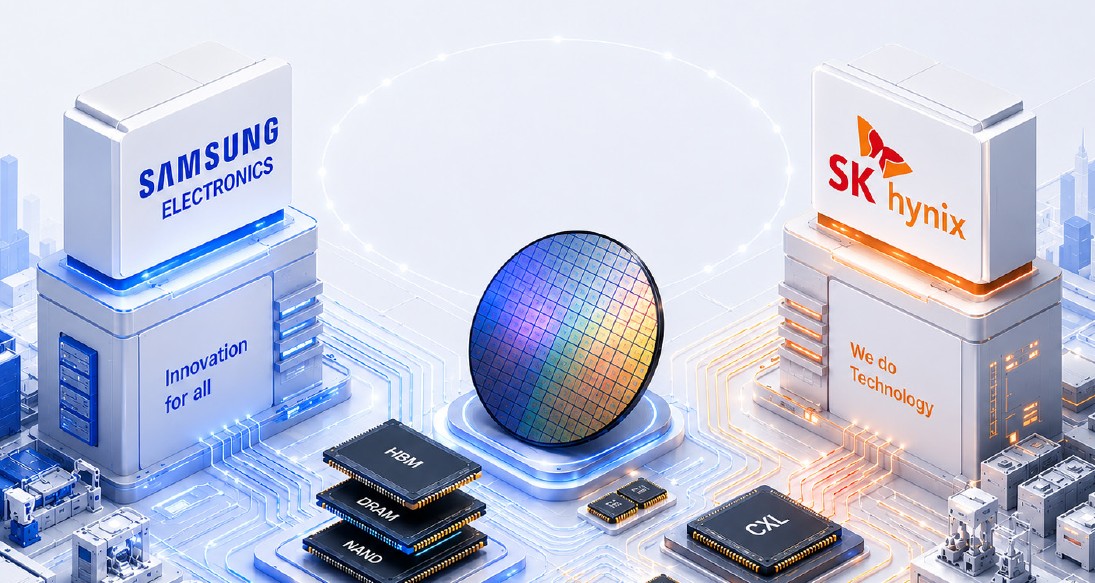
“SamJeon-Nix” is a Korean portmanteau combining “Sam” from Samsung, “Jeon” from jeonja—the Korean word for “electronics”—and “Nix” from SK hynix. The term reflects the growing tendency among investors to treat the two companies as a single investment portfolio. The term symbolizes how these two industry leaders have become the defining barometer of Korea's stock market amid the global restructuring of AI semiconductor supply chains. Their influence became particularly evident as the KOSPI surged past the historic 9,000-point milestone, with Samsung Electronics and SK hynix together accounting for nearly 60% of the KOSPI’s total market capitalization. Whereas investors once viewed the two companies primarily as rivals requiring an either-or investment decision, many now see them as complementary leaders in Korea's semiconductor industry and invest in both as part of a unified long-term strategy. More than simply a buzzword among retail investors, SamJeon-Nix reflects a broader transformation of the semiconductor ecosystem. As both companies pursue leadership in HBM2 and next-generation CXL3 while exploring opportunities for technological collaboration and strategic coexistence, they are reshaping the broader semiconductor ecosystem. In an era of unprecedented technological disruption, the strategic coordination between these two semiconductor giants and their advanced-process capabilities have become a powerful line of defense for the Korean economy and a key engine of future growth.
- 2.HBM: A high-performance memory semiconductor technology that dramatically increases data transfer speeds. HBM is a core component in generative AI systems and high-performance servers that must process massive volumes of data at ultra-high speeds.
- 3.CXL: A next-generation interconnect standard that enables high-speed, efficient communication between computing devices. By significantly expanding memory capacity and bandwidth, CXL is emerging as a core technology in future semiconductor architectures.