April
1st
Korea Begins Phased Induction in the WGBI
Korea officially began its phased inclusion in the World Government Bond Index (WGBI) in April, with foreign capital expected to flow into the domestic government bond market in stages through November. Market analysts estimate that approximately USD 52–62 billion in passive funds tracking the WGBI will flow into Korea, potentially helping stabilize the exchange rate and lower government bond yields. However, the overall impact is expected to depend on market conditions, with ongoing exchange rate volatility stemming from the Middle East war and the staggered timing of capital inflows potentially limiting the scope for any sharp short-term appreciation of the Korean won or steep decline in bond yields.
7th
Samsung Electronics Posts Record Quarterly Earnings on Semiconductor Strength
Samsung Electronics reported record quarterly results for the first quarter, posting KRW 57 trillion in operating profit and KRW 133 trillion in revenue. Quarterly operating profit surged 755% year on year, exceeding the company's total operating profit for the previous year, while quarterly revenue and operating profit both exceeded KRW 100 trillion and KRW 50 trillion respectively, for the first time. The strong performance was driven primarily by the semiconductor business, supported by rising DRAM and NAND prices amid robust AI demand. Analysts have subsequently revised Samsung Electronics' full-year operating profit forecast upward to more than KRW 300 trillion. Nevertheless, a prolonged Middle East war could dampen investment, while slowing growth in the company's finished-goods operations poses an additional downside risk.
16th
Youth Unemployment Reaches Highest Level in Five Years
According to the Economically Active Population Survey in March 2026 released by the Ministry of Data and Statistics, Korea's youth unemployment rate reached 7.4% in the first quarter, its highest first-quarter level in five years. Weakness in key industries such as manufacturing and construction, coupled with job losses in professional and IT occupations as AI adoption has expanded, contributed to the deterioration in youth employment. The number of youths in professional and IT fields has declined for two consecutive years since generative AI adoption began in earnest, and in February reached its lowest level since the relevant data series began.
16th
Stricter Review Proposed for Dual Listings
The Financial Services Commission and the Korea Exchange held a public seminar to gather feedback on a proposed new review framework under which parent–subsidiary listings would be restricted in principle. Under the proposal, the review process would be expanded beyond subsidiaries created through spin-offs to include relistings of companies established through cash contributions or acquisitions, as well as demergers undertaken as part of holding-company conversions. Reviews would focus on operational and managerial independence and investor protection. The proposal would also require parent company boards to fulfill their duty of loyalty to shareholders, assess the impact of subsidiary listings on shareholder interests, and establish appropriate shareholder protection measures.
22nd
First-Quarter GDP Grows 1.7%
Korea's real GDP grew 1.7% quarter on quarter in the first quarter, marking the strongest quarterly growth since the third quarter of 2020. Growth was driven primarily by a 5.1% increase in IT exports led by semiconductors, while private consumption, construction investment, and equipment investment also increased. Supported by higher export prices for semiconductors and other products, real GDI rose 7.5% from the previous quarter. However, with the continuing conflict in the Middle East, the Composite Consumer Sentiment Index fell below the baseline of 100 in April for the first time in a year, while inflation expectations increased. These developments raised concerns that the economic impact of the conflict could become more pronounced beginning in the second quarter.
May
6th
Court Rules Against Corporate Tax Assessments of Big Tech
Courts ruled in favor of Netflix and Meta in successive lawsuits challenging corporate tax assessments, dealing a setback to the tax authorities' efforts to tax global technology companies. It found that the companies' Korean subsidiaries were not involved in developing or operating services provided by their headquarters and therefore could not be regarded as permanent operations in Korea. The rulings have reinforced concerns that the current corporate tax framework is limited in its ability to tax global digital platform companies. They have also renewed debate over the disparity in tax burdens between global technology companies and domestic platform operators. Experts have suggested that Korea consider introducing a digital tax tailored to its own regulatory environment, drawing on international precedents.
20th
Samsung Electronics and Its Labor Union Reach Tentative Wage Agreement Moments Before Planned General Strike
Samsung Electronics and its labor union reached a tentative agreement on the 2026 wage negotiations just 90 minutes before a planned general strike, following months of conflict over performance-based compensation. Under the agreement, 12% of the company's annual operating profit will be allocated to the performance bonus pool, with the full after-tax amount distributed in company shares. The two sides also agreed to suspend the existing cap on performance bonuses for the next 10 years. The union subsequently suspended the planned strike, and the tentative agreement was formally ratified through a union vote on May 27.
27th

Bank of Korea Holds Base Rate Steady for Eighth Consecutive Meeting
The Monetary Policy Board of the Bank of Korea kept its Base Rate unchanged at 2.5% for the eighth consecutive meeting. However, citing inflation, the exchange rate, and household debt, it also formally signaled that further Base Rate hikes may be necessary. Two board members dissented, favoring a rate hike, while 3.0% was the most frequently projected Base Rate in the Board's dot plot. The Bank of Korea also raised its 2026 economic growth forecast to 2.6%, reflecting the continued strength of the semiconductor sector, while projecting 2.7% consumer price inflation. BOK Governor Hyun Song Shin stated that, considering inflation, economic growth, exchange rates, and the property market together, the direction of policy had shifted more clearly toward a rate hike, adding that the central bank would respond proactively to exchange rate volatility.
June
10th
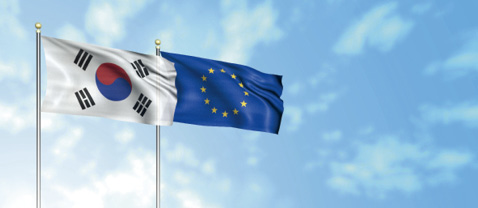
Korea and the EU Strengthen Digital Cooperation
During President Lee Jae Myung's visit to the EU, four European high-tech companies announced a combined USD 165 million in new investments in Korea, while Korea and the EU formally signed the Digital Trade Agreement (DTA). The agreement relaxes data-localization requirements and requirements for the establishment of local computing facilities, protects source code from forced disclosure, and recognizes the legal validity of electronic signatures and electronic authentication, helping reduce the cost of digital trade. The two sides also launched the Korea–EU Competitiveness Partnership, covering trade, investment, supply chains, and digital cooperation, and agreed to establish a high-level economic dialogue to coordinate economic security and industrial policy.
17th
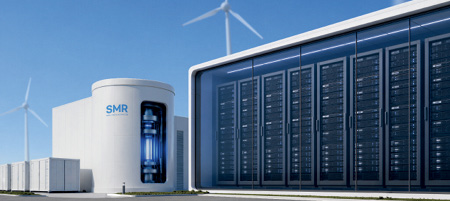
Korea Selects Candidate Site for Its First SMR, Raising Expectations for Nuclear Exports
Korea Hydro & Nuclear Power (KHNP) selected Gijang-gun, Busan, as the candidate site for Korea's first small modular reactor (SMR) project. The site is expected to host the innovative small modular reactor (i-SMR) being developed by the government, which is intended to serve as a distributed power source for industrial complexes and data centers. The government plans to complete the reactor design by 2028, obtain regulatory approval by 2030, and begin generating power in 2035. As the global SMR market continues to expand rapidly, the project is expected to strengthen Korea's competitiveness in SMR technology and support future nuclear power exports.
29th

Government Unveils Three Mega Projects for Korea's Next Leap
The government announced the Three Mega Projects for Korea's Next Leap, pledging to ensure the electricity and water supplies required by a semiconductor cluster in the Gwangju–Jeollanamdo region and AI data centers nationwide. Samsung Electronics and SK hynix plan to build four semiconductor fabrication plants in the region, while SK Group, GS, and NAVER plan to establish AI data centers across the country. The government plans to meet power demand with renewable energy, nuclear power and LNG, and water demand with available dam reserves and water currently used for power generation. However, concerns remain about the feasibility of supplying power and water on the scale required and building the necessary transmission grid.
30th
Government Downgrades Crude Oil Resource-Security Alert
The government downgraded Korea's oil supply security alert by one level, from "Alert" to "Caution," following a memorandum of understanding between the United States and Iran to end hostilities and resume shipping through the Strait of Hormuz. With tanker traffic resuming, procurement rates for crude oil and naphtha improved. Meanwhile, Korea's dependence on crude oil transported through the Strait declined from 70% to 50%. Emergency energy conservation measures, including alternating-day vehicle restrictions for public institutions and a five-day rotation system for passenger cars at public parking facilities, were lifted. Temporary measures supporting alternative crude oil imports and strategic oil-stockpile swaps were also discontinued, although supply stabilization measures for naphtha and petrochemical feedstocks will remain in place for the time being.