
A Milestone in Korea's Journey Toward Sustainable Corporate Management: Five Years of the K-ESG Alliance
The Era of ESG 2.0:
Beyond Regulatory Compliance,
Toward a New Growth Engine
By Yoon Kim, Chair of the K-ESG Alliance / Chairman of Samyang Holdings
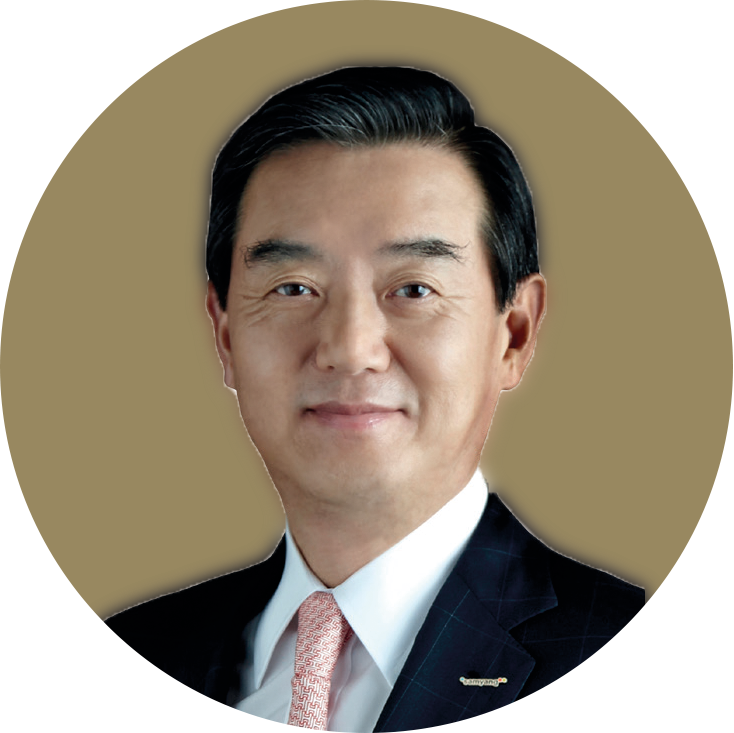
• Chairman, Samyang Holdings
• Honorary Chairman, Korea-Japan Economic Association
• Honorary Chairman, Korea-Japan Cooperation Foundation for Industry and Technology
• Vice Chairman, Federation of Korean Industries (FKI)
• Vice Chairman, Korea Mecenat Association
• Former Chairman, Korean Committee, Business at OECD (BIAC)
As geopolitical tensions in the Middle East continue to persist, uncertainty in global energy markets has reached unprecedented levels. Surging oil prices and unstable supply chains underscore that excessive dependence on any single energy source is no longer merely a cost issue; it is a fundamental business risk. Reducing reliance on fossil fuels and diversifying energy sources have therefore become not only environmental objectives but also strategic imperatives for corporate survival. Although the momentum behind ESG may fluctuate amid policy shifts during the Trump administration, today's rapidly evolving global environment ushers in new inflection points for sustainable management.
Over the past several years, the global ESG policy landscape has undergone a profound transformation. What was once largely voluntary and normative has increasingly become mandatory. The return of the Trump administration has introduced some changes in U.S. energy and environmental policies, fueling what some describe as "anti-ESG" sentiment, but the broader direction of global regulation, particularly in Europe, remains firmly intact. If anything, regulatory requirements continue to become more specific and sophisticated. The European Union's Carbon Border Adjustment Mechanism (CBAM), which is on the verge of being implemented, will place actual costs on carbon emissions, while the European Sustainability Reporting Standards (ESRS) require companies throughout global supply chains, including Korean businesses, to drive direct information disclosure and enhance corporate accountability. For Korean companies integrated into global supply chains, ESG has effectively become the new baseline for doing business.
The Korean government is moving in the same direction, recently providing greater clarity on its own roadmap for sustainability disclosures. The requirements are expected to be introduced in phases, beginning with larger listed companies, and they will serve as an important turning point in bringing the transparency and credibility of Korean corporate management up to global standards. As such, we will be charting a course through unfamiliar territory. Even large corporations will be hard-pressed to conduct climate-related risk/opportunity assessments and calculate Scope 3 greenhouse gas emissions across their supply chains. Especially, the building of systems for collecting, managing, and verifying emissions data throughout complex supply chains—including middle market enterprises and SMEs—will be challenging in the short term.
Once these disclosure requirements are introduced, however, they should be viewed as more than just another cost of regulatory compliance. Developing robust disclosure processes provides companies with an opportunity to improve resource efficiency, identify potential business risks before they materialize, and uncover new avenues for growth. Transparent disclosure is one of the most effective ways to build trust with global investors, ultimately strengthening corporate value.
To ensure the successful implementation of these initiatives, it will be critical for the government to provide full support to businesses, rather than simply increasing pressure on them. This includes education and training support for developing specialized talent, providing standardized data management infrastructure, and, above all, creating flexible, market-oriented policies that enable companies to internalize these systems without facing excessive legal burdens. Close cooperation between the public and private sectors will be essential to ensuring that regulation functions not as an obstacle, but as a stepping-stone into global markets.
This year marks my fifth year serving as the Chair of the FKI K-ESG Alliance. Seeing participation grow from approximately thirty participating companies at its launch to around sixty today demonstrates just how deeply ESG has become embedded in Korean corporate management.
The K-ESG Alliance began as an incubator dedicated to lowering the barriers to ESG adoption. Over the past five years, the Alliance has evolved into a public-private platform that brings together the legislature, government ministries, capital markets, and other key stakeholders. We have invited policymakers from relevant agencies and ministries such as the Financial Services Commission, the Fair Trade Commission, and the Ministry of Employment and Labor to engage directly with companies and receive frank feedback from the business community. Throughout this process, we have consistently advocated market-oriented policies that respect corporate autonomy rather than taking a regulation-centered approach. Several meaningful policy outcomes have emerged from these efforts, including the establishment of a legal basis for reducing administrative fines for companies with strong Fair Trade Compliance Program (CP) practices and the formation of more practical standards aimed at easing the due diligence burden on global supply chains. Faced with the growing challenge of mandatory sustainability disclosures worldwide, the Alliance has strongly advocated realistic transition periods and practical guidelines that reflect companies' actual circumstances.
More recently, we have broadened our agenda to address wider national priorities, including corporate initiatives that support work-family balance—aimed at addressing Korea's declining birth rate—and technological innovations that support decarbonization amid growing energy security concerns stemming from geopolitical instability in the Middle East. It has been deeply rewarding to build a cooperative ecosystem grounded in autonomy and accountability that bridges enterprises of all sizes, while narrowing the gap between policymakers and businesses. I believe these efforts will contribute to securing a solid, sustainable future for the Korean economy.
We are now entering a new phase, the era of ESG 2.0. Businesses are the principal actors in ESG management, and so, Korean companies must move beyond passive compliance and begin proactively reinventing their business models. The transition may be challenging in the short term, but it will become a powerful engine for growth over the long term. With businesses, government, and society working together, I am confident that in the end, ESG will usher in an era of sustainable growth.