in Story & News
FKI News

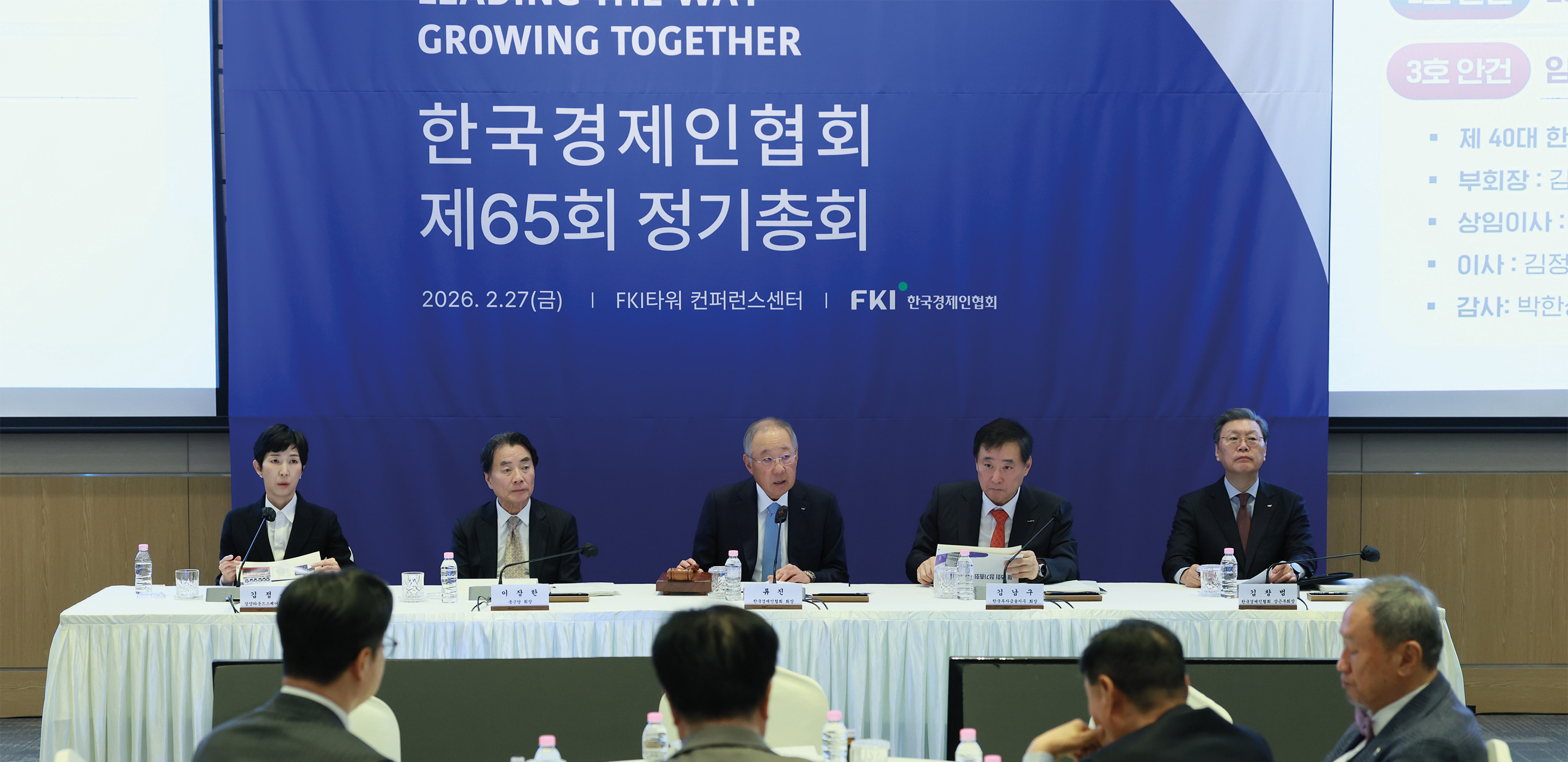
The 65th General Meeting of FKI Held
FKI held its 65th General Meeting, declaring 2026 as the inaugural year of “New K-Industry” and committing to a structural transformation of Korea’s industrial base. Chairman Jin Roy Ryu emphasized the need to identify new growth engines in the era of AI-driven transformation and to strengthen national competitiveness by providing tangible opportunities for employment and entrepreneurship for future generations. In this regard, FKI will focus on four key initiatives: securing leadership in the AI ecosystem, enhancing global standing, revitalizing regional economies and addressing labor shortages in SMEs. The organization also expanded its membership base with the addition of 20 companies from diverse industries, including Galaxy Corporation and Airbus Korea, further strengthening its role as a representative voice of the business community. FKI plans to actively reflect the diverse perspectives of its members in policy development.
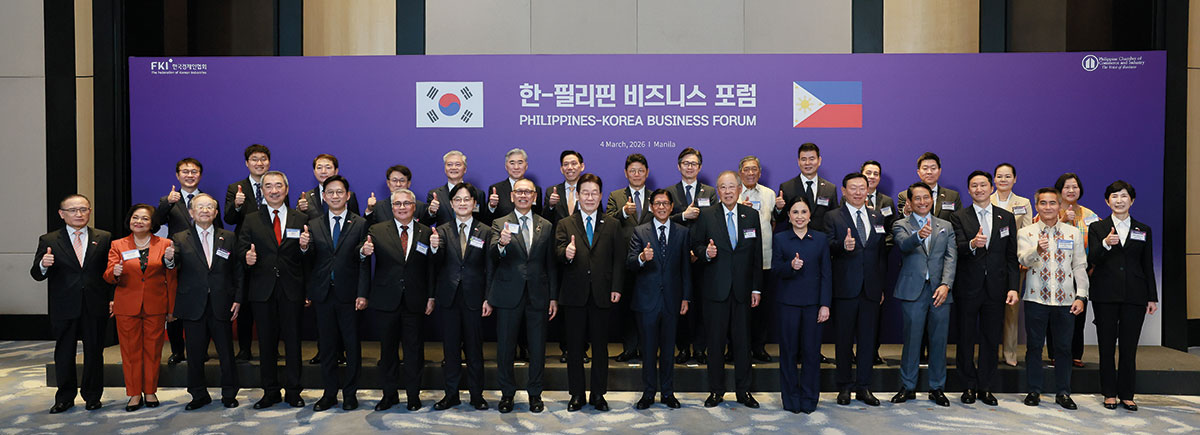
Korea–Philippines Business Forum Held
FKI co-hosted the Korea–Philippines Business Forum in Manila during President Lee Jae-myung’s state visit to the Philippines. As the first large-scale business event held since the Korea–Philippines FTA came into effect, the forum brought together approximately 250 participants, including the leaders of both countries and key business figures, to discuss forward-looking avenues for cooperation. Chairman Jin Roy Ryu proposed pairing the Philippines’ abundant resources and labor force with Korea’s advanced manufacturing capabilities to position the two countries as a key axis in global supply chains. The forum highlighted cooperation opportunities in four key sectors: critical minerals, shipbuilding, cultural and consumer goods and infrastructure. A total of seven MOUs were signed, including agreements related to nuclear power projects and distribution partnerships, providing a foundation for tangible business collaboration. Building on these outcomes, both countries aim to further strengthen partnerships across advanced industries and deepen strategic economic ties within the ASEAN market.
Korea–Brazil Business Forum Held
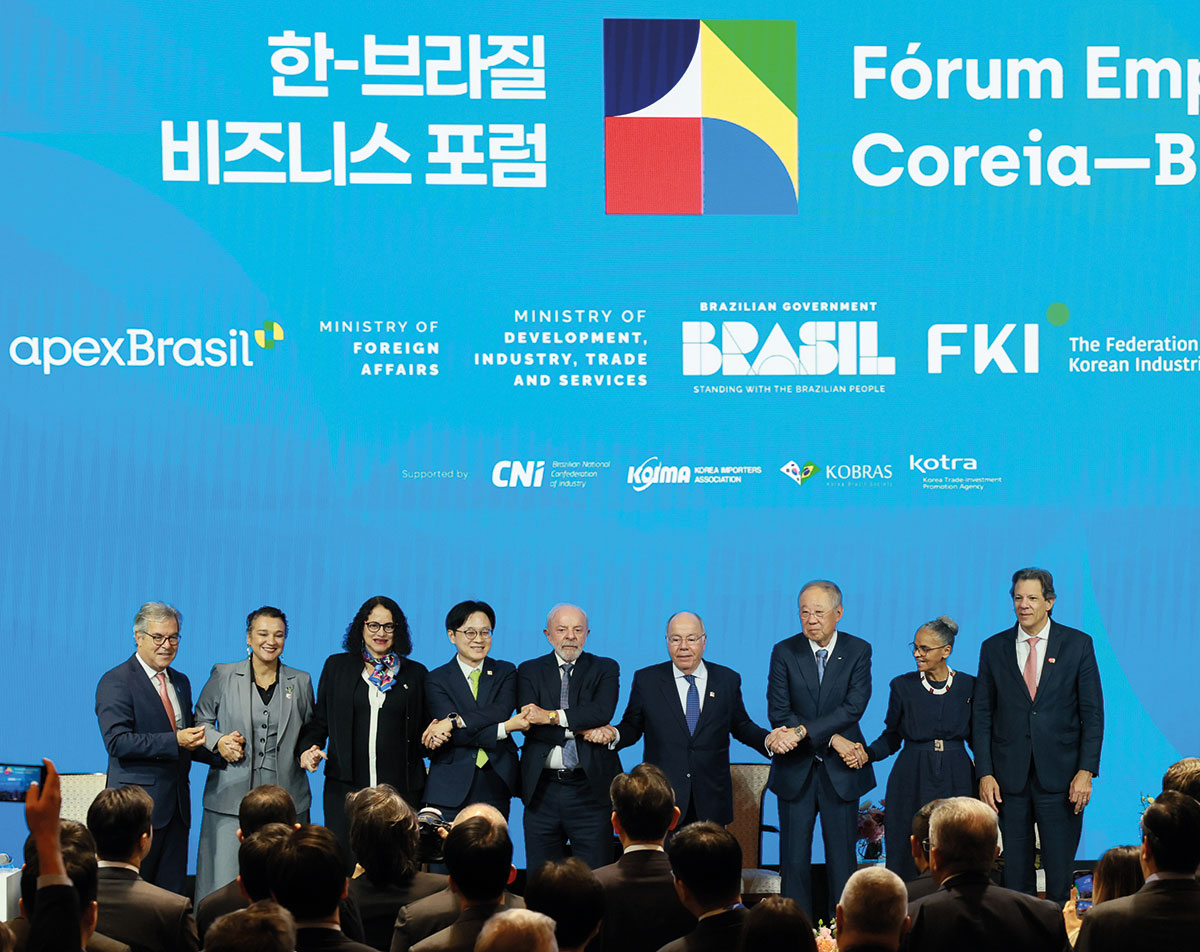
FKI, in collaboration with the Brazilian Trade and Investment Promotion Agency, hosted the Korea–Brazil Business Forum to discuss expanded cooperation in advanced manufacturing, critical minerals and AI. Held on the occasion of President Lula’s state visit to Korea, the forum was attended by approximately 400 participants from both governments and business communities. Notably, the Brazilian economic delegation comprised around 300 participants, more than double the size of the delegation that visited 21 years ago, reflecting Brazil’s strong commitment to economic cooperation with Korea.
The forum presented a collaborative roadmap across three key sectors: cultural and creative industries, agri-food and advanced manufacturing. Discussions focused on integrating Korea’s manufacturing strengths with Brazil’s resource advantages, including opportunities such as linking K-beauty with Brazilian raw materials.
Chairman Jin Roy Ryu noted that Brazil is a strategic hub in global supply chains and emphasized the need for both countries to move beyond trade, shifting toward a new phase of shared prosperity. With six MOUs signed, the forum is expected to serve as a meaningful step toward strengthening partnerships with Brazil, the largest market in South America, while enhancing supply chain stability.
KERI Projects Korea’s Economic Growth at 1.7% in 2026(1.0% Forecast in 2025)
The Korea Economic Research Institute projected Korea’s economic growth at 1.7% for 2026 in its “KERI Economic Trends and Outlook” report. While this represents a modest rebound from the 1.0% forecast for 2025, it remains below the country’s potential growth rate.
Exports in key industries such as semiconductors and shipbuilding are expected to lead growth in 2026. However, traditional manufacturing sectors face challenges in recovering capital investment due to global oversupply and weakening price competitiveness. Given Korea’s high dependence on exports, shifts in the global trade environment and exchange rate volatility are likely to be key variables for growth. KERI emphasized the need for thorough preparation against external risks, including changes in trade policies in the United States and the European Union, as well as a slowdown in China, for the recovery to evolve into a sustained phase of growth expansion.
Report Highlights Socioeconomic Costs of Socially Withdrawn Youth
According to an FKI report, the socioeconomic cost of socially withdrawn youth in Korea is estimated at KRW 5.3 trillion annually, equivalent to approximately KRW 9.83 million per individual. Among economically inactive youth, those who reported having spent the previous week “resting” without a specific reason were found to be about seven times more likely to become socially withdrawn than employed youth. The risk of isolation also accelerates as the duration of unemployment lengthens. Sang-ho Lee, head of economic affairs at FKI, noted that disconnection from social relationships is a key driver of youth isolation. He emphasized the need for systematic preventive policies that provide work experience opportunities and close monitoring, preempting the “resting” phase that leads to prolonged isolation.
Major Conglomerates Announce Regional Investment Plans
A survey conducted by FKI of 10 major conglomerates, including Samsung, SK and Hyundai Motor, indicates that approximately KRW 270 trillion will be invested in regions outside the Seoul metropolitan area over the next five years. These investments will focus on advanced and strategic industries such as semiconductor facility expansion, battery R&D, AI and carbon neutrality infrastructure. The plans reflect proactive efforts by companies to position regional areas as key growth hubs and to strengthen local industrial ecosystems. If executed as planned, the investments are expected to generate approximately KRW 525 trillion in production inducement effects over five years, providing significant momentum for revitalizing regional economies facing structural challenges.
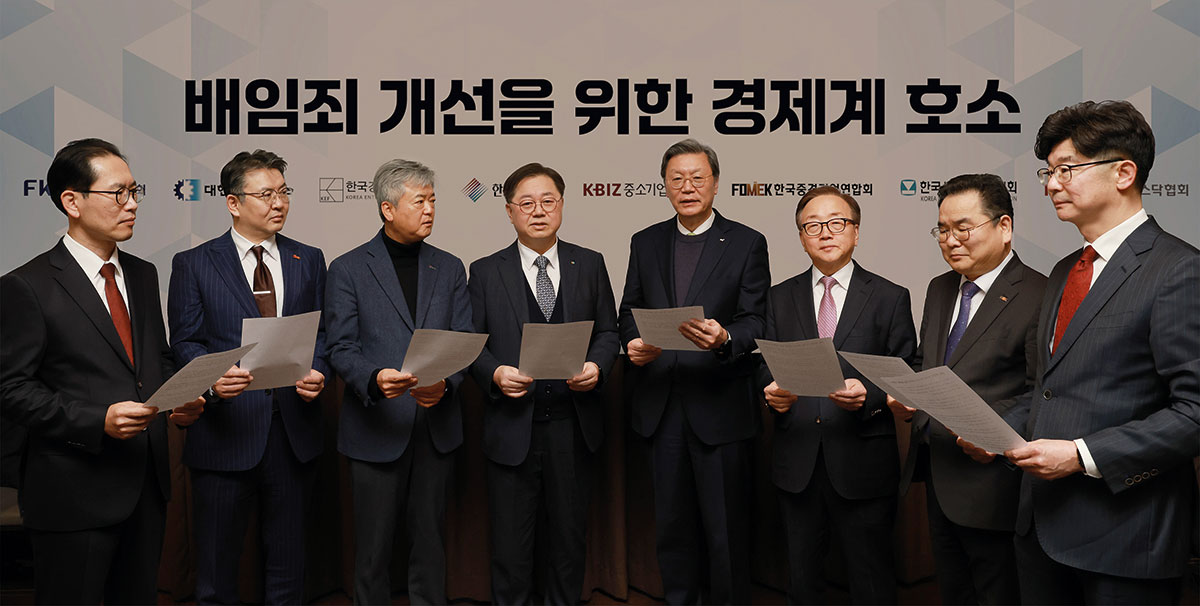
The Eight Major Economic Organizations Issue an Appeal and Submit Recommendations for Improving the Breach of Trust Law
The eight major economic organizations, including FKI and the Korea Chamber of Commerce and Industry, issued a joint statement and submitted policy recommendations to the National Assembly and the Ministry of Justice, calling for a comprehensive reform of breach of trust provisions. They argued that the current legal framework exposes even legitimate business activities to criminal liability, placing an excessive burden on economic activity. The business community proposed a full overhaul of breach of trust provisions under the Criminal Act, Commercial Act and the Act on the Aggravated Punishment of Specific Crimes, or restructuring the legal framework to address such cases under fraud or embezzlement statutes. They also emphasized the need to clarify the elements of intent and actual damage in any alternative legislation. In addition, the organizations called for excluding from mandatory cancellation requirements treasury shares acquired in the course of M&As. They further highlighted the importance of establishing a statutory basis for the business judgment rule and easing overlapping regulations to create an institutional environment that supports corporate investment and innovation.
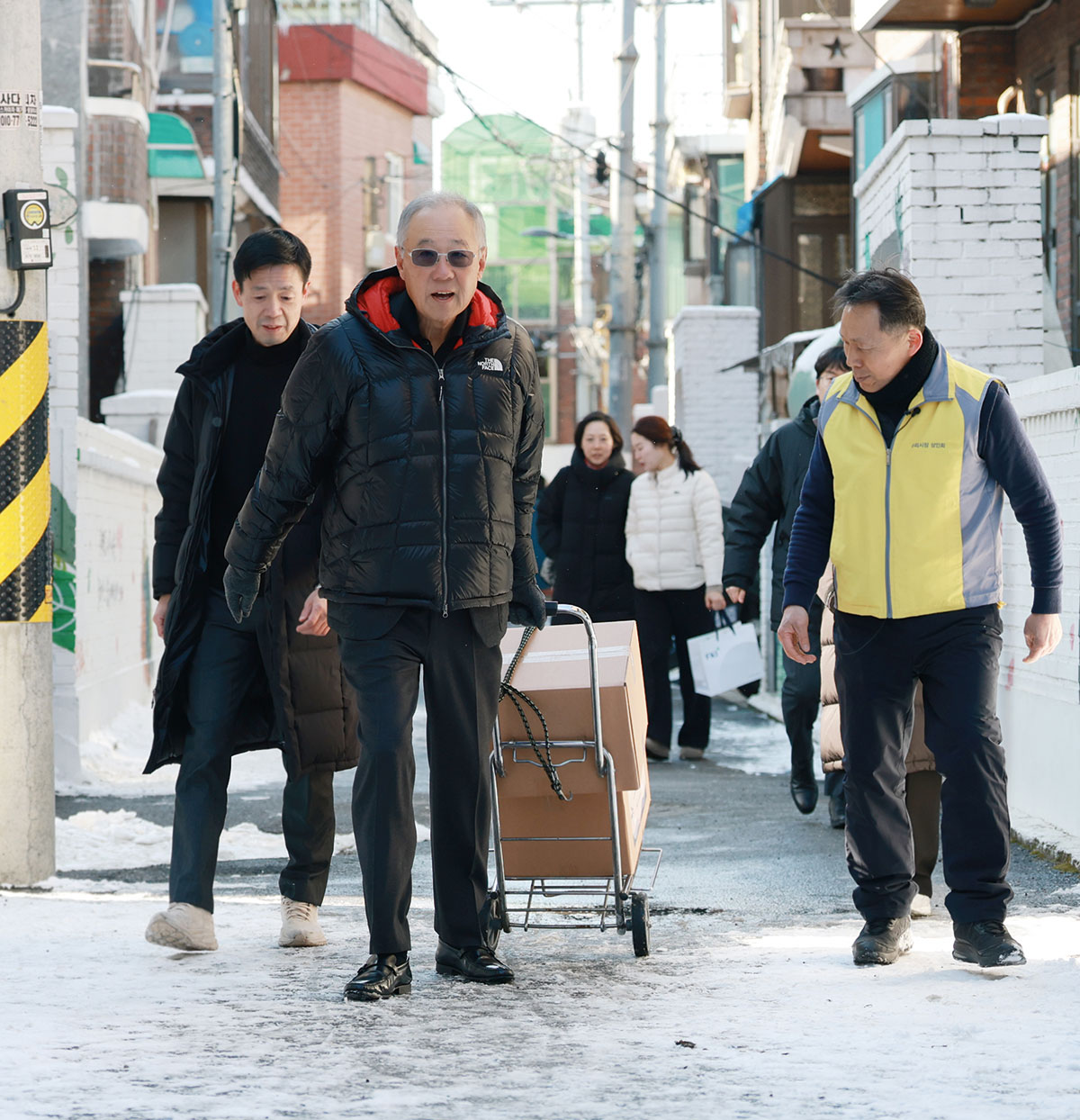
FKI Visits a Traditional Market Ahead of Lunar New Year and Shares Holiday Warmth
Ahead of the Lunar New Year holiday, FKI Chairman Jin Roy Ryu and employees visited Woori Market in Yeongdeungpo, Seoul, to support small merchants and carry out community outreach activities for vulnerable groups. The initiative was designed to help revitalize traditional markets affected by the economic slowdown while sharing holiday warmth with local communities. Chairman Ryu personally purchased food items such as rice and fruit from market vendors, while listening to their concerns. The goods were assembled into holiday care packages and delivered directly to elderly individuals living alone and households with disabilities, offering both material support and encouragement. This initiative is part of the ongoing “Warmth Campaign” launched last year, reflecting FKI’s continued commitment to community-centered social responsibility. By going beyond one-time support and combining efforts to stimulate domestic consumption with acts of social solidarity, the initiative aims to contribute to fostering a virtuous cycle of coexistence and shared growth across society.
Business Survey Index (BSI) for March 2026 Announced
The FKI’s Business Survey Index (BSI) for the top 600 companies by revenue showed the index rising to 102.7 this March, surpassing the benchmark level of 100 for the first time in four years. In particular, the outlook for the manufacturing sector increased by 17.8p over the previous month to 105.9, reaching its highest level in four years and ten months.
FKI attributed the improvement in business sentiment to stronger export performance in key industries at the start of the year, as well as a base effect from fewer operating days in February. While most manufacturing sectors, including general machinery, precision equipment, and textiles and apparel, shifted to a positive outlook, non-manufacturing industries remained slightly below the benchmark at 99.4. By category, export expectations reached their highest level in one year and nine months, whereas domestic demand and investment remained below the benchmark, indicating that the recovery in sentiment has not yet spread evenly across all areas.
Sang-ho Lee, head of economic affairs at FKI, noted that business sentiment, which had remained subdued amid prolonged economic slowdown, has undergone a meaningful improvement. He emphasized that to sustain this momentum beyond a short-term rebound, the government and the National Assembly should strengthen institutional support, including with regulatory reforms.
FKI Releases 2025 Report on Corporate Social Value at Major Companies
According to an FKI survey of the top 500 companies by revenue, both the scale and impact of corporate social contribution activities, as well as employee participation, increased across the board in 2024. Average social contribution expenditure per company reached approximately KRW 16.6 billion, marking the highest level since the survey began in 2002. Total spending also exceeded KRW 5.38 trillion, an increase of more than KRW 1 trillion compared to the previous year, indicating a growing trend of companies reinvesting profits into society.
Employee participation also rose significantly, with average annual volunteer hours per employee reaching 5.8, the highest level in the past five years. Newly introduced programs were concentrated among children’s and youth initiatives (24%), followed by community development and environmental protection. Notably, there has been a growing emphasis on strategic approaches that leverage companies’ core competencies and infrastructure to address social challenges. Reflecting this trend, FKI identified “LINC,” which connects local communities, industries and technology, as the key theme for the year. Among sustainability priorities, the social dimension, including safety, health and shared growth, has emerged as a top focus.
As corporate social contribution evolves beyond unilateral support into meaningful partnerships that drive social change, there is a growing need for policy environments that respect corporate autonomy and enable the continued development of such innovative initiatives.
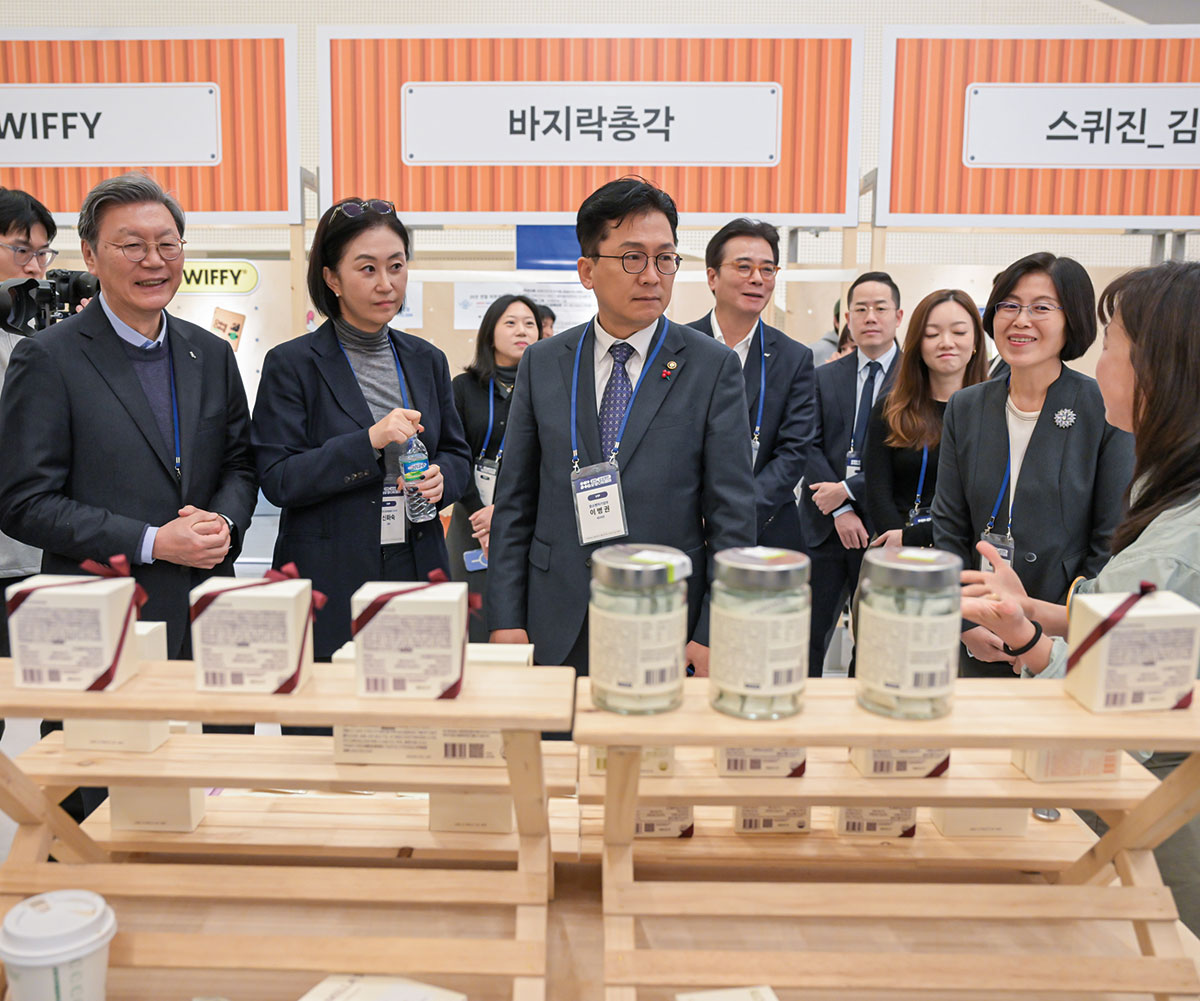
The “WE! Partners Fair” Held
FKI, in partnership with the Ministry of SMEs and Startups and the Small Enterprise and Market Service, hosted the “WE! Partners Fair” at DDP in Seoul to discuss growth strategies and collaborative support measures for small business owners. Major platform companies including Naver, Kakao, Amazon, and Shopee participated in the event, offering consultations and tailored guidance on expanding online sales channels and entering global markets. According to one survey, 77% of small business owners expect their sales in 2026 to either decline or remain stagnant compared to 2025, with rising fixed costs and intensifying competition identified as the main reasons. During the event, sales exhibitions, platform onboarding consultations, and AI technology experience programs were held, providing practical opportunities to enhance digital competitiveness and explore new market channels for small businesses.