
in Story & News
What Aerospace Engineering Can
Teach Us About Risk Management
Fault Tolerance: Why a Resilient
System Matters More Than Perfect Design
Organizational success does not depend on flawless execution. Just as a rocket, whose tens of thousands of components must work in concert, can still complete its mission despite imperfections, corporate survival depends on fault tolerance - the ability to absorb and manage defects at the system level.
By Gwang-rae Cho, Former President of the Korea Aerospace Research Institute (KARI)
The Non-Negotiable Red Line:
A Leader’s Judgment in Defining the Nature of Risk
Ahead of the launch of Korea’s first scientific rocket, KSR-I, in 1993, an “egg-sized” air bubble was discovered inside the propulsion system. Despite years of investment and mounting pressure to proceed, the research team decided to halt the launch altogether. In a solid rocket motor, such a defect, regardless of its position, constituted a critical failure that could not be tolerated.
This decision did not rest on intuition. It reflected an uncompromising adherence to first principles. The moment convenience is allowed to override principles, an error can escalate into catastrophe. Overlooking even a 0.01% variable can lead to the collapse of an entire system. This is not a matter of willpower, but of design philosophy.
In corporate management, sunk costs and external expectations often lead organizations to misclassify critical risks as manageable variables. A leader’s true capability lies in distinguishing between errors that can be tolerated and those that require everything to stop until the issues are addressed.
The Logic of Fault Tolerance:
Designing with Error as a Constant
Aerospace engineering strives for zero errors. In practice, however, that standard can never be fully achieved. In systems made up of hundreds of thousands of components, the possibility of failure under extreme conditions such as vacuum and high temperatures always remains. That is why systems are designed with fault tolerance mechanisms that prevent individual failures from cascading into systemic breakdowns.
The core principles of this approach are isolation and redundancy. Faults are contained by physically separating systems or using barriers, while critical components are duplicated or triplicated. Even in a field where nothing can be left to chance, building in redundancy is considered a condition of survival, rather than inefficiency.
Organizations that prioritize efficiency alone risk becoming brittle, as a single failure can disrupt the entire organization. One of the most complex decisions a leader can make is that of where to build strategic slack into the system - and how much of it to allow, whether through supply chain diversification or backup arrangements for key personnel.
Managing Off-Design Conditions:
Proving Resilience Under Extremes
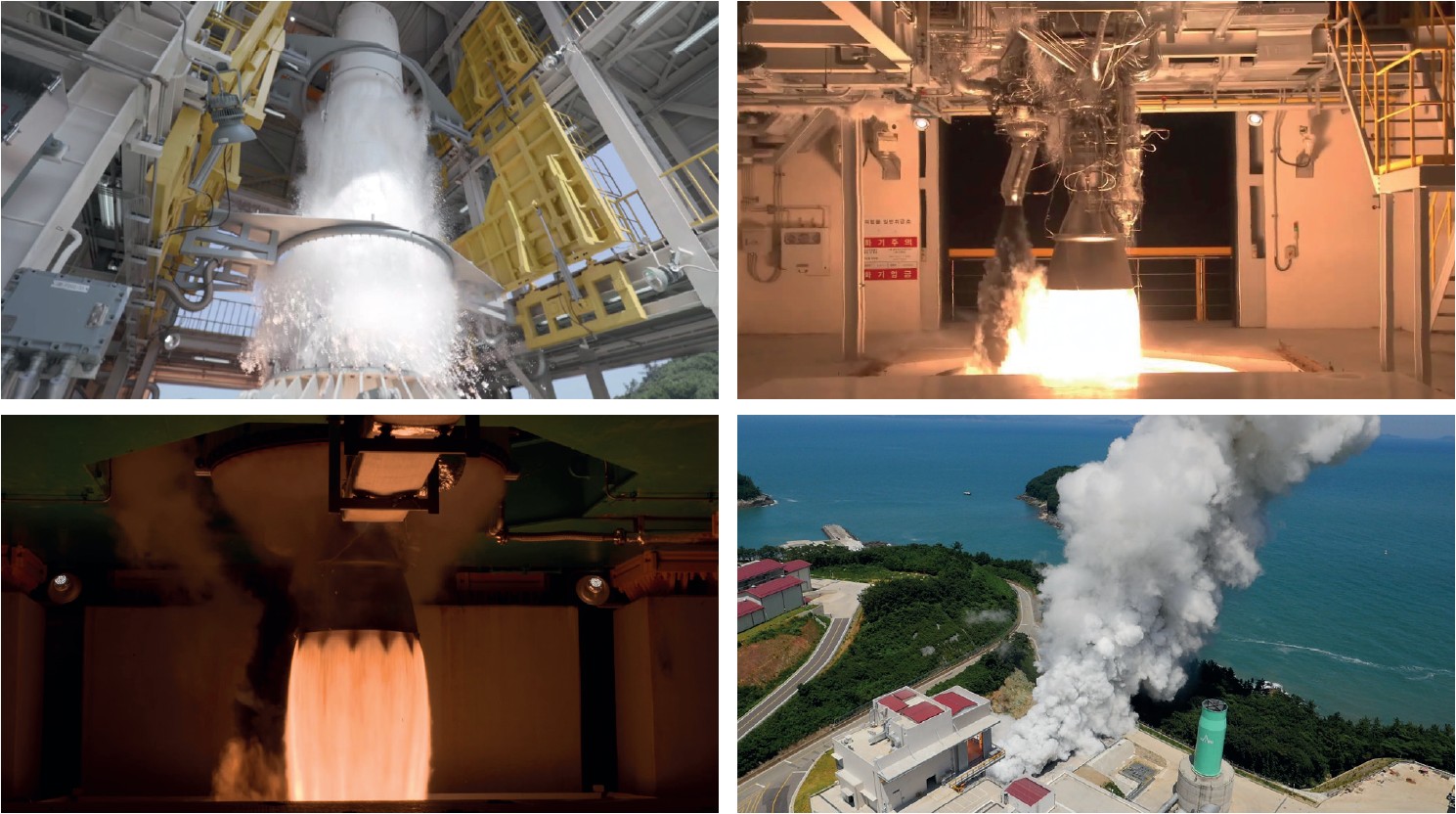
No hardware operates strictly within design specifications. During flight, variables such as pressure, flow rate, and temperature fluctuate continuously. Aerospace engineers therefore conduct repeated testing under off-design conditions, deliberately pushing engines beyond their limits to evaluate resilience. The development of a single 75-ton engine may involve 150 ground combustion tests and over 20,000 seconds of accumulated burn time, all to assess how the system performs outside its nominal operating window.
Business environments are similarly unpredictable. Market volatility, sudden regulatory changes and competitive disruptions represent off-design conditions. Organizations that rely solely on standard operating procedures are liable to fail in the face of unexpected crisis. This is why stress testing, which assesses how an organization would perform under extreme and atypical scenarios, must be central to the practice of leadership. Optimizing efficiency in stable conditions and ensuring survival in crises are fundamentally distinct design challenges.
The Discipline of Procedures and Scenarios:
An Operating System That Can Absorb Human Error
Human error is inevitable, and aerospace engineering does not rely on individual capability to overcome it. Rather, products are designed to absorb errors into the system. Tasks are carried out through mandatory cross-verification, with one operator performing the task and another verifying and signing off on it. Individual intuition or ad hoc decisions are not permitted, and even verbal communication adheres to predefined scripts.
During the first launch of Naro-1, a failure to detect an electrical discharge issue in advance was ultimately traced not to individual oversight, but to insufficient ground testing - in other words, a failure to build reliability into the system. Errors did not arise from carelessness, but from gaps within the system itself.
The strongest teams are not those driven by a single exceptional leader, but rather the ones equipped with an operational system robust enough to filter out errors automatically, regardless of who occupies a given role. Before demanding performance, leaders must first design procedural frameworks that prevent mistakes from escalating into crises.
Sustainable Know-How:
People as the Final Key to System Integrity
The Apollo program successfully landed humans on the moon in 1969, yet today the United States would still need to invest significant time and resources to rebuild that capability. Extensive records remain, but the tacit knowledge and refined judgment once embodied in the people behind the system have faded over time. Documentation provides structure, but human expertise is what brings a system to life and enables course correction in moments of crisis.
Organizations often aspire to become flawless. From the perspective of aerospace engineering, however, a truly resilient organization is not one without defects, but one that recognizes defects as a constant and develops both the systems and the people capable of overcoming them.
Failure and error are the small but unavoidable stresses that arise during the course of growth. What differentiates organizations is their ability to embed those experiences in the system itself and convert them into reliability for future operations. In the end, the real question is whether an organization is chasing the illusion of zero error, or building the fault tolerance that enables mission success under any conditions.