in Story & News
Forged at Sea,
Steering Toward Greater Abundance
Dongwon Group
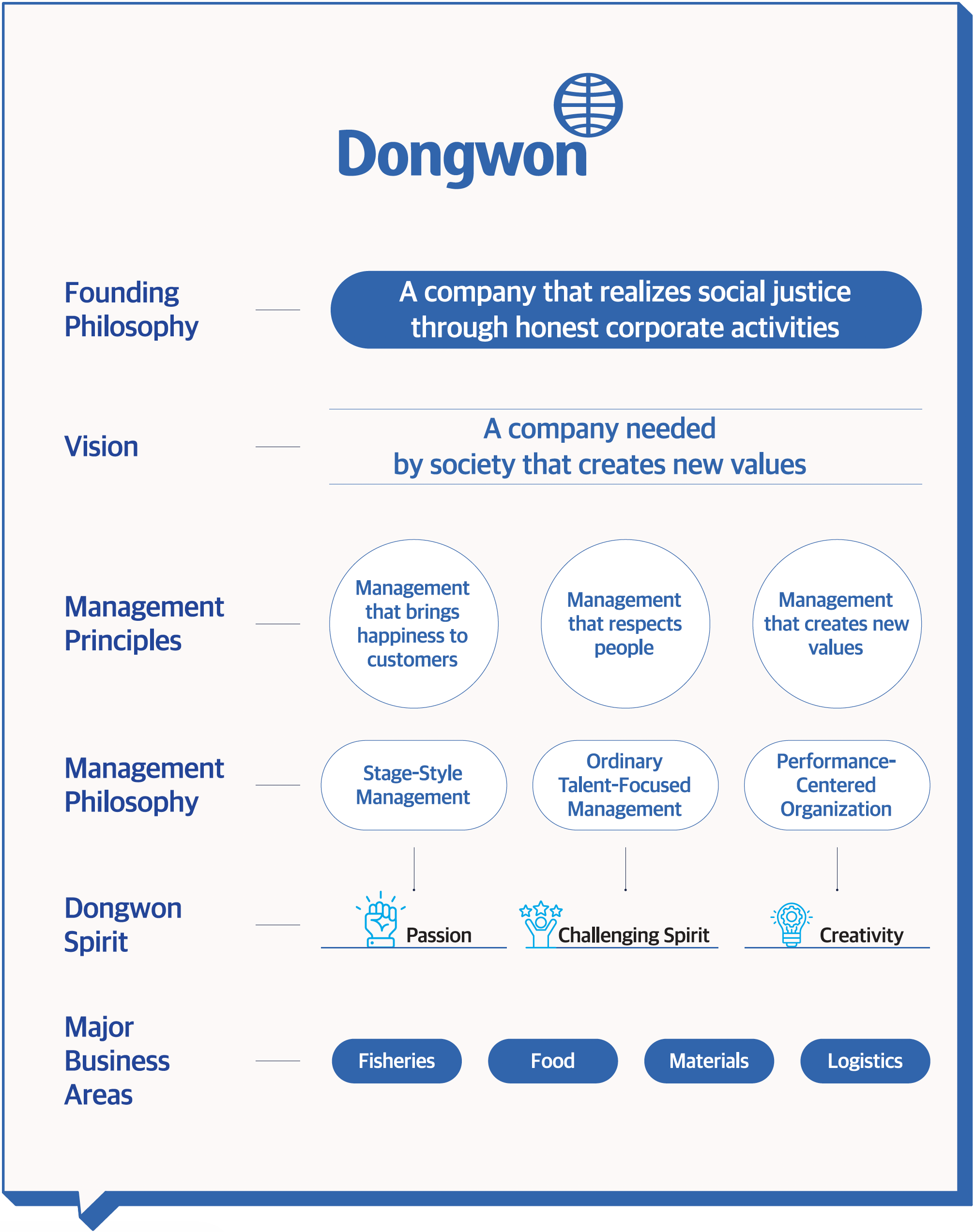
Founded in 1969 with a single deep-sea fishing vessel, Dongwon Group has grown beyond fisheries into a diversified enterprise spanning food, packaging, logistics and advanced materials, establishing itself as a comprehensive lifestyle conglomerate. Guided by its founding philosophy of “Realizing social justice” through sincere business practices, the group has continuously created new value in response to changing times, broadening the scope of everyday life.
By Na-yeon Kim
Photo Credit Dongwon Group
Serving the Nation through Fisheries, Starting with a Single Vessel
Dongwon Group’s history began with the pioneering spirit of its Honorary Chairman, Jae-chul Kim. On April 16, 1969, Dongwon Industries was established with the philosophy of serving the nation through fisheries, based on the conviction that the ocean was a vital food resource that could contribute to the national economy. At a time when both expertise and infrastructure in deep-sea fishing were limited, Dongwon built a competitive edge by proactively developing fishing grounds and techniques, laying the foundation for the growth of Korea’s fisheries industry.
Even during the oil shocks of the 1970s, Dongwon continued to invest boldly and modernize its fleet, decisions that would later drive its expansion. A pivotal moment came in 1982, when Korea’s first canned tuna product, Dongwon Tuna, was launched. By transforming tuna from a perceived luxury item into an everyday source of nutrition, the brand has surpassed cumulative sales of 8 billion cans and continues to lead the market.
As Dongwon grew, ethical management also took firm root. In 1991, Dongwon voluntarily paid one of the highest inheritance and gift tax sums of the time in connection with the transfer of shares to the founder’s children. The move became a symbolic example of transparency in corporate governance.
“Chain Innovation”: Deepening the Core Business to Drive Future Growth
Dongwon’s approach to innovation is rooted in the management philosophy of preparing the next fishing ground while current operations are thriving. Rather than pursuing diversification for its own sake, the group pursues a “chain innovation” strategy that deepens its core business, identifies linkages for innovation and connects them to new growth areas. When entering new sectors, Dongwon focuses on using capabilities it has already developed through existing businesses.
A key example is its expansion from packaging into secondary battery materials. The metal processing expertise developed through tuna can manufacturing, along with experience in retort pouch production, evolved into advanced aluminum adhesion and coating technologies. This, in turn, enabled entry into the cathode foil and cylindrical battery can markets for secondary batteries.
Dongwon’s M&A strategy has also been focused on strengthening its value chain. The acquisition of StarKist, the largest tuna brand in the United States, in 2008 marked the beginning of its global fisheries network. This was followed by the 2014 acquisition of Techpack Solutions, a leading manufacturer of glass bottles, cans and PET containers, completing vertical integration in the packaging business. In 2016, the acquisition of Dongbu Express significantly enhanced logistics capabilities, leading to the establishment of Dongwon Loex, which now serves as a key link connecting fisheries, food and packaging businesses. Through each new expansion, Dongwon has consistently prioritized synergy with its existing operations, reinforcing a cohesive chain of innovation.
From Fisheries to Food, Expanding the Industrial Ecosystem
Dongwon Industries has established a global fisheries supply chain, with fleets operating across major fishing grounds in the Pacific and Indian Oceans. At the same time, it has strengthened its commitment to responsible fishing by actively pursuing Marine Stewardship Council (MSC) certification, contributing to setting standards for sustainable fisheries.
These capabilities have extended into a broader food value chain. Dongwon F&B has established itself as a comprehensive food company through brands such as Yangban, Richam and Denmark. More recently the company has leveraged its tuna processing expertise and expanded into the global pet food market with its brand Nutri Plan.
In the B2B segment, Dongwon Home Food is strengthening its specialization across the full range of foodservice operations. It has built an integrated system spanning group catering and food distribution, while also supplying livestock products to the food service industry through its meat business. In addition, by integrating customized seasoning solutions, the company has introduced health-oriented brands such as Vivid Kitchen, which focuses on low-calorie and low-sugar offerings, thereby diversifying its portfolio in line with evolving consumer preferences.
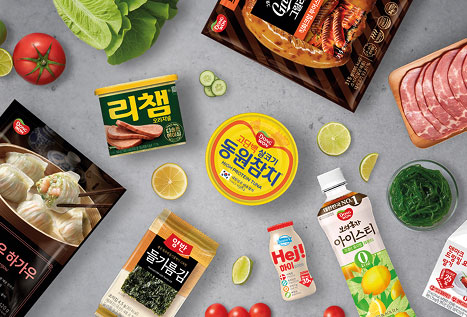 The diverse product portfolio of Dongwon F&B
Advanced Materials and Logistics as the Arteries of Future Growth
Dongwon’s expertise has expanded beyond food packaging into advanced materials. Dongwon Systems, a leading packaging company in Korea, has extended its business from food packaging to secondary battery packaging. Its product lineup, which includes cylindrical battery cans and pouch materials, has repositioned the company from a traditional manufacturing enterprise to an advanced materials provider.
In logistics, Dongwon Loex has established a cold chain system that integrates transportation, port operations and refrigerated storage infrastructure. The Dongwon Global Terminal Busan, which opened at Busan New Port in 2024 as Korea’s first fully automated port terminal, serves as a key platform for strengthening the group’s ability to respond to global supply-chain demand.
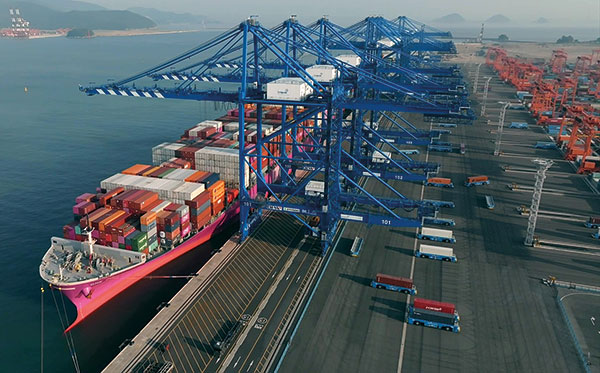 Fully automated port terminal, DGT (Dongwon Global Terminal Busan)
Redefining Traditional Industries with Digital Innovation and AI-Driven Management
Dongwon is actively transforming its operations through an AI-centered management approach. By integrating artificial intelligence across its fisheries, food, materials and logistics businesses, the group is accelerating its digital transition. Examples include AI-based video analysis systems in food manufacturing processes and the introduction of “Tuna Buddy,” a chatbot designed to support foreign crew members, both of which enhance operational efficiency and safety. These initiatives go beyond the adoption of new technologies, reflecting efforts to create new value by combining existing capabilities with AI.
Dongwon’s journey, which began at sea, continues to evolve. Just as it once helped chart a new course for Korea’s fisheries industry amid challenging conditions, the group is now setting its course toward the next century, guided by principled management and driven by AI-powered innovation.