in Issue & Trend
February
11th
Exports Reach Record High, Dependence on Top 10 Firms Also Peaks
Korea’s exports surpassed USD 700 billion for the first time last year, but the share accounted for by the top 10 companies also reached a record high of 39.0%, the highest level since records began in 2010. In the fourth quarter alone, this share rose to 43.4%, indicating that export growth has become increasingly concentrated among a small number of large corporations. While electrical and electronics exports surged on the back of the semiconductor boom, petrochemicals and textiles and apparel declined. Consumer goods exports, including automobiles, also showed sluggish performance. By region, exports to Southeast Asia and Latin America increased, while shipments to the United States and Japan declined. This suggests that concentration by product category, company, and market has intensified despite overall export growth.
23rd
Power Supply Constraints Delay AI Data Center Development in the Seoul Metropolitan Area
Infrastructure bottlenecks caused by power supply shortages are increasingly hindering the development of AI data centers in Korea. Of 195 applications for new data center construction, only four have received final approval. Key factors include delays in expanding transmission networks in the Seoul metropolitan area and rising electricity costs. In addition, the current regulatory framework does not allow large-scale direct power purchase agreements (PPAs). This raises concerns that Korea’s AI competitiveness may fall behind that of the United States and Japan. Industry stakeholders are closely monitoring the National Assembly’s review of a proposed special act aimed at addressing supply-demand imbalances and permitting direct electricity transactions.
25th

March
4th
Ministry of Justice Announces K-Core Visa and Overhaul of Work Visa System
The Ministry of Justice has unveiled its “Future Immigration Policy Strategy 2030,” aimed at attracting high-quality foreign talent and addressing regional population decline. As part of the plan, a new “K-Core Visa” will be introduced to support the employment of vocational college graduates in regional manufacturing industries. Eligibility for the “Top-Tier Visa,” designed for highly skilled talent, will be expanded to include universities and research institutions, with a target of securing 350 individuals by 2030. A new “Skilled Agriculture and Fisheries Visa” will also be introduced to support long-term residency for experienced workers in relevant sectors. The current employment visa system, which consists of 10 categories and 39 subtypes, will be simplified into a three-tier structure based on skill level. To prevent illegal brokerage, the government plans to introduce a registration system for foreign talent recruitment agencies and establish a pre-screening system for high-risk applicants. The policy marks a shift away from reliance on low-skilled labor toward retaining mid-level technical workers trained in Korea and highly skilled science and technology professionals in regional communities.
4th
Rising Logistics Costs and Oil Prices Strain Korean Manufacturing
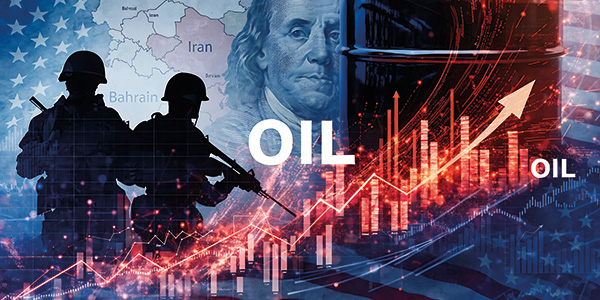
A surge in shipping rates and oil prices driven by geopolitical risks in the Middle East is creating a twin threat of rising costs and delivery delays for Korea’s key export industries, including automobiles, electronics and petrochemicals. As global shipping lines reroute around the Cape of Good Hope, transit times have increased by up to two weeks and emergency surcharges have been imposed. This has disrupted Hyundai Motor Company’s Middle East production strategy and affected logistics operations at Samsung Electronics and LG Electronics. The petrochemical industry is seeking alternative supply chains in response to rising naphtha prices and unstable import routes, while refiners are implementing contingency measures such as diversifying crude oil sources and utilizing strategic reserves.
11th
Major Conglomerates Announce Large-Scale Treasury Share Cancellations
Major Korean conglomerates, including Samsung Electronics and SK Inc., have announced large-scale treasury share cancellation plans in line with the implementation of the third revision of the Commercial Act, which effectively mandates the cancellation of treasury shares. Samsung Electronics plans to cancel KRW 16 trillion worth of treasury shares in the first half of the year, while SK Inc. will cancel KRW 4.8 trillion worth, equivalent to approximately 20% of its total outstanding shares. Companies such as KCC and LOTTE Corporation have also joined the move. The initiative is intended to enhance shareholder value; however, the business community has raised concerns that mandating the cancellation of all treasury shares, including those acquired prior to the law’s implementation, could limit their financial flexibility. They have called for supplementary measures that take into account corporate stability during the implementation process.
15th
BTS Comeback Concert at Gwanghwamun Expected to Generate USD 177 Million in Economic Impact
According to Bloomberg, the free concert scheduled for March 21 at Gwanghwamun Square is expected to generate approximately USD 177 million, or about KRW 266 billion, in economic impact for Seoul, taking into account potential spending on air travel, accommodation, food, merchandise and streaming services. Ahead of the event, nearby accommodations have been fully booked, and retailers are launching related marketing campaigns, driving a surge in demand. Experts view the concert as a potential turning point for the revival of Korea’s tourism industry, driven by K-content. The government is also considering expanding large-scale performance infrastructure, including the construction of a 50,000-seat dome stadium, to support the sustainable growth of K-pop.
March
25th
Government Launches Nationwide “Everyone’s Startup Project”
The government has launched “Everyone’s Startup Project” to promote balanced regional growth and revitalize the startup ecosystem through nationwide participation. To address the concentration of startups in the capital region, more than 70% of the 5,000 selected participants will be drawn from non-metropolitan areas. The final winner will receive over KRW 1 billion in business funding. Approximately 500 successful entrepreneurs will participate as mentors, sharing their expertise. In addition, a “Challenge Experience Certificate” system will be introduced to recognize failed ventures as valuable experience and encourage second attempts. The government also plans to establish a dedicated fund worth KRW 50 billion and build an online platform to support a sustainable startup infrastructure.
26th
OECD Lowers Korea’s Growth Forecast to 1.7%
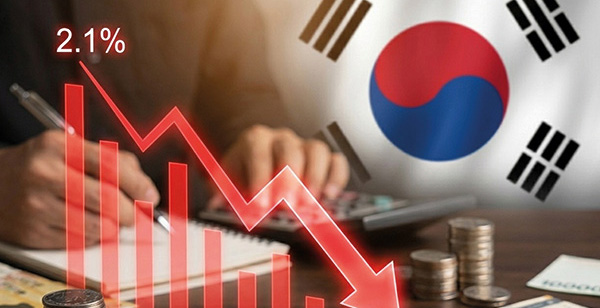
The OECD has lowered Korea’s economic growth forecast for the year from 2.1% to 1.7%, reflecting rising energy costs driven by heightened risk in the Middle East. Given Korea’s high dependence on Middle Eastern energy, prolonged conflict is expected to weigh on production. The inflation forecast has been raised from 1.8% to 2.7%. The OECD warned of stagflation risks characterized by low growth and high inflation and raised the average inflation outlook for G20 economies to 4.0%.
31st
Government Introduces Strategic Oil Reserve Swap to Stabilize Supply

The Ministry of Trade, Industry and Energy has introduced a “strategic oil reserve swap” system to address supply instability resulting from tensions in the Strait of Hormuz. Under this system, government reserves will be temporarily loaned to refiners and later replenished with replacement crude. Korea’s four major refiners have already secured more than 20 million barrels of alternative crude from sources such as Brazil and Kazakhstan for delivery by June. The new system is expected to offset supply gaps caused by transportation delays of up to three weeks. The government anticipates stable crude supply in the first half of the year through reserve releases and alternative sourcing, and will continue to monitor supply chains for key raw materials such as naphtha and helium in case of a prolonged conflict involving Iran.
31st
2027 Budget Guidelines Finalized with Focus on AI, Regions and Inequality
The government finalized its 2027 budget guidelines, which feature the largest-ever fiscal shake-up. The plan includes a 15% reduction in discretionary spending, a 10% cut in mandatory expenditures and the elimination of 10% of all programs. The savings will be redirected toward four priority areas: AI transformation, region-led growth, inequality reduction, and strengthening public safety and security. Key measures include providing up to KRW 20 trillion over four years to newly merged local governments and establishing a dedicated semiconductor fund to ensure stable investment conditions in advanced industries. Total government spending for next year is expected to approach KRW 800 trillion for the first time, reflecting an expansionary fiscal stance and the effects of supplementary budget measures.