
The Advent of the Physical AI Era
Atlas Steps Out of the Factory
The Coming Era of Robot
Commercialization
With world-leading robotics capabilities, Boston Dynamics is preparing to expand beyond the factory and into everyday life. At the forefront of this transition is Zachary Jackowski, who leads the development of “Atlas,” a next-generation humanoid robot. In this interview, he reveals Boston Dynamics’ distinct development philosophy, its manufacturing innovation in collaboration with the Hyundai Motor Group, and his outlook on a future where humans and robots coexist.
By Na-yeon Kim
Photo Credit Boston Dynamics
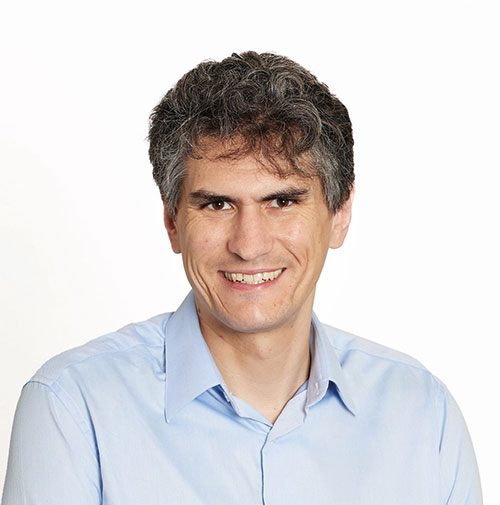
Zachary Jackowski
- Chief Product Technology Officer(CPTO)
- Lead of Atlas at Boston Dynamics
Q.You have been leading some of Boston Dynamic’s most challenging projects, from serving as a chief engineer of Spot and now overseeing Atlas. How do you define physical AI?
Physical AI means putting an advanced artificial intelligence system, built on powerful foundation models, in a physical form factor like a robot that can directly interact with the world. These kinds of systems have behaviors learned from data rather than programmed like in traditional automation.
Q.We understand that you underscore the philosophy that producing great robots requires thinking about the system in its entirety, from cache coherence to metallurgy. Could you give us examples of how this philosophy is reflected in the development processes and research strategies for Atlas, in particular, and other robots at Boston Dynamics?
At Boston Dynamics we strongly believe in colocated, close-knit cross-functional teams. We prefer to recruit staff members who are experts in a particular area but are capable and interested in a wide variety of disciplines, like Mechanical and Electrical engineering, or Software Engineering and Business. At all phases of the product lifecycle, from research proposals to product sustaining engineering, we have a process in which we openly publish reviews and solicit feedback from experts across the organization.
Q.Recently, the Software-Defined Facory (SDF) transformation and a strategy for introducing Atlas have been announced, and the demonstrations at CES that showcased various robots have heightened expectations. How do you envision the end-stage implementation of physical AI in Hyundai Motor Group’s manufacturing operations?
Initially we’ll see robots built with Physical AI technology filling the roles in factories that have historically been uneconomical to automate, like sequencing and general assembly, allowing automation percentages to go up, which results in the traditional outcomes of improved quality and product pricing. Over time the flexibility element of the SDF will become dominant, where instead of the majority of a plant being fixed automation, it will have fast to reconfigure flexible automation based on Physical AI. These fully software-defined plants will be able to flex capacity and introduce new products much more quickly and economically.
Q.What are some key points of differentiation for your approach, relative to other companies?
We know that getting physical AI based robots to work really well is going to take intensive development, so we’re focused on a smooth ramp up of task complexity in industrial environments, rather than jumping directly to commercial and consumer markets. Industrial environments have repeatable tasks, understood safety standards and training, and are technologically savvy. We also put a strong emphasis on safety, building our systems with similar systems and techniques as top-tier autonomous vehicles.
Additionally, we can leverage the industrial data that Hyundai Motor Group uniquely possesses. Hyundai Motor Group is one of the few companies able to secure the critical data required to realize Physical AI across the entire value chain—including manufacturing, logistics, sales, and customer operations. This breadth of real-world, cross-industry data enables us to develop practical, deployable applications grounded in actual operating conditions. In particular, on the manufacturing side, we plan to train robots using SDF data so they learn how to work alongside people—and evolve to become faster, smarter, and safer over time.
Next, we have deep experience in bringing mobile robots to market that newer players in the industry lack. Atlas will be our 3rd product platform launched this decade, and we now have thousands of Spot and Stretch robots operating with major customers all over the world. We know what it takes to build reliable robots that deliver real ROI at scale.
Finally, we are also differentiated in the technical specifications of our new humanoid robot itself. Our robot is designed for real work, capable of lifting up to 30 ㎏ and robust enough to handle a variety of temperature and (-20° to 40°C) and weather conditions (IP67 rating). It has 56 degrees of freedom and can reach up to 2.3 m, plus 360 degree cameras and fully rotational joints for continuous range of motion. Put simply, Atlas will perform in ways that exceed human capabilities.
Q.It was announced that beginning with parts-sequencing tasks in 2028, robot-assigned work will be expanded to vehicle assembly in 2030. What is the highest-priority task that needs to be addressed to enable humanoid robot deployment on the factory floor?
In order to really succeed it needs to be possible to put a robot to work on a new task and have it reliably executing it in days. This means we have to focus on building ML models that are capable of ‘generalizing’ - using examples of similar situations in training and applying them to new situations. This capability is already present in Large Language Models like Google Gemini for language and image modalities but is still extremely early for physical AI models.
Q.We can expect the requirements to increase nonlinearly as robot deployment scales from initial pilots to large-scale rollout and ultimately end-to-end implementation across the process. What are some expected bottlenecks that will constrain expanded use of physical AI in on-the-ground manufacturing operations?
The primary bottleneck will be around the robot’s ability to execute the very long tail of complex tasks in a factory reliably. Until we’re able to collect enough data and conduct enough research to fully handle these tasks, there will be the task of training the robot a little bit more, but also making the environment a little more robot friendly. These might be things like making it easier to interact with a machine with a simpler hand, or providing the robot material in more consistent configurations.
Q.To date, robots have been optimized for specific areas, such as logistics, welding etc. The biggest advantage of Atlas is its humanoid form, which can be integrated seamlessly into environments designed for humans. Over the next 5 to 10 years, Atlas adoption may expand beyond manufacturing operations and enter people’s everyday life spaces, including services and disaster response. What is Boston Dynamics’ view of such future? How will commercialized robots coexist with people’s everyday lives?
Atlas is going to revolutionize the way industry works, and it marks the first step toward a long-term goal we have dreamed about since we were children–useful robots that can walk into our homes and help make our lives safer, more productive, and more fulfilling.
We’re very excited about the potential for humanoid robots in disaster response, and that’s not just situations like major fires or earthquakes, but also applications like nuclear decommissioning and remediation.
I expect we’ll see robots in service industry applications pretty quickly after adoption in manufacturing, doing tasks like cleaning commercial buildings, landscaping, laundry service, and delivering packages. These are applications where a robot is able to do a specific, valuable activity all day long.
“Every industry is going to need to rethink the way it designs its operations and prepares its people to integrate more and more robots for difficult and highly repetitive tasks.”
Q.Korea ranks among the top in global manufacturing robot density, according to the International Federation of Robotics. What strategies should Korea pursue to further advance Korea as a manufacturing powerhouse?
Korea is already one of the world’s most automated manufacturing nations, with roughly 1,000 industrial robots per 10,000 workers. However, high robot density does not automatically translate into high-quality robots or directly into stronger industrial competitiveness. From that perspective, to improve both the practical applications of robots and the quality/value they deliver, Korea should strengthen its robotics supply chain by localizing essential components such as reducers, motors, and actuators while proactively identifying and developing competitive suppliers to build a more resilient SCM. In parallel, Korea should accelerate development of next-generation robotics powered by Physical AI—such as intelligent robots and humanoids that integrate cutting-edge perception, learning, and autonomy for real-world deployment. Finally, sustained leadership will require an enabling ecosystem across government, industry, and academia, including expanded policy support, practical standards that allow robots to be deployed more freely and safely, and the cultivation of AI and robotics talent through coordinated efforts across the public and private sectors.
Q.How can physical AI contribute to resolving the aging population issue in Korea, beyond providing additional labor?
Physical AI and robotics can help address Korea’s aging population in ways that go beyond simply adding labor. Rather than replacing jobs, robots will primarily improve productivity by taking on repetitive and physically demanding tasks and supporting people in their work. As physical capability declines with age, older workers can increasingly collaborate with robots—leveraging robots for repetitive or high-intensity work while people focus on higher-value roles such as supervision, maintenance, and repair to ensure stable operations. This shift can broaden workforce participation among older adults and contribute to job creation across the robotics value chain, including operations, service, and upkeep.
Q.Globally, there is significant concern over AI and robots displacing jobs. What are some necessary factors to implementing “human-centered automation,” including reskilling, job redesign, and on-site communication?
We have already learned a great deal about how to successfully deploy mobile robots with our Spot and Stretch platforms, and an effective change management plan is key. Every industry is going to need to rethink the way it designs its operations and prepares its people to integrate more and more robots for difficult and highly repetitive tasks. Robots will free up workers’ time to complete different tasks, like managing multiple robots or handling work that is not easily automated, like repair and maintenance, or strategic planning. It’s also very important that we make tasking and training robots accessible to all humans, not just programmers, so that their application is something that can be widely shared.
Q.FKI views entrepreneurship as the new driver of growth in a period of low-growth. What are some key systemic or institutional elements that facilitate the growth of entrepreneurship? Could you give us a notable example of shaping an innovation-fostering environment?
It’s very important for institutions and mature companies to create an environment where capital is available to those who have the drive to create something new, and are ready to engage in the high-variance outcomes of that world. This is a very different kind of investing where investors offer capital, guidance, and expect to iterate constantly, but business plans are vague and change rapidly, which is quite different from how mature industries invest.
Q.For Korean youth and next-generation leaders who seek to perform on the global stage like you, what advice would you offer on the core mindsets or capabilities required?
We hope our work at Boston Dynamics helps inspire the next generation of young roboticists. Kids who are interested in getting into this field should pursue STEM-related coursework and engage in creative extracurriculars like participating in robotics and engineering competitions or contributing to open-source software. They should ask lots of questions, and employ a “first principles thinking” approach to solving problems. Finally, the greatest roboticists all have a healthy appreciation for failure and a mindset that seeks continuous learning and improvement. One of our mantras internally is build it, break it, fix it, and we do lots of all three at Boston Dynamics. Robotics is a challenging field, but it’s also incredibly rewarding.