Special Interview
A Bridge for Korea-France
Economic Cooperation:
François Jackow,
Chair, Korea-France Business
Dialogue for Our Future, MEDEF
A Bridge for Korea-France
Economic Cooperation:
François Jackow,
Chair, Korea-France Business
Dialogue for Our Future, MEDEF
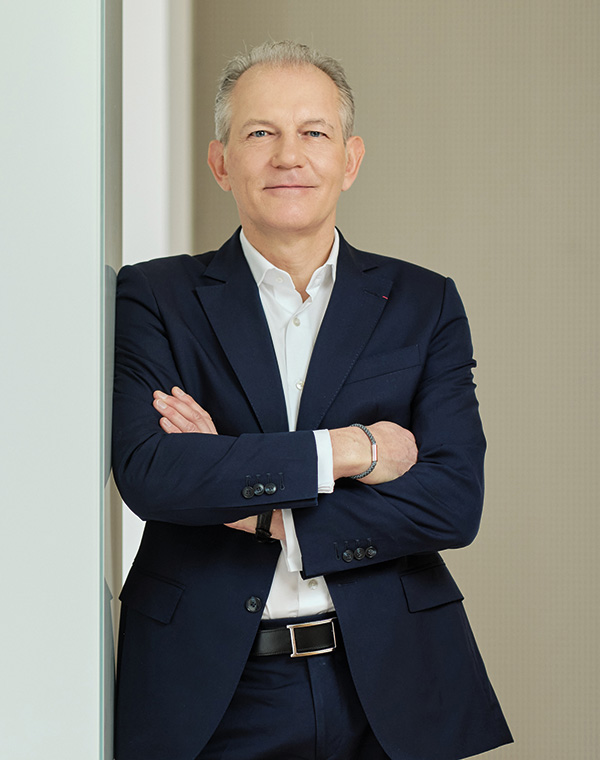
Ahead of the 140th anniversary of diplomatic relations between Korea and France in 2026, we met François Jackow, MEDEF’s Chair of the Korea–France Business Dialogue for Our Future, a key platform for bridging economic cooperation between the two countries. Also serving as CEO of Air Liquide, a global leader in industrial gases, Mr. Jackow recently reaffirmed his strong confidence in the Korean market through the acquisition of DIG Airgas. In this interview, he outlines a strategic vision for Korea–France economic cooperation at a pivotal moment shaped by hydrogen and AI, and presents a blueprint for the next phase of growth and collaboration.
By Na-yeon Kim
Photo Credit MEDEF
Q. 2026 marks the 140th anniversary of diplomatic relations between Korea and France. In your view as the CEO of a private sector leader, what are the necessary elements to drive forward cooperation between Korea and France?
A. For me and for all French companies operating in Korea, this 140th anniversary is an extremely exciting milestone! It not only celebrates a long history of friendship, but also underscores the continuity and consistency of a remarkably fruitful cooperation. While France and Korea naturally face different challenges stemming from their unique histories and geographies, we share similar perspectives in today’s highly competitive global environment. Today, our collaboration has become a necessity for both our nations. In a complex geopolitical landscape, where traditional alliances are being challenged, the dialogue between the private and public sectors—across large companies, mid-sized firms, and startups—is now more vital than ever for fostering stronger business ties between France and Korea.
Q. FKI and MEDEF International have maintained a consultative body (1991-2016) and established the “Korea-France Business Dialogue for Our Future” in 2024, whilst they have served as a bridge between the French and Korean business communities during this period. Could you share the key areas for discussion between the Korean and French business communities?
A.
First of all, let me highlight the remarkable continuity of the ties between the FKI and MEDEF International over 35 years. In 2024, we jointly decided to strengthen the scope and depth of this business dialogue by engaging our members more actively and addressing the collaboration areas that matter most to them. Decarbonization of industry and mobility is a cross-cutting issue that we have addressed every time we’ve met, as many of our members have ambitious goals to contribute to this agenda. In addition, key sectors such as aerospace and semiconductors remain high on the agenda, and we strongly believe France and Korea can do more together. In 2026, we will add a specific focus on biotechnologies and deep tech, engaging pioneering companies from both France and Korea in AI and Quantum computing.
When tackling complex transformations that require a strong industrial base and innovation, as well as the right policy frameworks, the Korea-France Business Dialogue for Our Future is an essential platform where businesses and policymakers meet to address what is most critical to achieving successful results.
Q. France 2030 is the EUR 54 billion investment plan to achieve objectives in ten priority areas, including nuclear SMRs, low carbon hydrogen, future mobility, etc. Which fields do you think have the greatest potential for synergy between Korean and French businesses? What are some cooperation models that may facilitate quick successes for Korean companies?
A.
France 2030 is an ambitious roadmap by the French government to position France as a leader in key strategic areas for the next decade, such as industrial and mobility decarbonization (including electrification and hydrogen), space, biotechnology, and nuclear energy. As a major industrial powerhouse, Korea also has strong ambitions in these areas, and both countries therefore find significant opportunities for collaboration. We are already seeing encouraging trends, with prominent Korean actors such as Samsung, LG, and Enchem announcing investments in France.
France hosts one of the world’s largest startup incubators (Station F1’, with over 1,000 startups) and has a strong collaboration with KOSME, supporting Korean startups actively developing their activities in France. We believe this type of partnership is instrumental in accelerating further business collaboration, which is why we leveraged the presence of Korean startups in Paris in 2025 to organize the Korea-France Business Dialogue for Our Future at Station F.
- 1.Station F: The world’s largest startup campus situated in Paris, housing over 1,000 startups and serving as a centerpiece of the French tech ecosystem.
Q. From your perspective as Chair of the Korea-France Business Dialogue for Our Future Council, how have the investment decisions and cooperation practices of companies in both countries changed in recent years? What are some regulatory restrictions or institutional tasks that Korea should address most urgently to maximize its appeal as a global investment destination?
A. Industrial companies make decisions with a long-term horizon and therefore need ambitious policy frameworks; however, predictability, consistency, and stability are paramount. Today, as many countries face complex transformations, collaboration between the private and public sectors is absolutely necessary. Policymakers face extremely strong budgetary constraints and significant pressure from voters, which limits their room to maneuver. Businesses need to make long-term, sound decisions based on financial criteria, while also aiming to deliver results consistent with their commitments, including those regarding their decarbonization trajectories. There is no silver bullet, and positive outcomes can only be achieved through constant discussion and adjustment to find the best possible path.
France and Korea both need to provide investors with reliable and consistent policy frameworks (for example, regarding the evolution of the “CO2 price”, low carbon product mandates and energy supply mix) to ensure the competitiveness of national industries, maintain an international level playing field, and enable companies to invest in low-carbon solutions successfully.
Q. Air Liquide has been expressing high levels of confidence in the Korean market, having recently acquired DIG Airgas. As a business executive who directly makes large-scale investments, what makes Korea attractive as an investment destination?
A. Air Liquide has been present in Korea for more than 30 years, and we have been continuously investing in the country. Our most recent acquisition of DIG Airgas—a landmark move that more than doubled our size in Korea—is a clear demonstration of our trust in the Korean economy. Korea is strategic because of its strong diversified manufacturing base and innovative economy. The strength of the semiconductor sector and the country’s proactive stance on the energy transition create an ideal environment for large-scale, long-term investments.
Q. What do you see as the key engines that will drive Air Liquide’s future growth?
A. Our growth is driven by supporting the transformation of the manufacturing industries around the world. This implies reconfiguration of the value chains and major technological shifts across all sectors - starting with automation, digitization, electrification…. and of course the impact of AI on the economy. More specifically, the primary engines of today and tomorrow’s growth are the need for increased sovereignty including reshoring critical industries or redesigning value chains, industrial decarbonization and electrification, and semiconductor manufacturing. Additionally, healthcare is a vital pillar; with an aging population in developed countries and expansion in emerging markets, our homecare and hospital activities will continue to grow strongly. This is the case in Korea where we have a significant presence in home healthcare for example.
“The initial extra costs of low-carbon solutions must be supported by mechanisms that maintain a level playing field across geographies, ensuring that being "green" does not mean being uncompetitive.”
Q. As Co-Chair of the Hydrogen Council together with Hyundai Motor Group, where do you see the most urgent bottleneck that needs addressing to develop Korea’s hydrogen commercialization?
A. Hydrogen is one of the key solutions enabling the energy transition. It is also a path to stronger energy security for both Europe and Korea, provided we can achieve domestic hydrogen production to some extent, even if it requires significant resources such as low carbon electricity and Carbon Capture and Storage (CCS) technologies.
The role of the Hydrogen Council, which now gathers 140 companies, is to contribute to activating the markets that need to use hydrogen for decarbonization. This requires a combination of effective policies, including financial support to produce low-carbon hydrogen, develop infrastructure, and most importantly stimulate the demand for low-carbon products.
Hydrogen requires the strong alignment of all actors along the value chain, necessitating a broad synchronization of public and private stakeholders. Korea, which has been one of the first countries to develop a vision for the Hydrogen economy, has many world class leading companies. For example, Air Liquide has been collaborating with Hyundai, SK E&S, Lotte Chemical and others to build an optimized supply chain and deploy large fleets of hydrogen buses. Accelerating this momentum requires even closer coordination with the government and we are looking forward to having continuous visibility and support. It is a great opportunity for Korea to develop a leading position in this emerging market.
Q. When pursuing carbon neutrality and industrial competitiveness, what are the essential elements of strategy that companies must have?
A. Companies must reframe the long term goal of carbon neutrality as an opportunity rather than a constraint. It is a journey. Strategy must be pragmatic, combining incremental solutions like energy efficiency with disruptive technologies like carbon capture. Crucially, the initial extra costs of low-carbon solutions must be supported by mechanisms that maintain a level playing field across geographies, ensuring that being “green” does not mean being uncompetitive.
Q. As a witness of Korea’s development first hand, can you share some final thoughts on the country, especially at this time of global uncertainty?
A. Korea’s dynamic expansion across every major industrial sector has been a source of inspiration for Air Liquide, positioning the country as one of the top five globally for the Group. Today, global uncertainty can be a source of anxiety for many, but it also presents a source of hope as many transformations are ongoing. Korea’s success is rooted in the nation’s unique dynamism and pioneering spirit—qualities that are vital in the current climate. Building on its outstanding track record and the quality and determination of its people, Korea has the ability to take a leading position in many markets. If business and political leaders demonstrate responsibility, ambition, and courage, and embrace collaboration with like-minded partners to drive change through AI and innovation, I am confident the future will bring tremendous opportunities. Air Liquide is proud to be a committed corporate citizen in this nation.
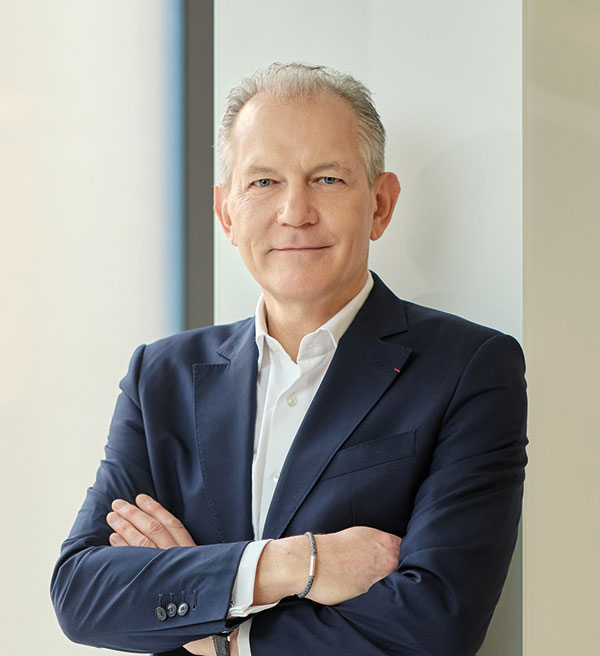
François Jackow
François Jackow is the Chief Executive Officer of Air Liquide, a world leader in industrial gases, services, and health. With a career spanning over three decades at the Group since 1993, his extensive global experience across Europe, Asia, and the U.S. has shaped his strategic leadership. Beyond his role at Air Liquide, he serves as the Chairman of the Korea-France Business Dialogue for Our Future Council, MEDEF International, positioning him as a key economic diplomat driving cooperation and innovation between the two nations.