in Story & News
FKI News
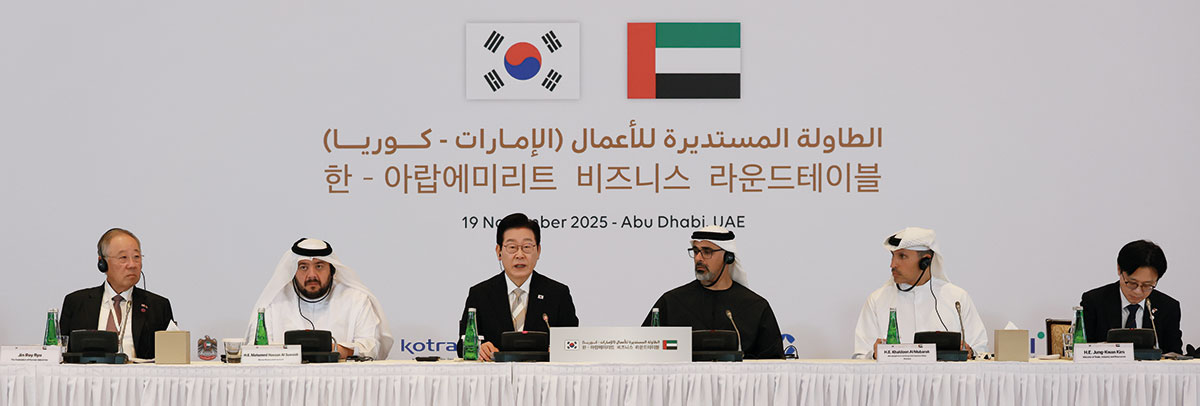

Korea-UAE Business Roundtable Held in Abu Dhabi
FKI, in collaboration with KOTRA, the UAE Ministry of Foreign Trade, and the Abu Dhabi Chamber of Commerce and Industry, co-hosted the Korea-UAE Business Roundtable in Abu Dhabi to strengthen future partnerships in advanced industries, energy, and culture. Held in conjunction with President Lee Jae Myung’s state visit to the UAE, the meeting was attended by senior UAE government officials including Crown Prince Khaled, as well as leading Korean companies such as Samsung Electronics, Hyundai Motor Group, SK, LG, and Hanwha.
Participants discussed expanding cooperation beyond traditional infrastructure and defense projects to include the establishment of AI innovation hubs, clean energy and power infrastructure transitions, and broader digital technology collaboration. In response to growing local demand for K-Content and K-Food, the two sides also explored opportunities for joint content production and distribution, as well as expanded exchanges such as student-employment linkage programs. The meeting concluded with a shared commitment to pursuing sustainable and mutually beneficial growth based on the technological capabilities and innovation strengths of both countries.
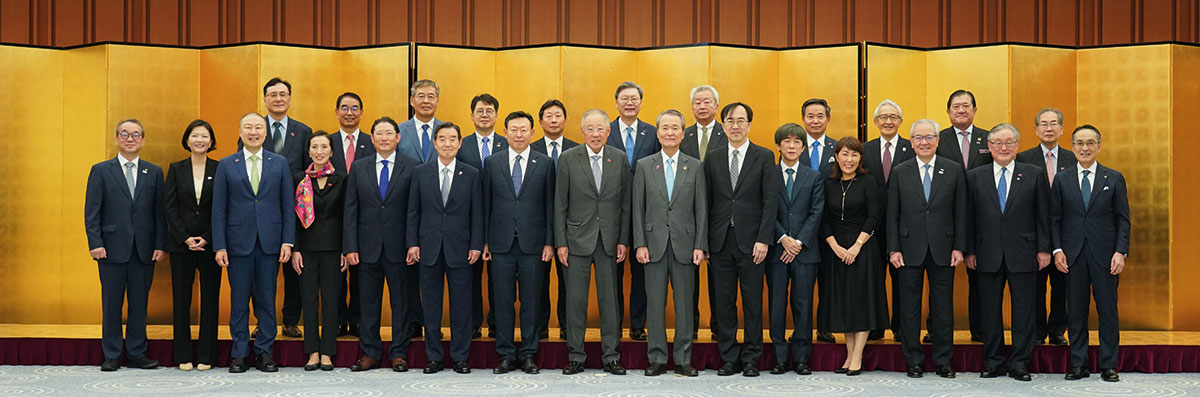
32nd Korea-Japan Business Conference Convened in Tokyo
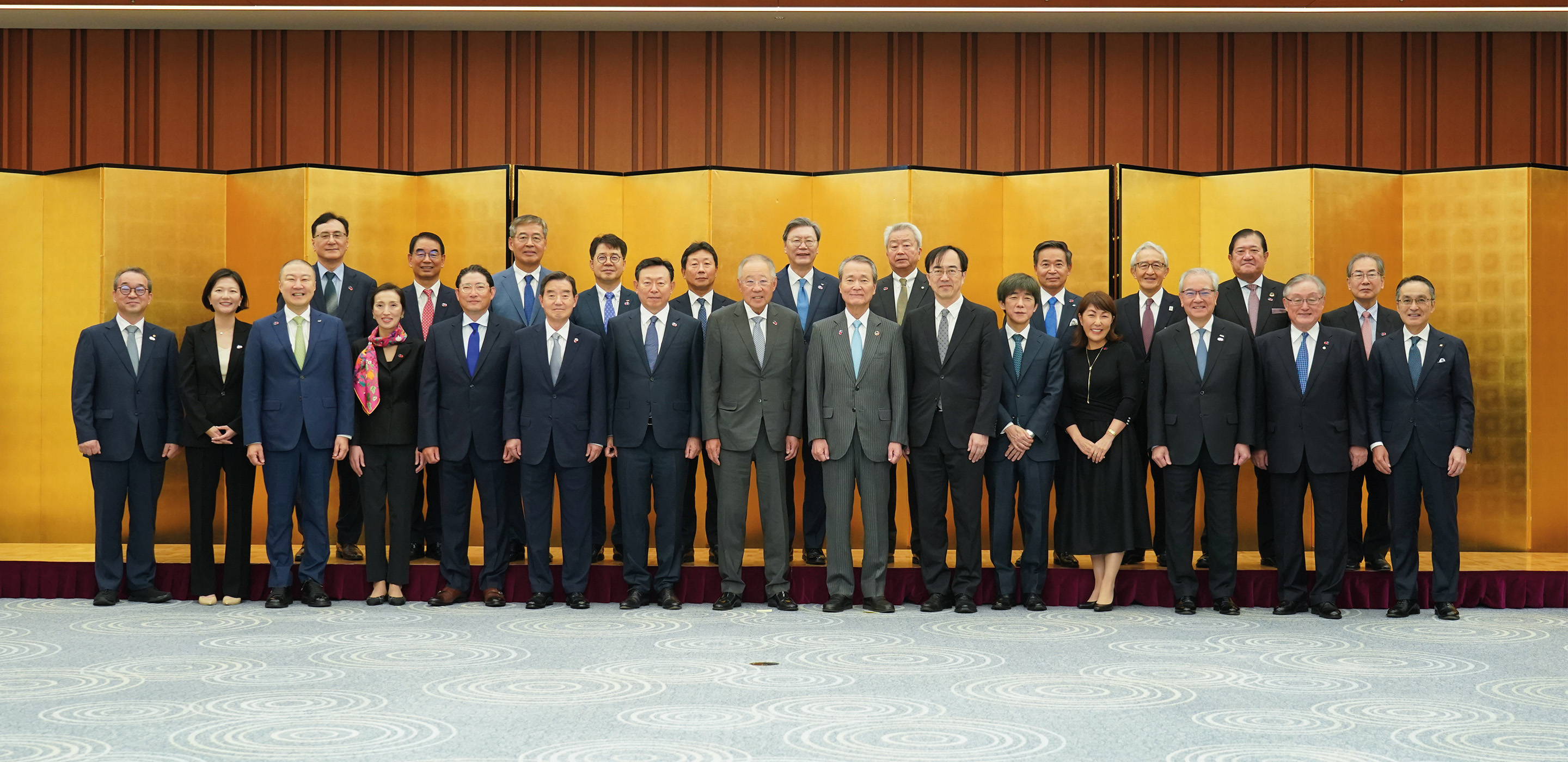
FKI and the Japan Business Federation held the 32nd Korea-Japan Business Conference in Tokyo, marking the 60th anniversary of diplomatic normalization and agreed to expand cooperation toward a new era of Korea-Japan economic partnership.
Based on the discussions, the two business communities adopted a joint statement outlining areas of cooperation, including maintaining a rules-based free and open trade order and advancing Korea’s potential accession to CPTPP, joint responses to the global trade environment and supply chain cooperation, strengthening coordination among Korea, the United States, and Japan in connection with the Free and Open Indo-Pacific vision, expanding cooperation on international platforms such as APEC and the OECD, collaboration in hydrogen energy and carbon reduction, joint responses to shared social challenges such as low birth rates, population aging, and climate change, promoting qualitative growth in tourism and exchanges among future generations including youth and startups, and strengthening cooperation in emerging industries such as disaster prevention and content.
“Gadsaeng Hankki” Featuring Chairman Byung-kyu Jang Held
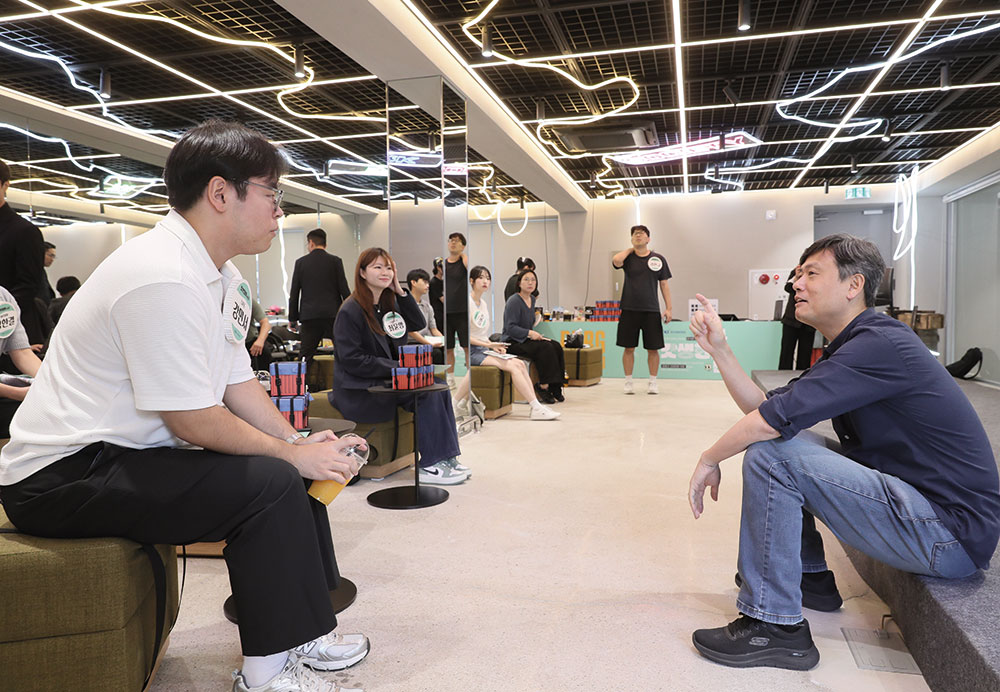
FKI held the fourth session of its youth engagement program “Gadsaeng Hankki” in Seongsu, Seoul, bringing together young participants and Byung-kyu Jang, Chairman of Krafton, for an open dialogue. Drawing on his experience in achieving global success, Chairman Jang emphasized the importance of challenge and innovation under the theme “Living a Purpose-Driven Life for Your Dreams,” encouraging participants by noting that trial and error is an essential part of growth. He also responded to questions across work, life, and society, offering practical advice to help young people plan their careers and lives.
The 20 participating youths pledged to carry out talent-sharing activities such as mentoring and community service within one month, committing to the spread of positive social impact. FKI stated that it will continue to develop the program as a platform that enables young people to actively participate as drivers of growth.
2025 Growing Together Job Fair Held
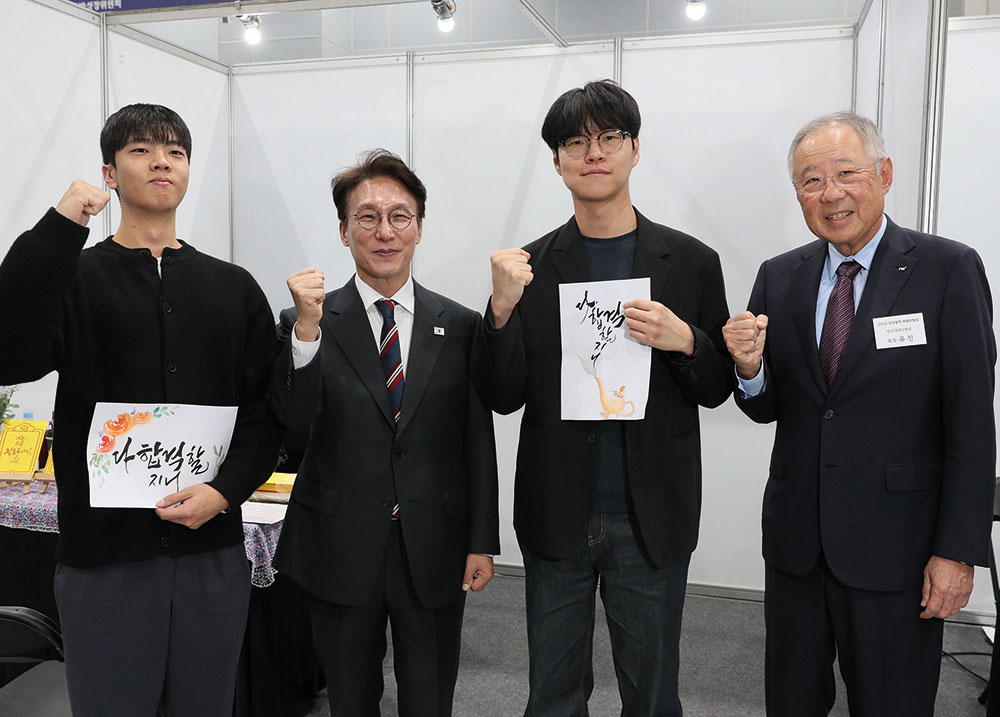
FKI, in collaboration with the Ministry of Employment and Labor and the Ministry of SMEs and Startups, hosted the 2025 Growing Together Job Fair to address youth unemployment and labor shortages among partner companies through public private cooperation. The event marked the first large-scale joint recruitment fair led by the business community in 15 years, with participation from approximately 500 companies, including major groups such as Samsung, SK, and Hyundai Motor Group, as well as SMEs and partner firms.
Chairman Jin Roy Ryu emphasized that youth employment is both a social responsibility and an investment in the future. The job fair extended beyond a one-time event, continuing online through the end of the year to expand opportunities for sustained connections between young job seekers and regional and small businesses.
FKI and World Bank Host Entrepreneurship Conference
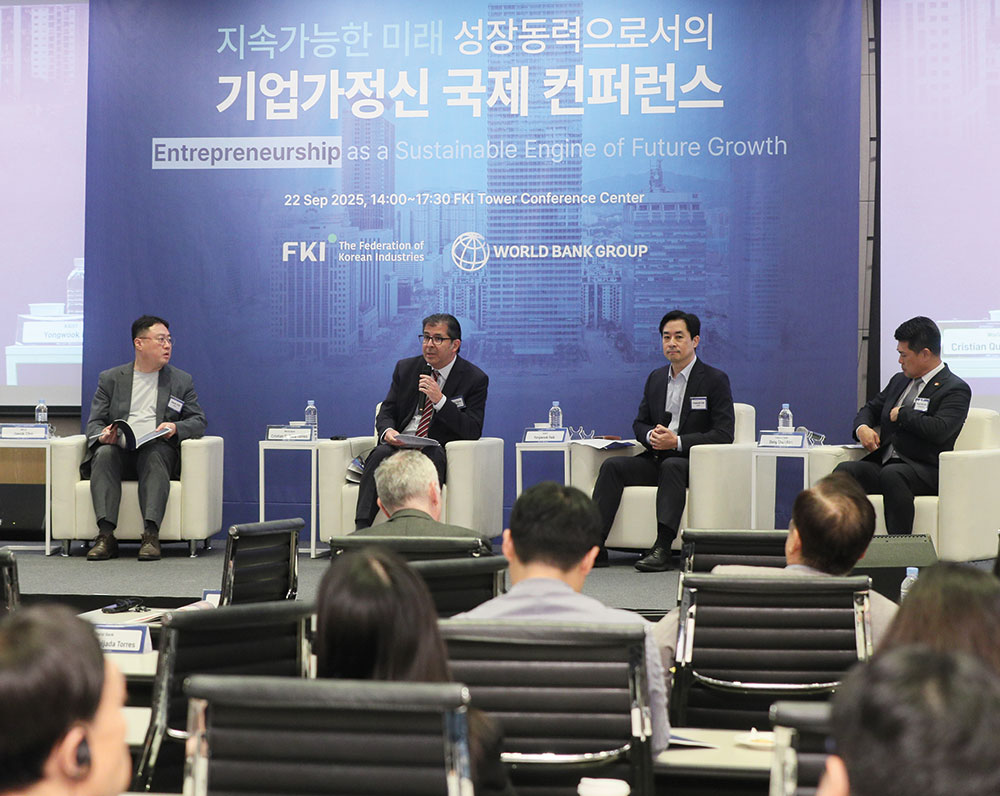
FKI co-hosted an International Entrepreneurship Seminar with the World Bank and announced plans to strengthen cooperation on the development of the Global Entrepreneurship Index (GEI). FKI developed the initial version of the GEI using the World Bank database and agreed to further collaborate in advancing it into a global standard indicator.
According to the findings presented, the United States ranked first in the GEI, while Korea placed fifth. The analysis indicated that Korea’s performance relative to inputs remains constrained by bottlenecks such as regulatory barriers and labor market rigidity. Participants highlighted the need to build an open innovation ecosystem that enables large enterprises to scale up, advances regulatory reform, and stimulates private sector investment. There is growing expectation that Korea’s next phase of economic growth will be driven by a broad spread of entrepreneurship and international cooperation.
2025 FKI-PIIE-OECD International Conference Held
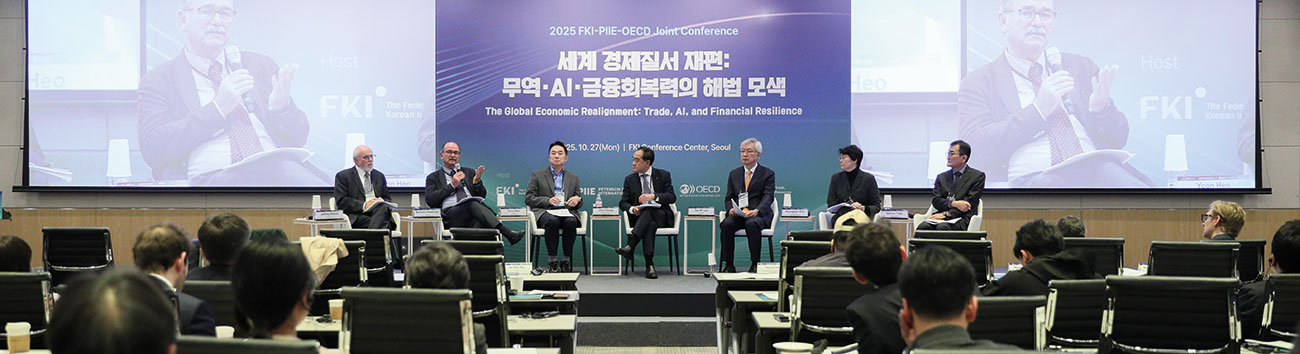
FKI co-hosted an international conference with the Peterson Institute for International Economics (PIIE) and the OECD to discuss Korea’s policy responses amid intensifying strategic competition and global supply chain realignment. Professor Kenneth Rogoff observed that the dominance of the U.S. dollar is weakening due to expanding U.S. fiscal deficits, with the global monetary order gradually shifting toward a multipolar structure. Speakers highlighted the need for trade diversification and proactive supply chain risk management in response to the spread of protectionism, and proposed the deregulation of digital trade and the expansion of regional trade agreements as key policy options. It was also noted that AI is fundamentally reshaping global trade patterns, underscoring the importance for Korea to maintain a strategic balance amid U.S.-China competition while building an open ecosystem grounded in technology cooperation and data trust. In the financial sector, concerns were raised over growing risks of “financial fragmentation,” as security-driven policy approaches weaken international coordination. Participants emphasized the need for resilience-focused frameworks to mitigate systemic risks. The discussions served as an opportunity to reassess practical strategies for the Korean economy in an increasingly uncertain global environment.
Second Entrepreneurship Development Center Talk Live Held
FKI’s Entrepreneurship Development Center hosted the second Talk Live event, inviting YLC alumni entrepreneurs and engineers to engage in dialogue on growth and the overcoming of challenges. Min-gi Kim, CEO of Ajungdang, emphasized that a willingness to embrace failure is a key driver of startup growth, delivering the message to “fail fast.” Professor Chang-hwan Shin of Korea University noted that the spirit of taking on challenges remains essential even in the AI era, stressing that a problem-solving mindset and active intra-organizational communication are critical to technological innovation.
FKI stated that the entrepreneurial spirit cultivated through the YLC program is taking root across society and reaffirmed its commitment to serving as a central hub for fostering youth innovation and growth.
Chairman Ryu Visits Chungwoo Core, an Outstanding Management Advisory Company
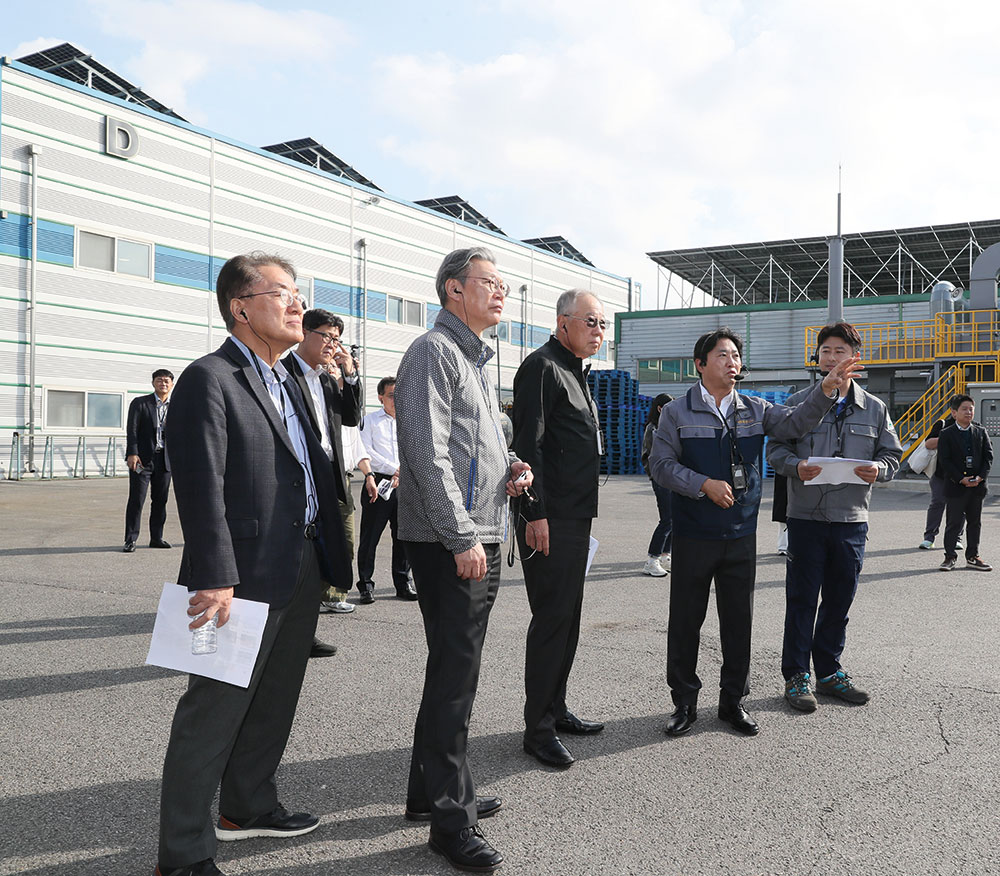
FKI Chairman Jin Roy Ryu visited Chungwoo Core, a bearing manufacturer in Pyeongtaek, Gyeonggi-do Province, to review its export performance and ESG achievements and to encourage employees. Following consulting support from the FKI Management Advisory Group, Chungwoo Core implemented customized strategies for key clients, resulting in a 2.5-fold increase in exports and double-digit revenue growth. The company also secured price competitiveness by proactively responding to reciprocal tariff pressures in the United States, contributing to its export expansion. In addition, Chungwoo Core was selected for the Ministry of Environment’s Smart Eco Factory initiative, supporting reductions in greenhouse gas emissions and air pollutants.
Chairman Ryu described the company as a model case demonstrating global competitiveness through technology and strategy, and encouraged continued innovation.
Inaugural Meeting of the Service Industry Competitiveness Enhancement Task Force Held
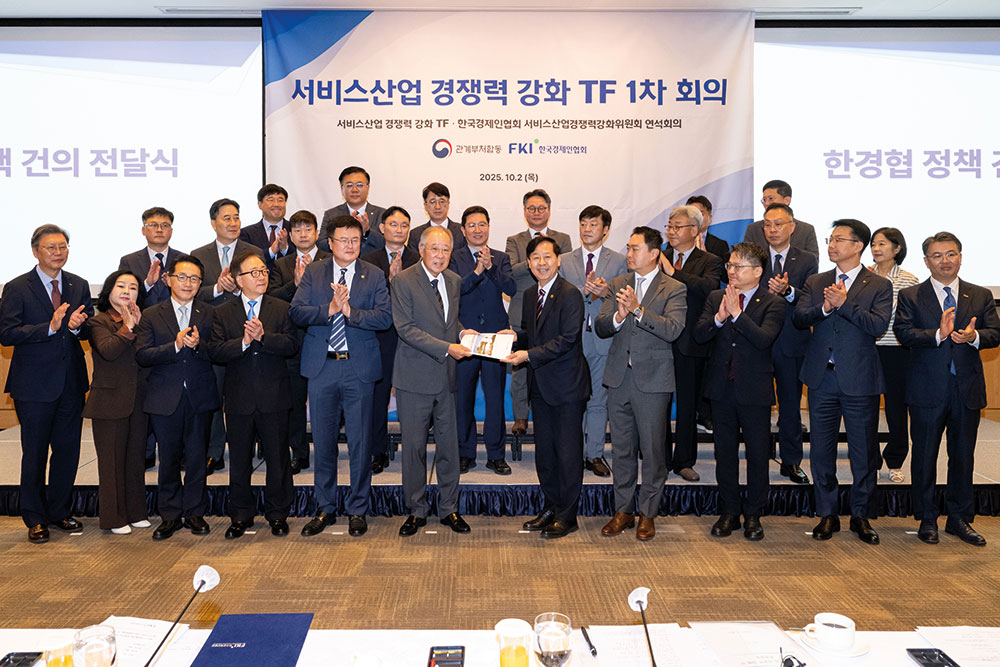
FKI convened the first meeting of its Service Industry Competitiveness Enhancement Task Force and emphasized the need to link the global expansion of K-Culture to revitalizing regional tourism. The task force proposed 33 policy measures aimed at strengthening competitiveness. While global demand for Korean lifestyle experiences is rising alongside the popularity of K-Content and K-Food, 76% of tourism activity remains concentrated in Seoul, highlighting growing regional imbalance. FKI proposed “dailycation” models and other experiences accessible in daily life to increase repeat visits and disperse demand toward regional destinations. The Task Force also recommended that Japan’s integration of regional content with transportation serve as a benchmark and that the Gyeongju APEC Summit should be leveraged as an opportunity to enhance regional promotion and accessibility. FKI stressed that broadening region-specific experiences and building foundations for long-stay tourism are essential to sustainable regional growth.
Survey: Capital Region Baby Boomer Generation's Interest in Regional Employment and Relocation
According to an FKI survey, 73.0% of baby boomers living in the Seoul metropolitan area would consider relocating to regional areas if employment opportunities were available at local SMEs. Key reasons for preferring relocation included a healthier lifestyle, a more relaxed pace of life, and a better natural environment. Major deterrents were insufficient living infrastructure and limited transportation accessibility. The Chungcheong region ranked highest among preferred destinations. In terms of employment preferences, administrative and office roles were most favored, with part-time work emerging as the preferred employment arrangement. The study proposed a “three-party alliance” model in which baby boomers, regional cities, and SMEs grow together. It noted that comprehensive and targeted policy support will be a critical factor in translating relocation demand into actual migration.
A Call for Reforms: Penal Provisions in Economic Laws Across 21 Ministries
An FKI analysis found that a total of 8,403 criminal penalty provisions exist across 346 economic laws administered by 21 government ministries. Of these, 91.6% include joint liability clauses that may potentially punish both individuals and corporations. Notably, 33.9% of the 8,403 economic penalty provisions permit multiple overlapping sanctions, such as imprisonment, fines, and administrative penalties, allowing for up to five layers of sanctions in some cases. In laws such as the Fair Trade Act and the Building Act, even minor administrative violations may expose companies to criminal penalties, significantly increasing the compliance burden on businesses. The findings underscore the urgency of reforming the current sanctions framework to meet the principle of proportional enforcement and better align with global standards.
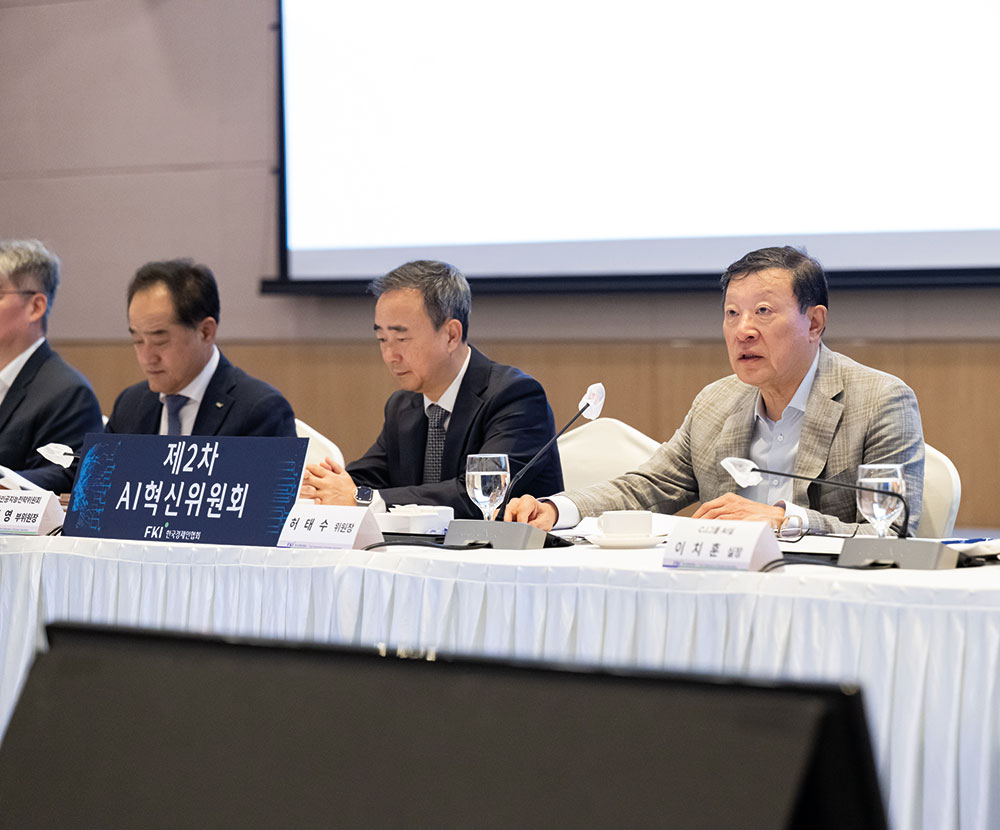
Second Meeting of the AI Innovation Committee Held
FKI convened the second meeting of its AI Innovation Committee to discuss strategies for strengthening national AI competitiveness amid intensifying global competition. The committee submitted its “Economic Sector Policy Recommendations for a K-AI Leap” to the Presidential Council on National Artificial Intelligence Strategy. The proposal outlined 23 policy tasks across four priority areas: infrastructure development, data regulation reform, industrial competitiveness enhancement, and the introduction of a negative regulatory framework. Committee Chair Tae-soo Huh emphasized that bold challenges and close public-private cooperation are essential for Korea to transition from an AI follower to a global leader. Moon-young Im, Vice Chair of the National Artificial Intelligence Strategy Council, stated that the views of the business community would be actively reflected in the formulation of the national AI action plan.