
in Issue & Trend
From Sugarcane to Fiber,
Wearing the Future
regen™ BIO Spandex
The global fashion industry is facing a major inflection point, shaped by tightening sustainability regulations and a broad restructuring of supply chains.
Hyosung TNC, the world’s leading producer of spandex, has been among the first to respond to this shift. Its answer is regen™ BIO Spandex.
regen™ BIO Spandex stands as a clear example of an eco-friendly transition without compromising performance. Petroleum-based inputs are replaced with plant-derived materials, while a fully integrated production system links raw materials to finished products. This innovation goes beyond the development of a new fiber, setting a new benchmark for the coexistence of performance and sustainability.
By Na-yeon Kim
Photo Credit Hyosung TNC

A Technological Shift That Began with Plants
Spandex, known for its exceptional elasticity, is a fiber that moves in tandem with the human body. It stretches, responds, and recovers repeatedly, making it an essential material for sportswear, underwear, denim, and even bedding, where flexibility and resilience are critical.
For decades, however, the source of this comfort was petroleum. One of the key components of spandex, butanediol (BDO1), has traditionally been derived from fossil fuels. regen™ BIO Spandex redefines this starting point. It uses bio-based BDO produced by fermenting sugars extracted from sugarcane. By replacing conventional chemical processes with nature-based fermentation, Hyosung TNC has shifted from a petroleum-dependent model to one based on renewable resources. This transition opens a pathway where natural cycles are integrated into industrial systems, significantly reducing environmental impact.
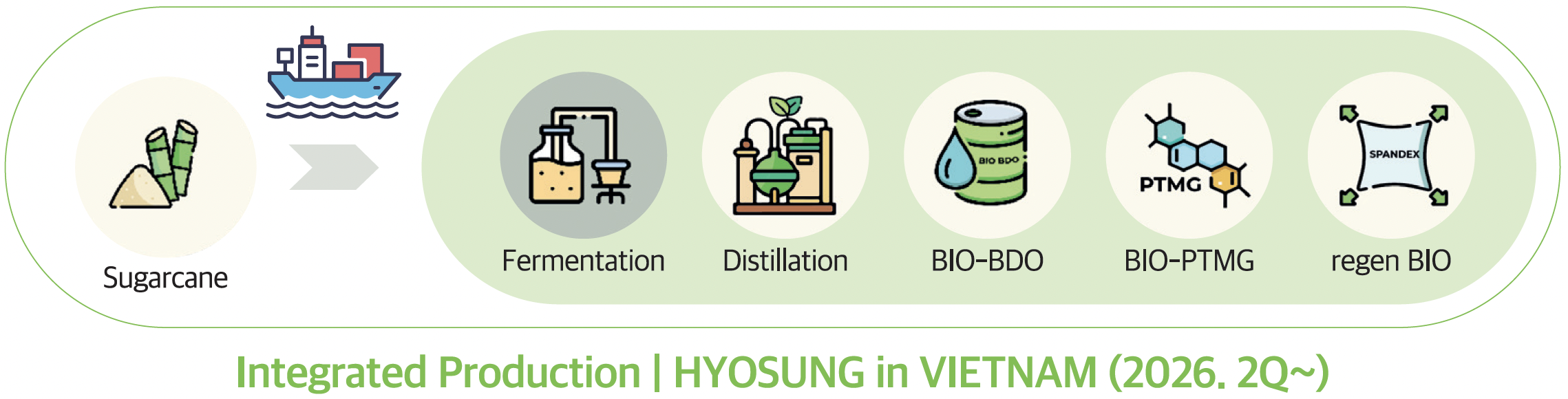
This bio-based process will be fully implemented at the Bio BDO production plant in Vietnam, scheduled for completion in the first quarter of 2026. Raw materials produced there will be converted into intermediate inputs at nearby facilities and then processed into spandex yarn. From raw material to finished fiber, the entire process takes place within a single region, forming the world’s first fully integrated spandex production system of its kind. By reducing transportation distances and streamlining processes, the system enhances efficiency while lowering carbon emissions.
From plants grown by nature to garments worn by people, regen™ BIO Spandex transforms this vision into a practical, scalable technology.
- 1.BDO: A primary raw material for spandex, traditionally produced through petroleum-based processes.
“As the influence of materials continues to grow across the fashion industry, Hyosung TNC’s regen™ BIO Spandex is gaining attention as a case in which Korean technology sets a new benchmark for the global eco-friendly market.”
Elasticity That Reduces Carbon, Innovation Shaped by Nature
The most defining strength of regen™ BIO Spandex lies in its substantial carbon reduction effect.
The product’s core raw material, bio-based BDO, is produced using a differentiated fermentation technology that converts sugars derived from sugarcane directly into BDO without intermediate processing steps. This approach enables a significant reduction in carbon emissions compared with conventional fossil fuel based BDO.
To introduce this technology, Hyosung TNC entered into a technology partnership with Geno, a U.S.-based biotechnology company. By applying Geno’s fermentation technology, Hyosung TNC has enhanced the efficiency of bio-based BDO production while further lowering environmental impact.
In addition, the vertically integrated production system in Vietnam, where the entire process from raw material production of Bio BDO to the final product takes place locally, contributes to reducing carbon emissions associated with transportation.
According to Hyosung TNC, sugarcane-based regen™ BIO Spandex is expected to achieve up to approximately 55% carbon reduction compared with conventional spandex products. The actual figures will be provided in the third to fourth quarter of 2026 based on measured data from commercial production. The product has also obtained SGS EEPS2 certification, verifying the use of bio-based raw materials, and third-party verification of sugarcane traceability and sustainability is also through the VIVE program.
From the earliest stages of development, regen™ BIO Spandex has adopted objective sustainability verification as a core standard. This approach aligns closely with Hyosung TNC’s long-standing brand philosophy of transparency and technology-based trust.
With the growing significance of material across the fashion industry, Hyosung TNC’s regen™ BIO Spandex is gaining attention as a benchmark case for Korean technology in the global eco-friendly market.
- 2.SGS EEPS: A voluntary product environmental labeling program operated by the international certification body SGS, granting labels to products that meet environmental performance standards.

Unchanged Performance, Seamless Transition
The transition to new materials is often accompanied by concerns over quality. regen™ BIO Spandex has effectively removed those concerns. It maintains the same level of elasticity, recovery, and durability as existing products while successfully shifting to eco-friendly raw materials. This achievement reflects Hyosung TNC’s decades of accumulated expertise in material design. As a result, manufacturers do not need to modify existing processes or equipment. They can continue using their current spandex production lines while seamlessly transitioning to a more sustainable product.
regen™ BIO Spandex blends smoothly with natural fibers such as organic cotton, merino wool, and cashmere, offering a soft tactile feel and stable performance even in high-intensity sportswear and premium underwear. What Hyosung TNC describes as a “Seamless Transition” captures both continuity in performance and efficiency in production. Sustainability, in this view, is not an abrupt shift but a gradual evolution that maintains quality levels.
The material has changed, yet garments remain soft and the body can move freely. What changes is the starting line and the size of the footprint.

Taking On the Global Stage
The global market response to regen™ BIO Spandex has been highly positive. More and more brands, particularly in Europe and North America, are adopting this eco-friendly product line. Structural changes across the fashion industry, including carbon taxes, environmental regulations, digital product passports, and ESG disclosure requirements, have led to a growing recognition that survival without sustainable products is becoming increasingly difficult.
Within this context, regen™ BIO Spandex has emerged as a core brand positioning Hyosung TNC as a total solution provider for sustainable materials.
Sustainable fashion is no longer a special initiative but rather the industry’s common language. At the center of this shift, regen™ BIO Spandex is sets an example for transitioning into the future, through speedy but balanced change.