in Issue & Trend
Keywords Driving
Korean Innovation in 2026
#AX Organization #Zero-Click #Foodtech #K-Content
As 2026 begins, Korea is entering a critical turning point for deeply embedding artificial intelligence (AI) within and across industries to maximize productivity and efficiency. Beyond enhancing convenience in everyday life, technological advancements are fundamentally reshaping corporate culture, industrial structures, and even Korea’s cultural presence on the global stage. The article offers perspectives on Korean society amid rapidly shifting global dynamics by calling to attention four key themes.
By Byung-woong Kwon, Professor, Department of Art Management, Graduate School of Arts, Chung-Ang University
Corporate Survival Strategies Reinforced by AI Transformation
Digital transformation (DX) focused on converting analog data into digital formats, marking a change in form, but the current AI transformation (AX) marks a change in essence. An AX organization goes beyond simply adopting the latest AI technologies, embedding AI across decision-making systems and operational processes to maximize management efficiency. This is not a matter of incremental technology adoption, but a sweeping shift that reorganizes corporate DNA around AI.
Across Korean companies, AI use in document drafting, meeting-minute summaries, data analysis, and automated customer support has already become commonplace. More recently, firms widened AI agent deployment to manage project schedules, prepare draft reports, and even provide decision-making support for various scenarios. Efforts to automate repetitive administrative tasks are on the rise, allowing human resources to focus on core functions. Moreover, major Korean conglomerates are accelerating organizational restructuring by positioning AX as a company-wide strategic priority.
Samsung Electronics, for example, recently established an AX Team under its Management Support Office, creating a central coordinating body to plan and execute AI transformation across the organization. This team functions not merely as a technical support unit, but as a driver of change that integrates AI into all aspects of corporate operations and transforms how work is done.
At the core of an AX organization is a shift in perception. AI is no longer viewed simply as a tool, but as a workplace collaborator. By delegating repetitive and draining work to AI, employees can concentrate on creative and strategic decision-making to significantly enhance the firm’s productivity. This organizational transformation has become a necessity for survival in an increasingly volatile global market, and is no longer left to choice. The ability to build and operate effective AX organizations is expected to become a critical indicator of corporate value.
Faster than the Speed of Thought: A Future-Oriented Service
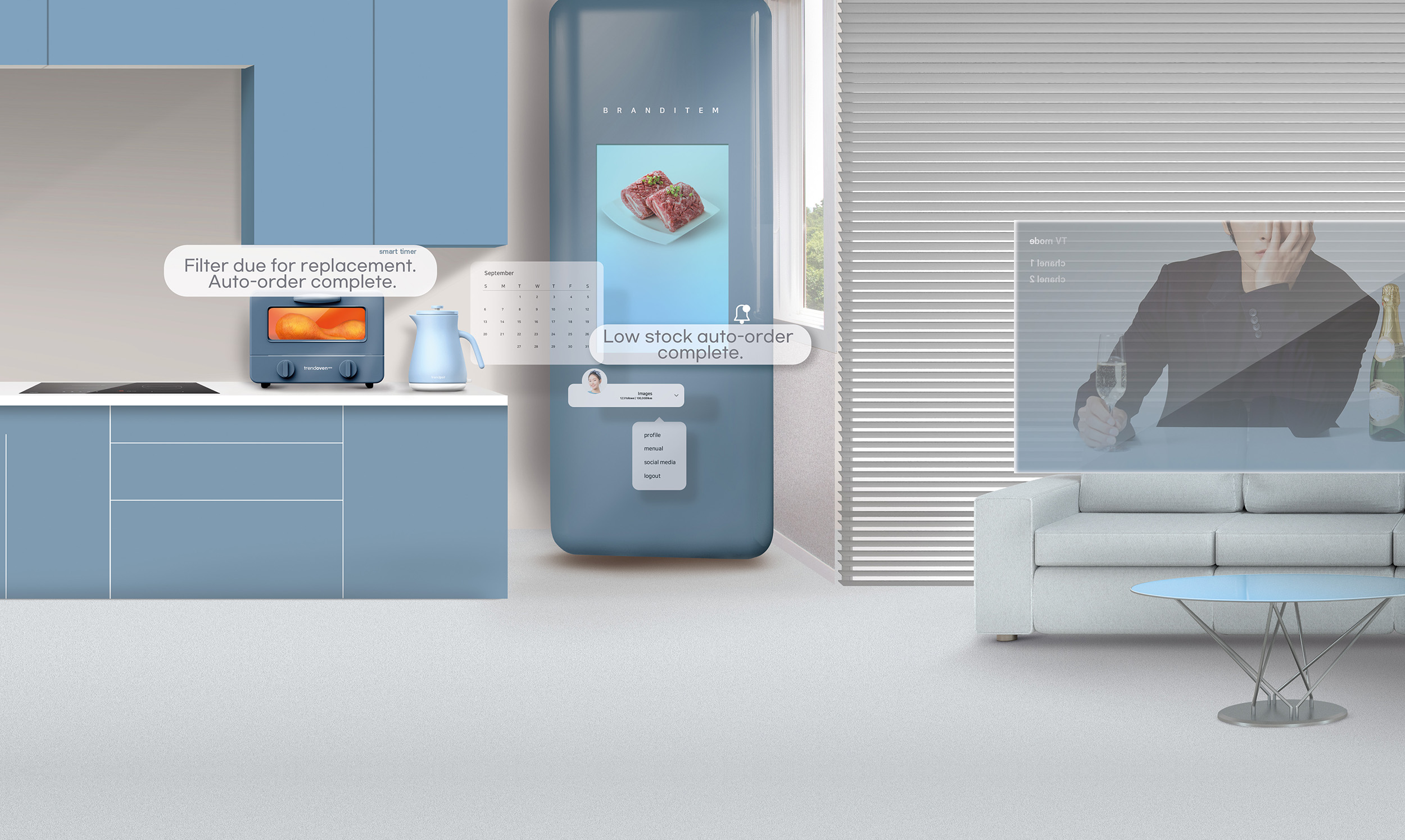
The era of “zero-click” services has arrived. Now, AI can anticipate user intent and interpret context to deliver instant results, making search queries or repeated clicks unnecessary. This approach reflects the maturity of hyper-personalization technologies and predictive algorithms, enabling companies to present answers proactively, ahead of customer requests. Zero-click services significantly reduce information overload and decision fatigue, and are emerging as a powerful marketing and engagement tool.
In the search engine space, it has become standard practice to summarize answers directly on the results page, eliminating the need for users to click through to external links. In e-commerce, companies are refining services that analyze purchase cycles and consumption patterns, so that essential goods are added to shopping carts or orders are prepared up to the final payment stage automatically. Home appliances equipped with smart platforms such as Samsung Electronics’ SmartThings and LG Electronics’ ThinQ, for example, can calculate remaining supplies and soil levels on their own, automatically placing orders or notifying users of the optimal timing for refills and replacements.
Music streaming applications can also respond in real time to the user’s environment and biological rhythm. Melon features an adaptive music playlist that detects the user’s running speed and plays music with an optimal beats-per-minute tempo. Naver VIBE offers dynamic playlist moods based on current weather conditions and time of day. In both these cases, playlists suited to user location and situation are delivered even before the play button is pressed.
These shifts present new challenges for content creators and companies alike. As traditional performance indicators such as click counts and time spent weaken, the competition for in-platform visibility, along with the accuracy and credibility of summarized information, has become increasingly important. Companies and media outlets must now rethink their strategies and place greater emphasis on establishing trust quickly, rather than generating clicks as the zero-click era calls for a fundamental transformation in information delivery and brand communication.
Advanced Science and the Future of Food
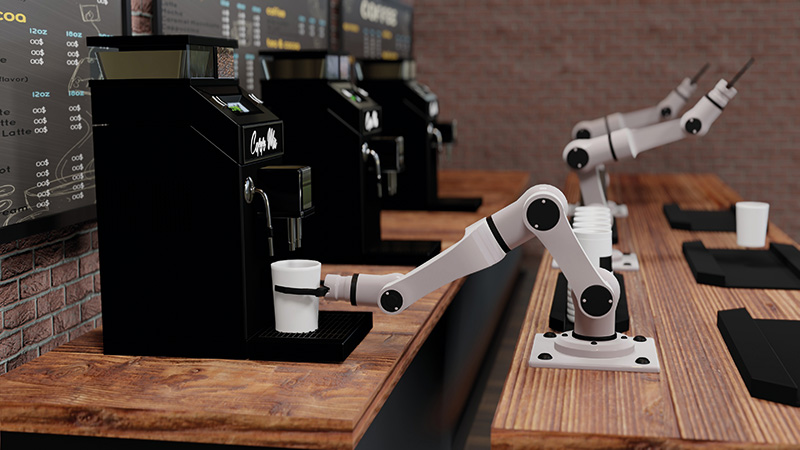
Foodtech — the convergence of food and technology — is fundamentally reshaping humanity’s production and consumption of food. Moving beyond the convenience offered by delivery plat-forms, foodtech is emerging as a high-value advanced industry spanning the entire food value chain, from production and preparation to distribution, through innovations such as robotic kitchens, cell-cultured foods, and smart farms. Amid global labor shortages, climate challenges, and growing consumer focus on health, the significance of foodtech is rising at an unprecedented pace.
Foodtech is rapidly becoming part of everyday life in Korea. AI-driven services are recommending personalized diets based on health conditions, age, and lifestyle, and the food service industry is adopting cooking robots and self-service ordering systems to reduce labor burdens and improve operational efficiency. Convenience stores and institutional catering operations are also expanding efforts to reduce food waste through automation and data-driven demand forecasting. In addition, value-based consumption, which emphasizes environmental protection and ethical choices, is gaining traction, and there is ongoing explosive growth in markets for plant-based alternative proteins and lab-grown cultivated meat. According to the Ministry of Agriculture, Food and Rural Affairs, Korea’s foodtech market size was estimated at approximately KRW 61 trillion as of 2020, and has been expanding at an average annual growth rate of around 31%.
The growth of foodtech is also closely linked to demographic structural shifts, including population aging and the rise of single-person households. Technology-driven food development is gaining importance as demand increases for ready-to-eat meals, functional food, and care food. Foodtech is more than a consumer trend, and it is continuing to gain attention as a future industry capable of addressing food security, reducing environmental burdens, and mitigating labor shortages.
K-Content as an Evolving Platform for Cultural Consumption
Korea’s cultural reach extends beyond the genre level and now influences lifestyles around the world. Encompassing drama, film, and music, K-content has become a firmly established global standard, and is no longer considered a passing trend. Recent successful strategies leverage strong intellectual properties and one-source multi-use (OSMU) models, enabling content to drive revenues across multiple industries and form a large-scale economic ecosystem.
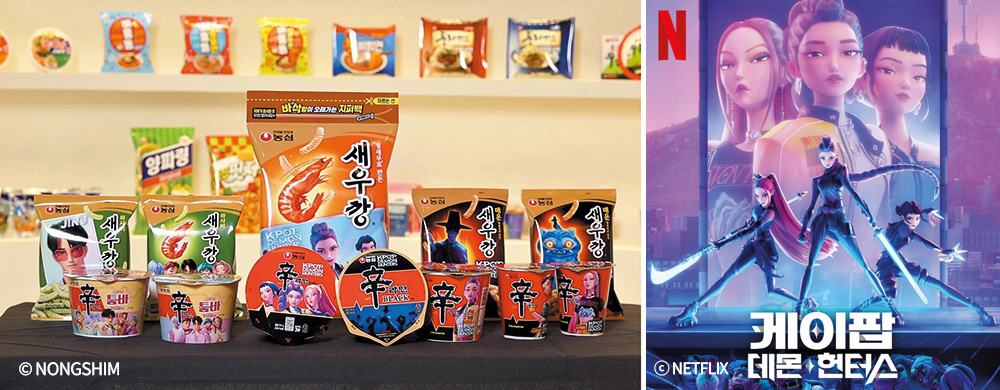
A prime example of this phenomenon is the sustained global impact of the mega hit K-Pop Demon Hunters. The film extends far beyond on-screen storytelling to shape real-world consumption patterns. Products inspired by its characters and universe, such as K-Pop Demon Hunters Cup Noodles, sold out immediately at convenience stores in Korea and overseas, while thousands of fans lined up overnight to purchase limited-edition merchandise. Large-scale cultural events and pop-up towns developed in collaboration with local governments have drawn visitors from around the world, contributing meaningfully to regional economic revitalization. In this way, K-content is not only limited to what audiences watch, but has become an adoptable lifestyle that people can wear, eat, and enjoy. Backed by compelling narratives, distinctive visuals, and powerful fandoms, K-content functions as a source of soft power that elevates Korea’s national brand.
The expansion of OTT platforms and global distribution networks further accelerates this growth. At the same time, content production practices are becoming increasingly industrialized, with greater emphasis on data-driven planning, simultaneous global releases, and region-specific localization strategies. K-content has thus progressed beyond the expansion of cultural influence to generate multifaceted economic effects linked to tourism, consumer goods, and distribution, and is becoming an established core driver of Korea’s future growth.