in Issue & Trend
October
1st
Korea Abolishes Breach of Trust Offense After 72 Years
The government and the Democratic Party of Korea agreed to abolish the breach of trust offense, 72 years after its enactment. Previously, executives could face criminal sanctions if losses arising in the ordinary course of management ultimately resulted in a loss to the company, whereas in common law jurisdictions, civil liability typically serves as the primary remedy. The past Korean framework has long been criticized as a constraint on business that discourages creative innovation. With its abolition, the government and the ruling party plan to introduce substitute legislation that categorizes breach of trust by type. At the same time, 441 provisions will be converted, imposing administrative fines and similar measures rather than imprisonment. This aims to enhance managerial autonomy and reduce uncertainty stemming from judicial risk.
28th
Korea–Malaysia to Expand Economic and Security Cooperation Under FTA
Korea and Malaysia finalized a bilateral Free Trade Agreement (FTA) following a summit between the two countries. Under the agreement, market access was expanded for Korea’s key export items, including automobiles, steel, and chemicals, while additional liberalization of agricultural and fisheries products was excluded. The two sides also agreed to strengthen cooperation in defense (including the FA-50 program), infrastructure development, and energy transition. On the sidelines of the ASEAN summit, Korea further moved to reinforce economic and security partnerships across Southeast Asia, including an agreement with Cambodia to launch a dedicated Korea task force for crime response.
28th
31st
November
5th
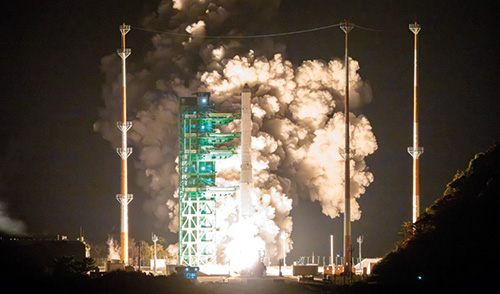
Korea Unveils AI Highway Plan and Expands AI Budget
In a policy address to the National Assembly, President Lee Jae Myung declared 2026 the inaugural year of the “AI era” and called for large-scale national investment. Drawing a parallel with the expressways built during Korea’s industrialization and informatization (digitalization) phases, President Lee outlined plans to establish an
“AI highway” to underpin future growth. The AI-related budget in 2026 will be KRW 10.1 trillion, more than triple the 2025 level. As core objectives, the budget targets “physical AI” development and integration with robotics, as well as the advancing of cutting-edge defense capabilities. To support these goals, a record KRW 35.3 trillion will be allocated to research and development.
“AI highway” to underpin future growth. The AI-related budget in 2026 will be KRW 10.1 trillion, more than triple the 2025 level. As core objectives, the budget targets “physical AI” development and integration with robotics, as well as the advancing of cutting-edge defense capabilities. To support these goals, a record KRW 35.3 trillion will be allocated to research and development.
8th
Semiconductor Supercycle Points to Possible 2%-Range Growth in 2026
As the semiconductor industry enters a supercycle, Korea’s economic growth projections are being revised upward. In September, the current account posted a record surplus with stronger semiconductor exports driven by demand for high-performance AI applications, while trade uncertainty eased between Korea and the United States. The Bank of Korea expects to see 1%-range growth in 2025 and sees potential for 2%-range growth in 2026 as export momentum and a recovery in domestic demand converge. Major global investment banks have likewise maintained a positive outlook, forecasting growth of around 1.9%, but have also indicated that high exchange rate and weakness in the construction sector are key variables.
27th
28th
Bank of Korea Holds Rate at 2.50%, Signals Possible End to Rate-Cut Cycle
The Monetary Policy Board of the Bank of Korea held the benchmark interest rate at 2.50% for a fourth consecutive meeting, and its policy guidance suggested that the rate-cut cycle may be approaching its end. There was a tone shift from a bias toward easing to a possibility of raising, a move widely interpreted as reflecting concerns over the won-dollar exchange rate, which has climbed into the KRW 1,470 range.
As expectations for further rate cuts weakened, the yield on three-year Korean Treasury bonds rose above 3% for the first time since July 31, 2024.
As expectations for further rate cuts weakened, the yield on three-year Korean Treasury bonds rose above 3% for the first time since July 31, 2024.
December
3rd
Korea Ranks 11th With 13 Unicorns, Growth and Sector Imbalance Highlighted
Korea has 13 unicorn companies (privately-held firms valued at USD 1 billion or more), placing the country 11th worldwide. According to an analysis by the Korea Chamber of Commerce and Industry, the United States added 229 unicorns after the COVID-19 pandemic, while Korea added only 2. The average time required for Korean companies to reach unicorn status was 8.99 years, longer than the 6.97-year average among the top 10 countries. Global unicorns are concentrated in the AI and IT industries, but Korea showed a heavy concentration in the consumer goods and distribution (46.1%) industries, highlighting structural limits in growth speed and industrial diversification. Regulatory burdens and limited access to global capital were cited as key constraints on the growth of innovative firms.
3rd
3rd

10th
Public and Private Sectors to Invest KRW 700 Trillion in Semiconductors by 2047, Aiming for Top 2 Status
The government and the private sector will invest more than KRW 700 trillion by 2047 to build and expand 10 semiconductor fabrication plants, aiming to advance Korea into a global top-two semiconductor powerhouse. Unveiling the K-Semiconductor Vision, the Ministry of Trade, Industry and Energy revealed plans to strengthen fabless design capabilities while maintaining memory semiconductor leadership. To support domestic fabless firms and create co-prosperity, a dedicated foundry facility valued at KRW 4.5 trillion will be established by 2028. The vision also provides concentrated investment in next-generation memory, AI semiconductors and advanced packaging, and will promote Korea’s technological self-reliance, introducing a preferential procurement system for domestically produced chips in critical national security infrastructure. At the same time, the vision aims to strengthen the broader industrial ecosystem by developing a southern innovation belt and cultivating globally competitive companies in materials, components and equipment.
December
22nd
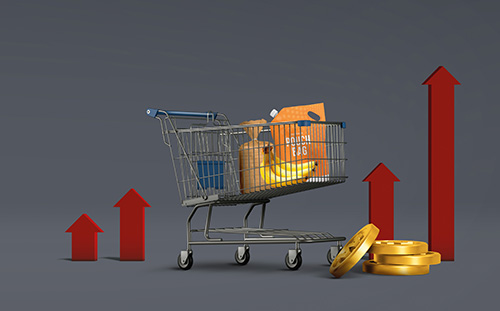
Industrial Electricity Rate Hikes Heighten Manufacturers’ Cost Burdens Production Disruption Concerns
Rising industrial electricity rates have sharply increased cost burdens for the country’s top 30 electricity-consuming companies. Survey results show that while their electricity usage rose 0.8% year on year, electricity costs increased by about 12.7%, or more than KRW 1.814 trillion. This reflects cumulative rate hikes of roughly 70% over the past three and a half years and electricity rates for large corporations being set at more than 30% above cost to offset losses at the national power utility. These have prompted concerns that production may be suspended or some operations relocated overseas, or that some firms may respond by making direct power purchases.
23rd
29th
30th