Korea’s Path to Shared Growth
Building a “Scale-Up Highway”
The 2nd Corporate Growth Forum
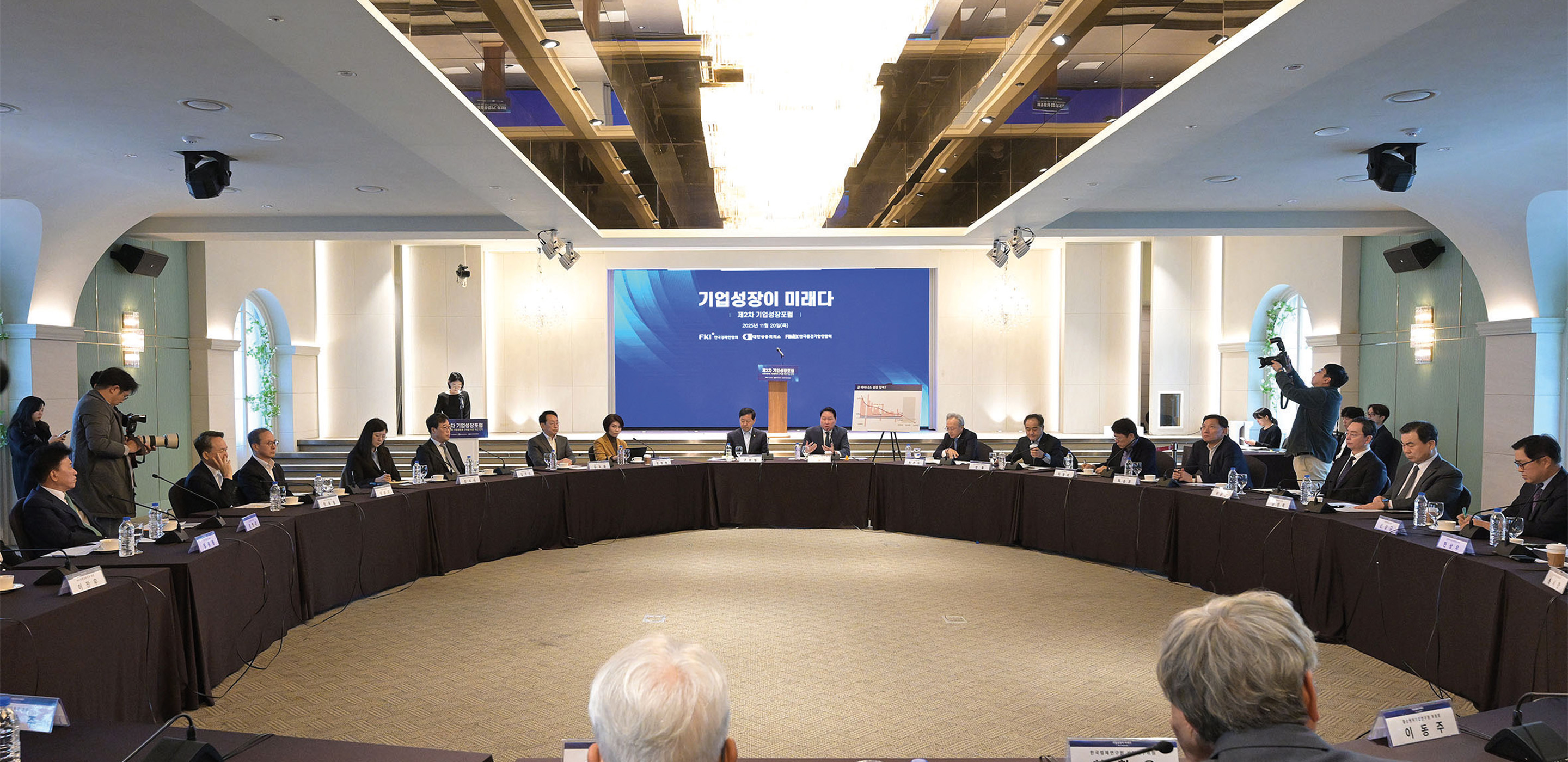
The 2nd Corporate Growth Forum, jointly hosted by the Federation of Korean Industries (FKI), the Korea Chamber of Commerce and Industry, and the Federation of Middle Market Enterprises of Korea, convened to advance private sector-led growth strategies. With the inaugural focusing on diagnosing institutional constraints and the cumulative burden of regulation facing growing companies, the 2nd iteration of the forum moved a presented specific innovation strategies to revive private growth engines.
By Na-yeon Kim
Photo Credit FKI
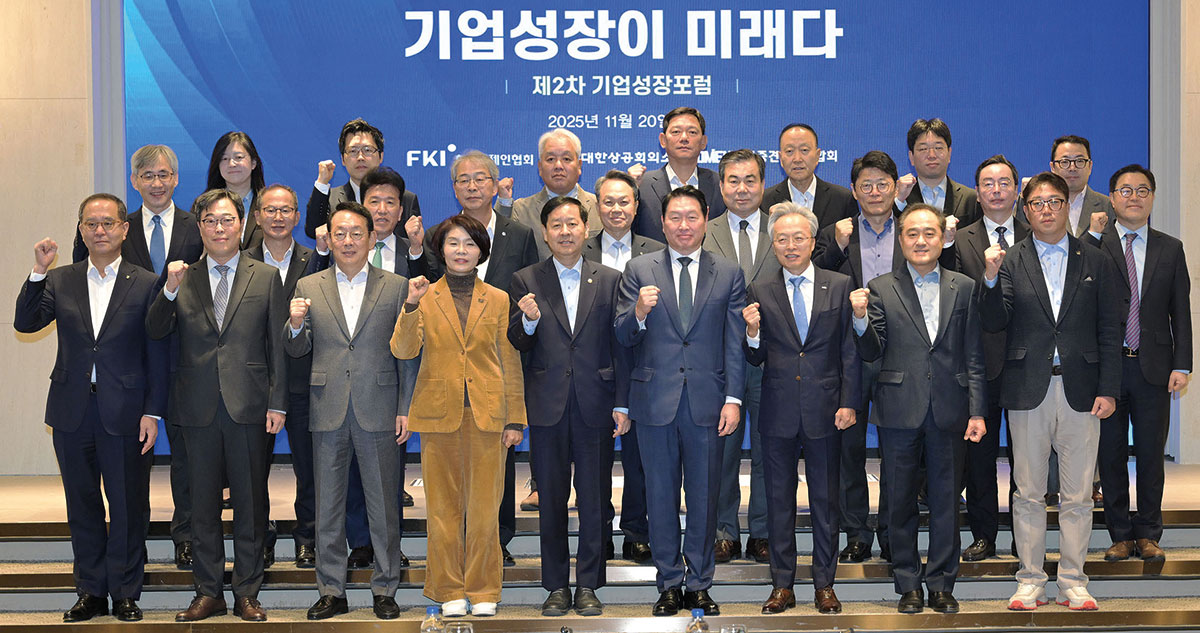
“Without fundamental changes to the system that disadvantages growing companies,
it will be difficult to secure a bright future for the next 30 years of the Korean economy. A decisive shift is required from penalizing growth to rewarding it.”
Reviving the Growth Ladder Through Public-Private Cooperation
Launched in September 2025, the Corporate Growth Forum is a policy consultation platform formed around a shared concern that differential application of regulation based on corporate size and unbalanced support systems are obstructing corporate growth. The second forum drew broad participation not only from the business community, but also from government, the National Assembly, the financial sector, academia, and startups. This diversity enabled a wide-ranging discussion of growth policy from multiple perspectives.
The discussions throughout the forum centered on two key themes, growth and scaling-up. Against a backdrop of concern that Korea may enter a phase of negative growth after 2030 if private growth engines stall, participants focused on how to reform size-based regulatory frameworks and the policy regime regulating competition. Participants also examined measures to mobilize the substantial capital required for emerging industries such as deep tech and AI through productive finance and a combination of policy-driven and private capital.
Concrete data point to the effects of the “triple-low” structure (Low formation rates, growth, and economic dynamism), which is marked by slowing growth, declining potential growth, fewer new and high-growth firms, and the reversion of middle-standing companies to small enterprise status. Participants agreed that without fundamental changes to the system that disadvantages growing companies, it will be difficult to secure a bright future for next 30 years of the Korean economy.
In opening remarks, Tae-won Chey, Chairman of the Korea Chamber of Commerce and Industry; Jin-shik Choi, Chairman of the Federation of Middle Market Enterprises of Korea; Deputy Prime Minister Yun-cheol Koo; and policy chiefs from both ruling and opposition parties addressed the slowdown in Korea’s economic growth and the limitations of the current regulatory and institutional environment. They also expressed a clear commitment to shifting policy toward rewarding growth and providing incentives to expanding companies.
Keynote speeches by Chul Chung, President of the Korea Economic Research Institute at FKI; Sang-woo Han, Chairman of the Korea Startup Forum; and Jin-yul Ju, Professor at Pusan National University, addressed different themes. These included weakening corporate growth drivers and scale-up strategies, the startup ecosystem and productive finance, and the transition of competition policy toward an innovation-oriented framework. Despite their differing focus areas, all speakers called for a decisive shift from a system that penalizes growth to one that rewards it.
The forum concluded with an open discussion in which representatives from academia, finance, and industry shared their experiences, proposals for institutional reform, and growth strategies. Through this exchange, participants outlined a blueprint for restoring the growth ladder through coordinated public-private action.
By moving beyond problem diagnosis to articulate a clear roadmap for transforming the growth ecosystem, encompassing institutional reform alongside financial and industrial strategies, the forum marked an important milestone. Building on these discussions, future forums will further specify policy measures and cooperation models to lay the groundwork for a public-private transition toward a new growth paradigm.
Keynote Speech 1 - A Blueprint for Reigniting Corporate Growth Engines
Chul Chung Chief Research Officer, FKI, and President, KERI
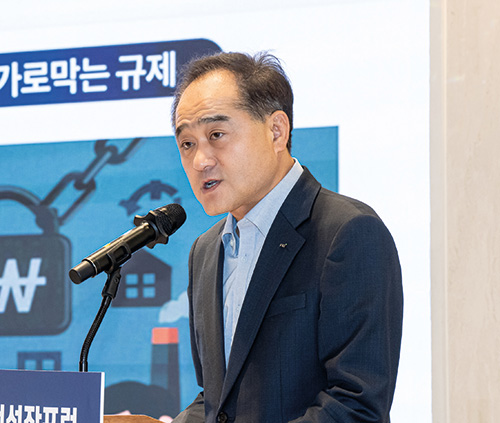
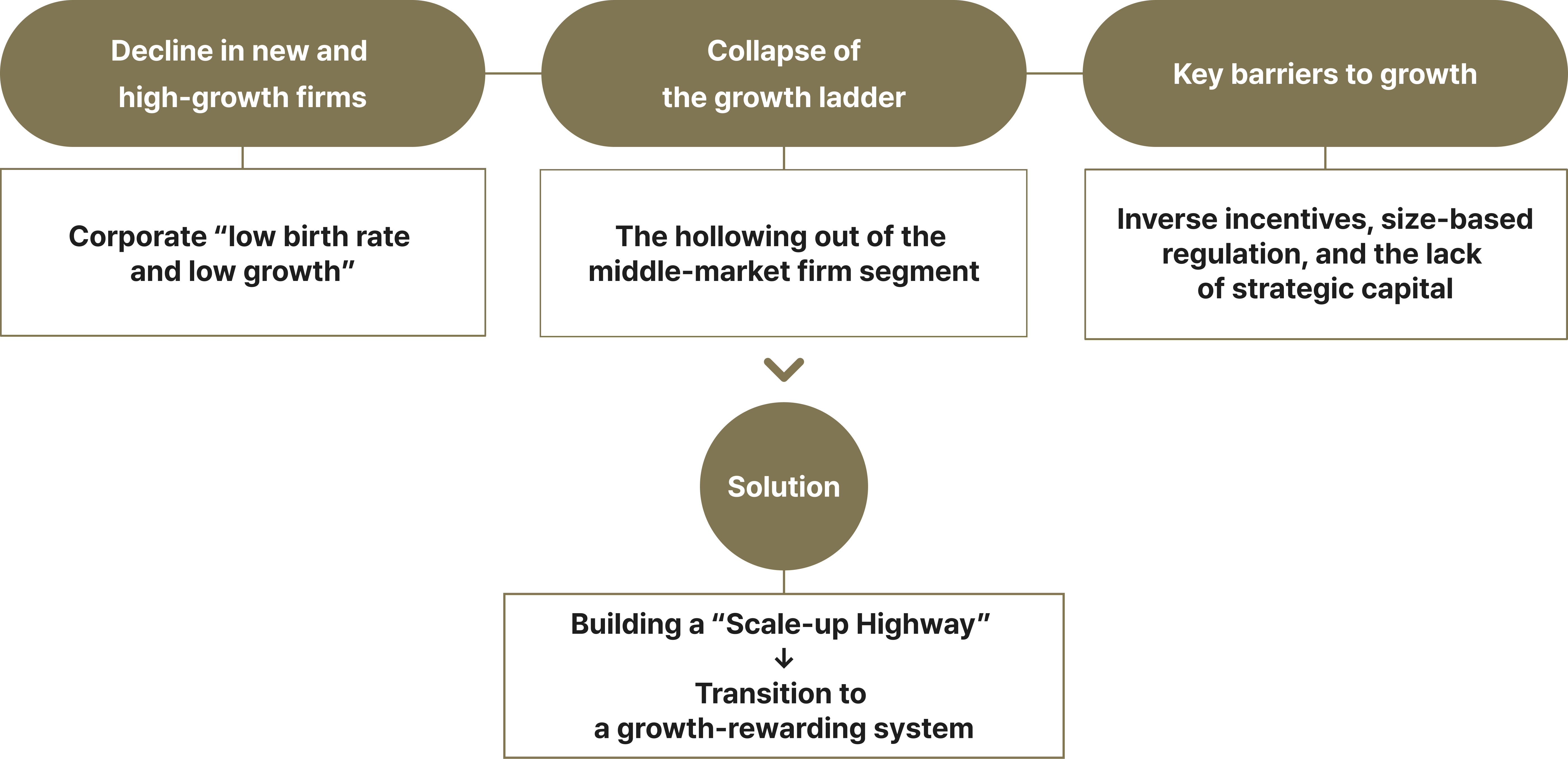
Korea’s corporate ecosystem is currently facing a “triple-low crisis,” characterized by low firm formation, low growth, and low economic dynamism among companies. The simultaneous decline in new firms and high-growth enterprises is not a short-term cyclical fluctuation. Rather, it is a warning signal that the ecosystem itself is losing vitality.
Equally concerning is the stagnation among mid-sized enterprises, which should serve as the core drivers of growth. Over the past four years, the natural growth rate of middle-market companies has remained in the 0% range. As the growth ladder from SMEs to middle-market firms and ultimately to large corporations has failed to function properly, a reversal has emerged: more companies are falling back from middle-market to small enterprise status. Although growth is a survival strategy for firms, a “growth paradox” is intensifying, signifying that growth is becoming a burden. This rigidity stems from three structural bottlenecks.
First, perverse incentives have become entrenched, with support and benefits diminishing as companies grow in size. For example, R&D tax credit rates fall sharply from 25% for SMEs to 8% for middle-market firms and just 2% for large corporations. As a result, the incentive to innovate weakens as companies scale up, creating a structurally regressive system.
Second, the current competition policy framework, which imposes advance regulations based on asset size, diverges from global standards. As companies grow, the number and burden of regulations accumulate, requiring firms to comply with as many as 343 additional regulatory obligations.
Third, strategic capital supply is institutionally constrained in future industries such as AI and biotechnology, which require large-scale investment. Regulations on holding companies and corporate venture capital make it difficult for firms to leverage external funding and overseas investment. They also hinder the establishment of long-term growth investment systems that are based on industry-finance cooperation.
The global market waits for no one, and Korea’s competitiveness in the unicorn race is weakening. Korea ranks ninth worldwide in the number of unicorn companies, with 18 firms. This is just 1% of the global total, which is lower than five years ago and signals that the window of opportunity for reigniting growth engines is closing fast.
As a response, the entire growth process must be redesigned as a single, continuous pathway. The concept of a “Scale-up Highway” begins from this perspective. Rather than forcing companies to overcome new constraints at every stage of growth, the system should allow rewards to accumulate as firms scale up, enabling a virtuous cycle in which innovation leads to reinvestment. Core strategic priorities to meet this goal include expanding growth incentives, advancing smart regulatory reform, and activating productive finance.
Keynote Speech 2 - Strategies to Revitalize the Venture and Startup Ecosystem
Sang-woo Han Chairman, Korea Startup Forum

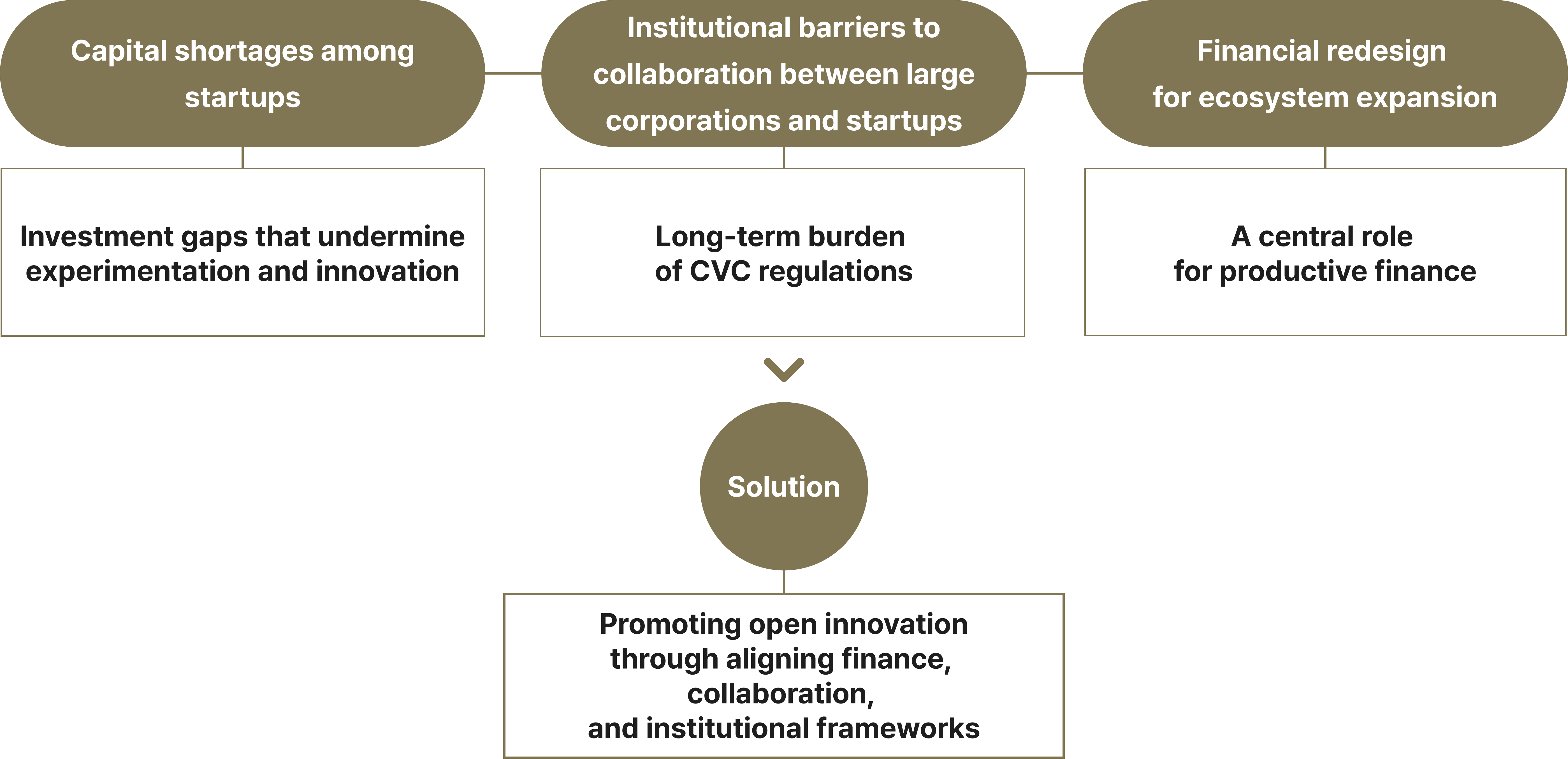
Over the past decade, Korea’s startup ecosystem has emerged as a core driver of digital transformation. The Korea Startup Forum alone comprises approximately 2,600 member companies, of which about 1,500 have attracted institutional investment. Fourteen unicorn companies form a combined enterprise value of roughly KRW 85 to 90 trillion, and have led digital transformation across major domestic industries and consumer markets.
This growth reflects more than a temporary trend. The spread of OTT services has reshaped audience patterns for multiplex cinemas, e-commerce-based fashion platforms have reorganized offline retail markets, and mobility innovations have even led to the closure of bus terminals. These shifts illustrate how the core of Korea’s industrial structure is moving toward platform- and data-based industries.
In the global AI race, Korea is recognized as the only country besides the United States and China to place AI products in the global Top 20. This underscores a clear reality: in the era of AI-driven transformation, startups represent the most powerful engine of innovation.
Despite this momentum, the foundation of productive finance needed to sustain the pace of innovation remains insufficient. M&A accounts for only about 5% of exits in Korea, compared with more than 90% in the United States, resulting in narrow pathways for both recovery and scale-up. Regulations on CVC and holding companies continue to constrain strategic investment flows from large corporations, limiting ecosystem expansion in fields such as advanced manufacturing, AI, and biotechnology, where large-scale capital is essential. Addressing this challenge requires stronger inter-firm collaboration.
Startups can contribute by offering speed and experimentation, while large corporations provide infrastructure and resources. Together, they must evolve into partners that create new growth engines through open innovation.
To support this shift, institutional frameworks should be put in place, including conflict mediation guidelines and safety nets for cooperation. In addition, mechanisms to mitigate wage gaps are needed to facilitate the flexible movement of high-quality talent. When such conditions are met, companies in rapid growth phases may rapidly advance organizational maturity and become more competitive.
Keynote Speech 3 - Creating a Corporate Growth-Friendly Environment
Through a Rational Reform of the Fair Trade System
Jin-yul Ju Professor, Pusan National University Law School

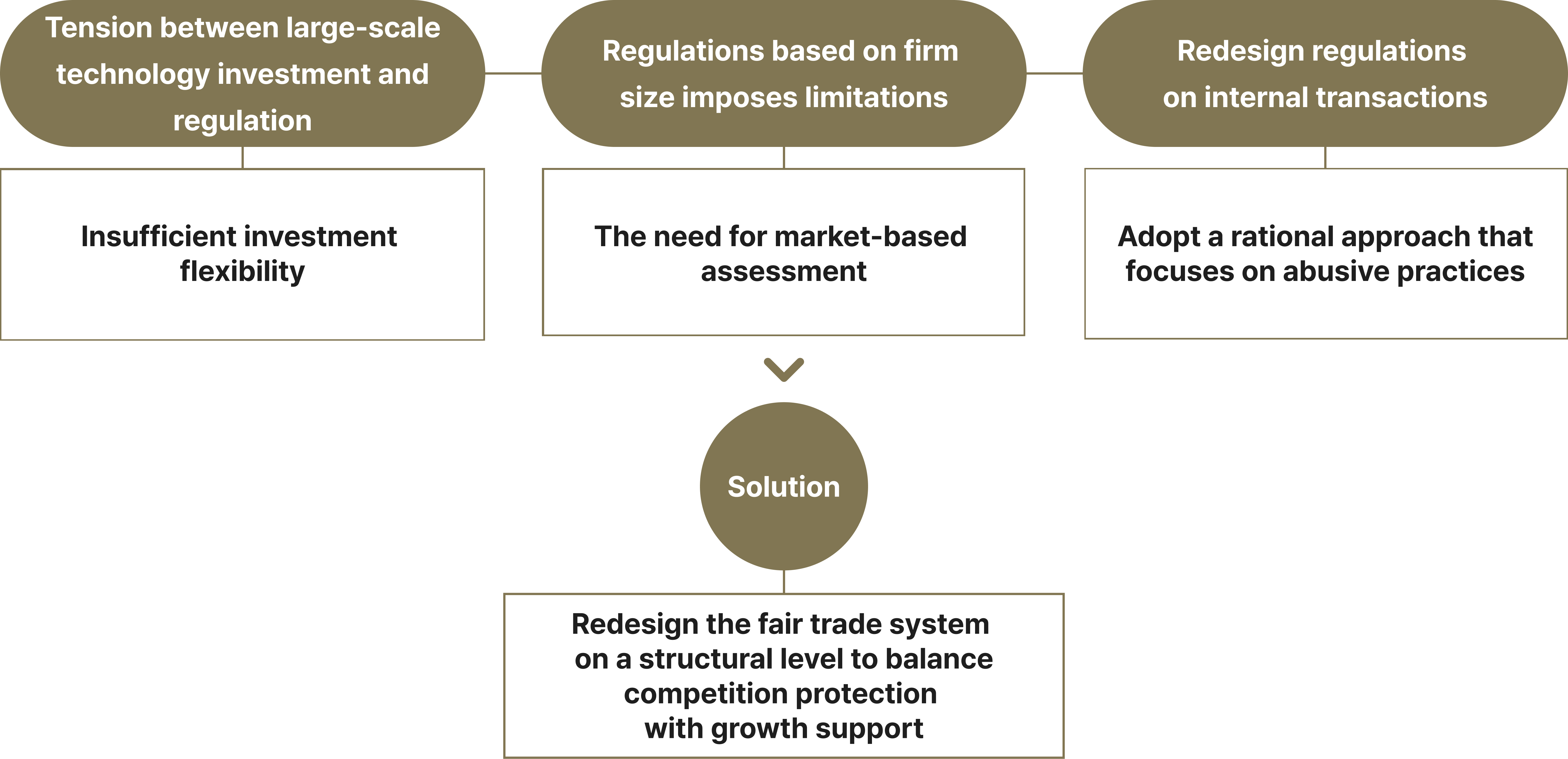
Korea’s fair trade system has long been designed around a model aimed at restraining large business groups. While this approach was intended to prevent excessive concentration of economic power and minimize concerns over collusion between business and politics, markets have already shifted toward a landscape characterized by platform-based global competition in which sustained, large-scale investment is unavoidable. Despite this transformation, the regulatory framework remains rooted in an industrial structure that predates the 1990s.
The fundamental problem lies in a regulatory regime that is largely unique to Korea. Major economies such as the United States, Europe, and Japan do not impose ex ante regulation on large corporate groups, and they broadly permit the combination of financial and industrial capital. In contrast, once a corporate group in Korea exceeds KRW 5 trillion in assets, a comprehensive set of preemptive regulations is applied. These regulations extend to internal transactions, governance structures, and affiliate support, effectively treating firm size as a risk factor.
Such a structure constrains strategic and future-oriented business support. This problem becomes particularly acute in industries such as AI, quantum computing, and biotechnology, where long-term investment on the scale of tens or even hundreds of trillions of won and sustained technology accumulation are essential. When internal capital allocation is institutionally restricted, the capital and infrastructure held by large corporations cannot flow sufficiently into innovation-driven areas. This inevitably widens Korea’s technology gap at a structural level.
While companies such as Google in the United States and Alibaba in China are leaders in hyperscale AI and quantum technologies through their substantial investment capacity, Korean firms face criminal liability risks that make it difficult even to attempt comparable strategies. As a hypothetical, affiliate acquisitions undertaken during Tesla’s expansion into renewable energy could, under Korea’s current fair trade framework, be interpreted as unfair support or the provision of improper benefits to related parties. As a result, companies tend to avoid innovative initiatives in order to reduce legal risk, a dynamic that ultimately undermines national competitiveness.
Reform of the Monopoly Regulation and Fair Trade Act is not about deregulation, but about restoring alignment with contemporary economic realities. Provisions aimed at restraining large business groups should be comprehensively reexamined, and the system should be redesigned to strike a balance between preventing excessive concentration of economic power and promoting innovation. Through such reform, an institutional growth ladder can be restored, enabling companies of different sizes to organically expand their growth pathways through technology and capital.
Open Discussion - Without a Shift in the Growth Paradigm, Stagnation Will Persist
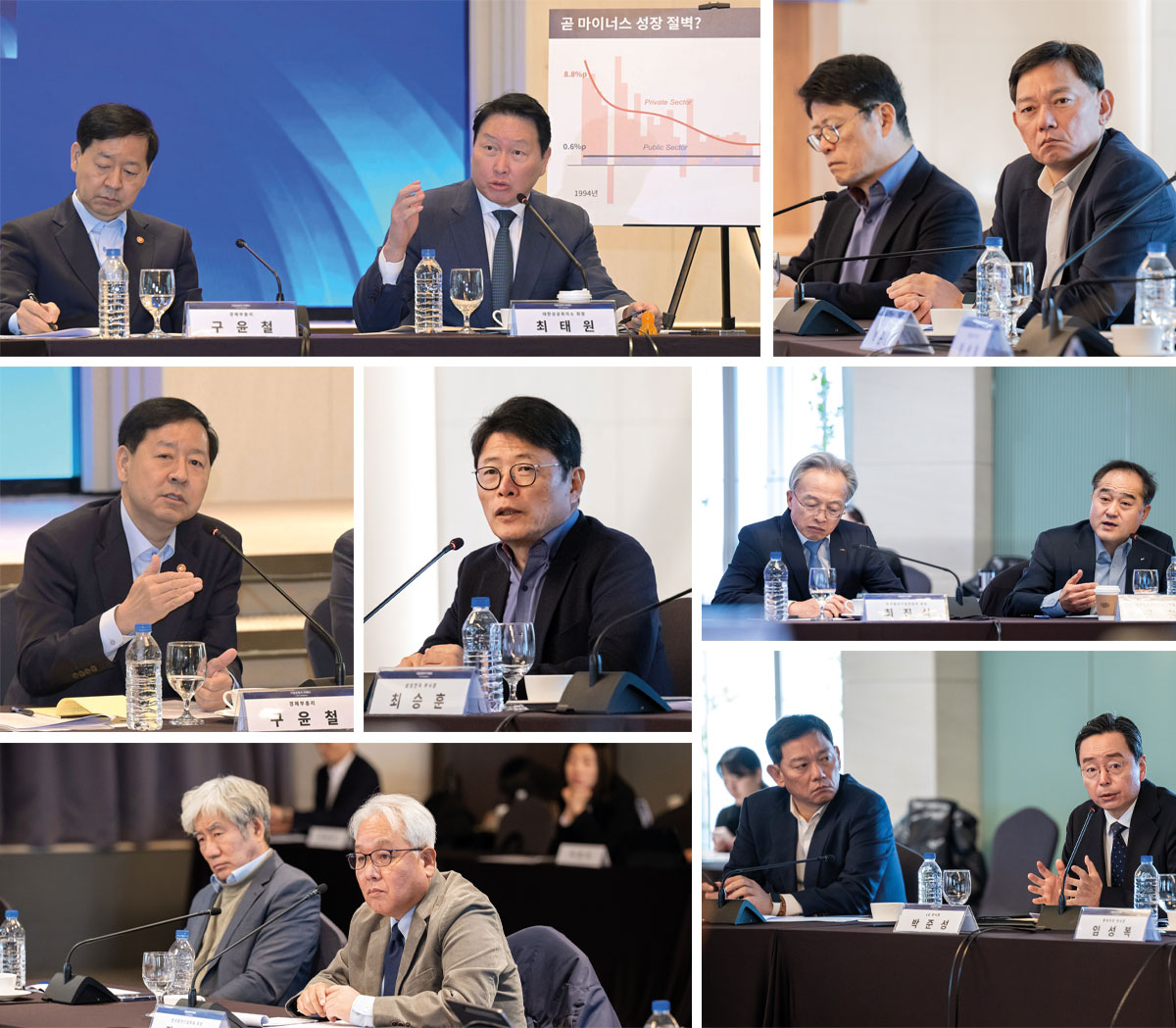
During the open discussion session, leaders from the business community, the financial sector, and industry experts gathered to engage in in-depth dialogue on how to build a “Scale-up Highway” and restore the growth ladder. Participants noted priorities such as the need for a paradigm shift in regulation, the expansion of productive finance, and the establishment of national-level industrial competitiveness strategies, stressing that the time has come to change how policies are implemented. In particular, as the global industrial system continues to shift toward national competition frameworks, there was broad consensus that institutional reform is urgently needed to enable swift deployment of strategic capital in areas such as deep tech, AI, and advanced manufacturing.